More Than Just a Podcast
-
Date: September 1, 2024
Role: Multimedia Design Manager
Services: Video Production, Graphic Design, Brand Development, Marketing/Communications Manager
Location: Tulsa, OK
Talent: Family & Children's Services staff and community partners
Crew: Dee Harris - Chief Marketing Communications Officer
Chris Posey – Director of Marketing and Communication
Sara Hathcoat - Creative Director
Russell Wadlin - Multimedia Design Manager
There are so many stories to tell at Family & Children’s Services.
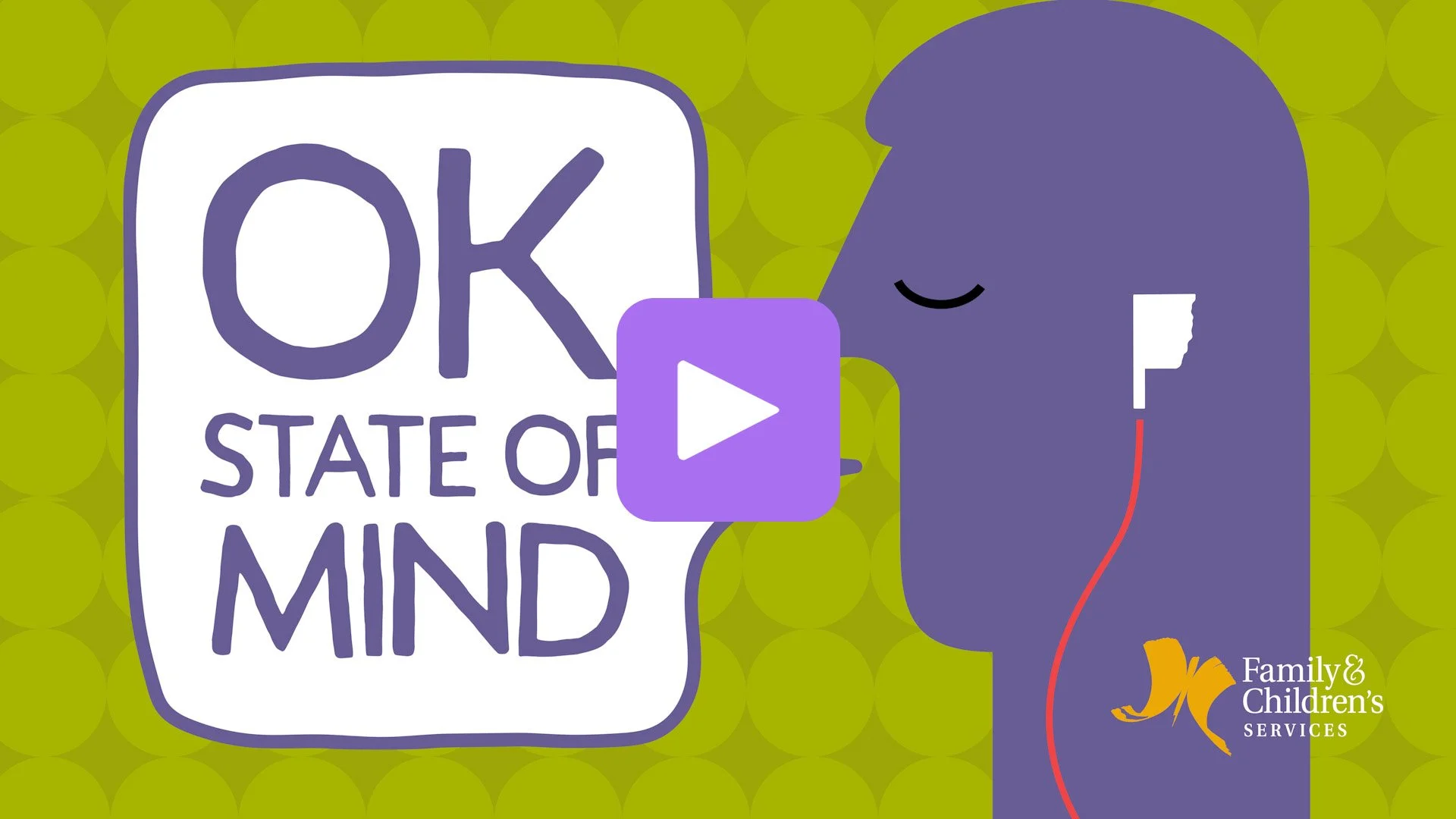
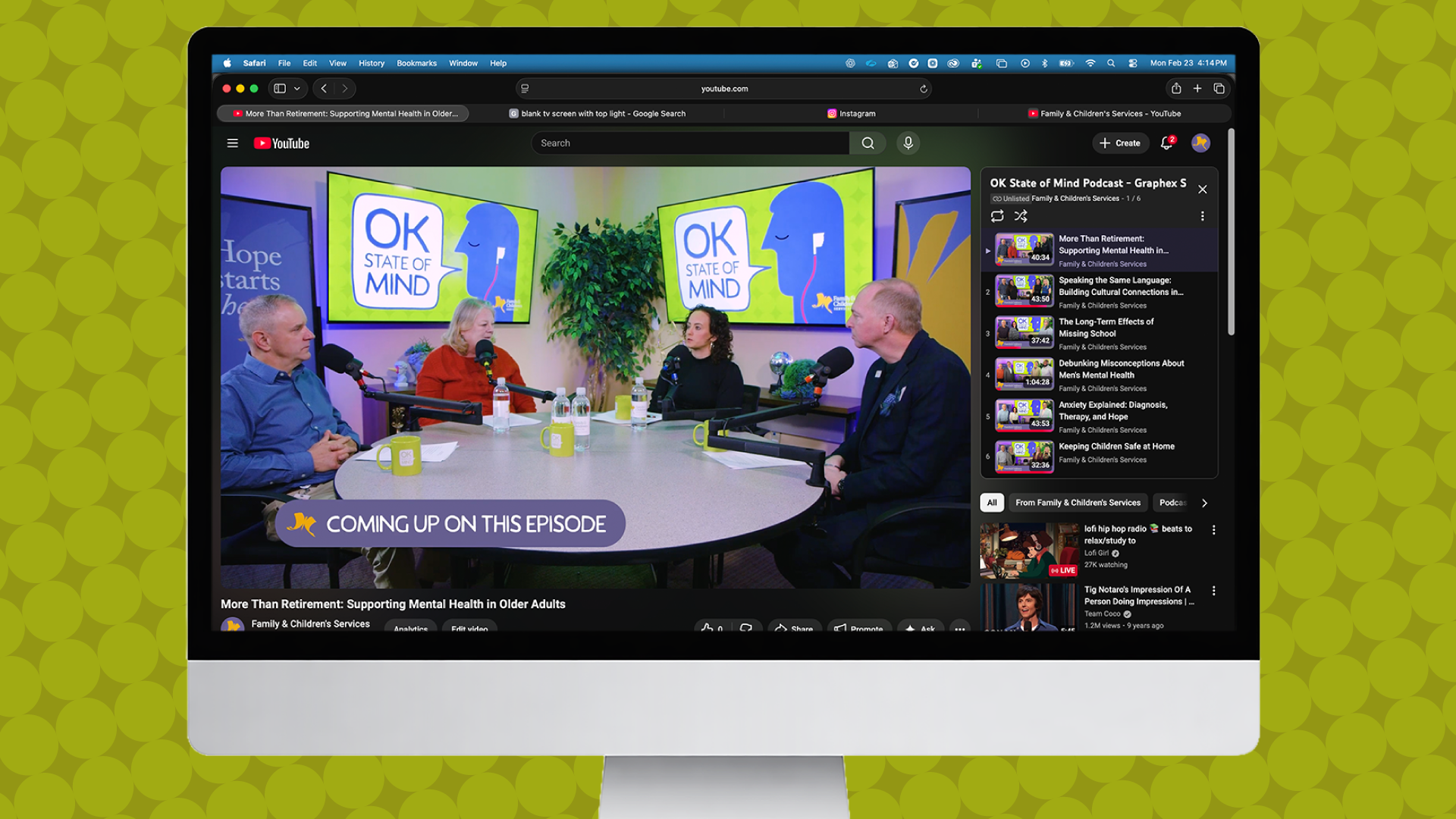
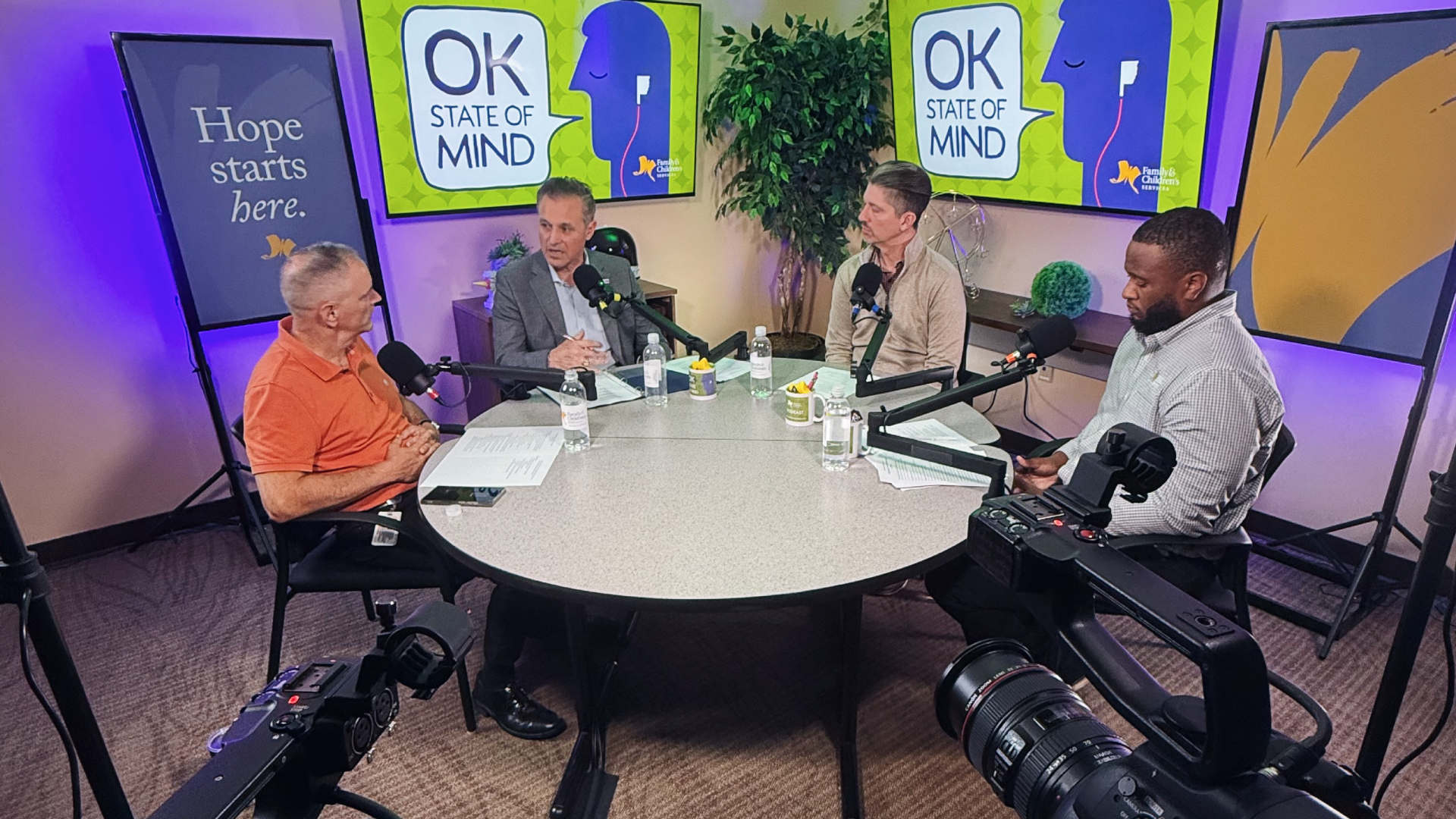
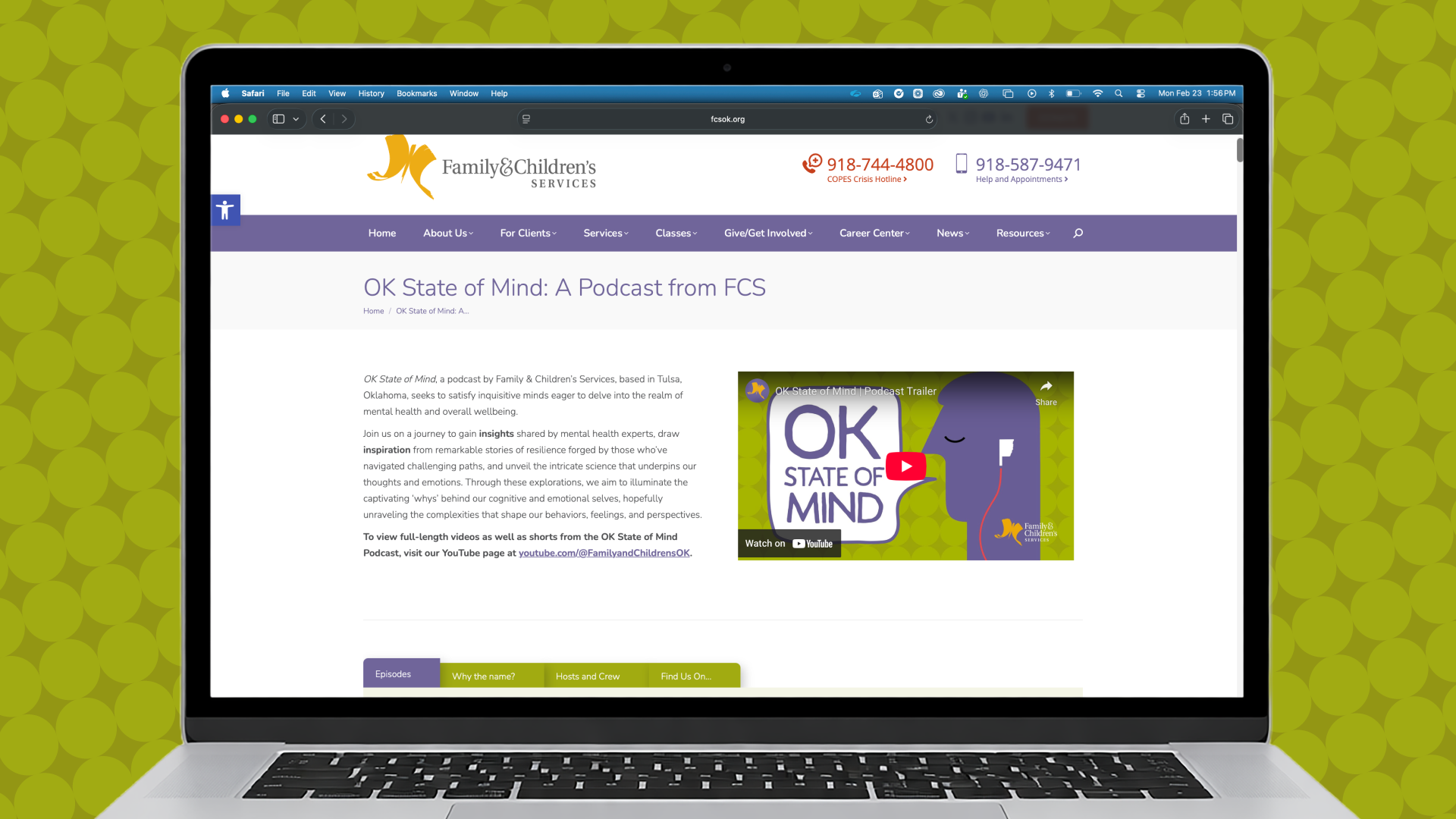
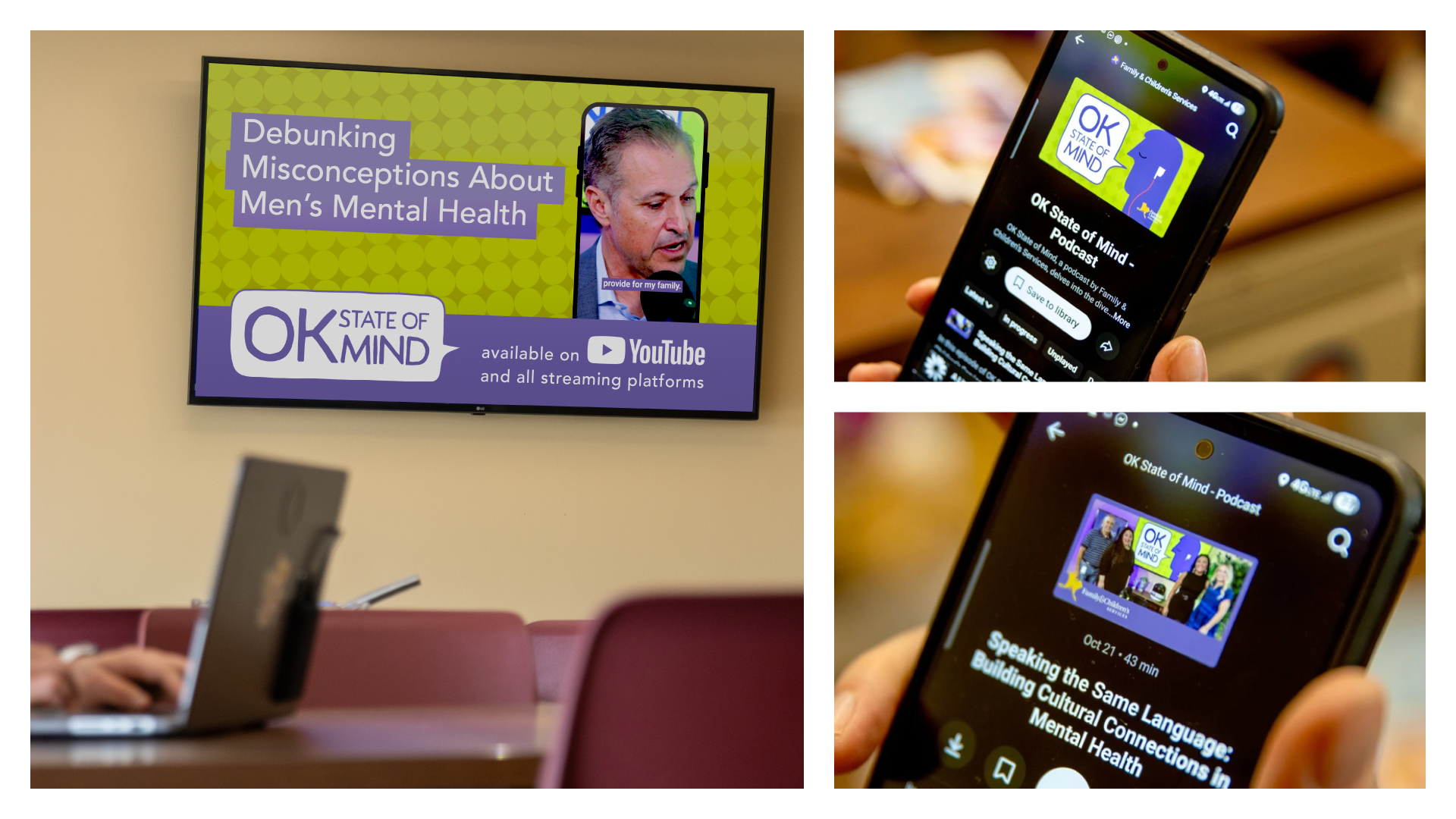
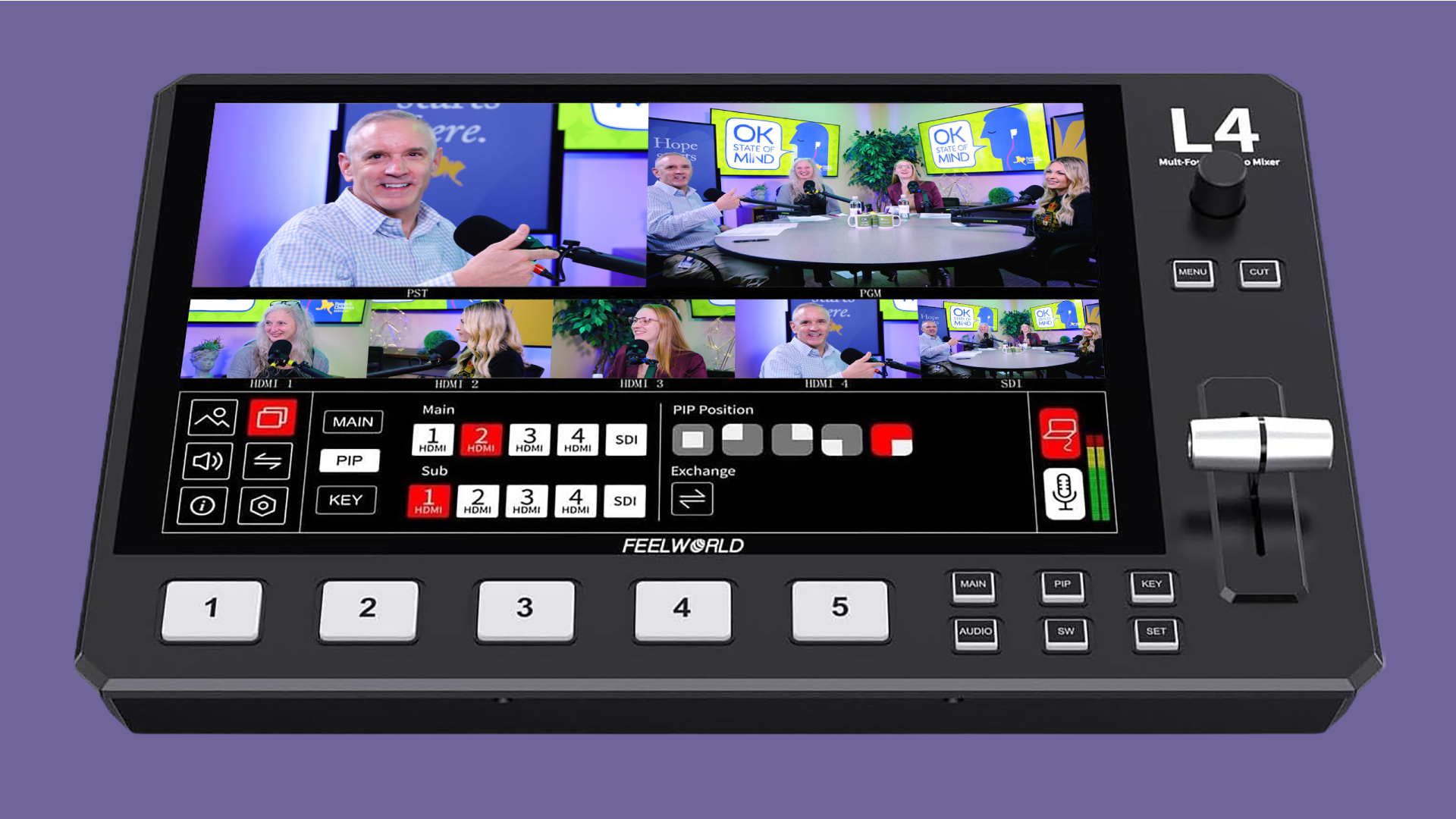
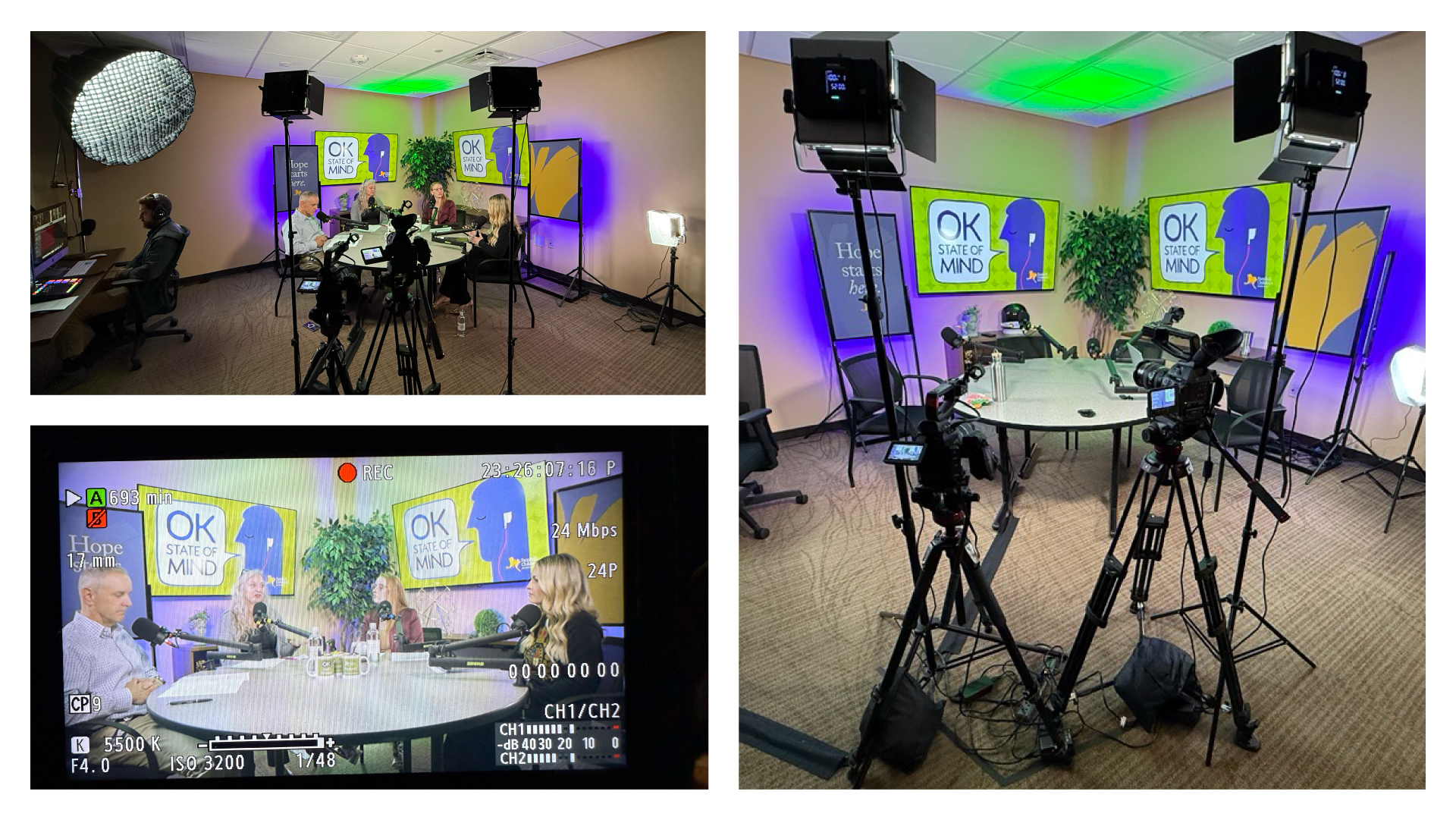
When I stepped into the role of Multimedia Design Manager, OK State of Mind already existed as an audio-only podcast recorded in a shared conference room. It had strong voices and meaningful conversations, but the production environment limited its potential. I was challenged early to introduce a full video-forward component that would push the agency into a modern, scalable social strategy. That meant rethinking everything—camera placement, lighting control, audio routing, visual identity, and content distribution. OKSOM became the catalyst that justified building the agency’s first intentional production studio in its 100+ year history.
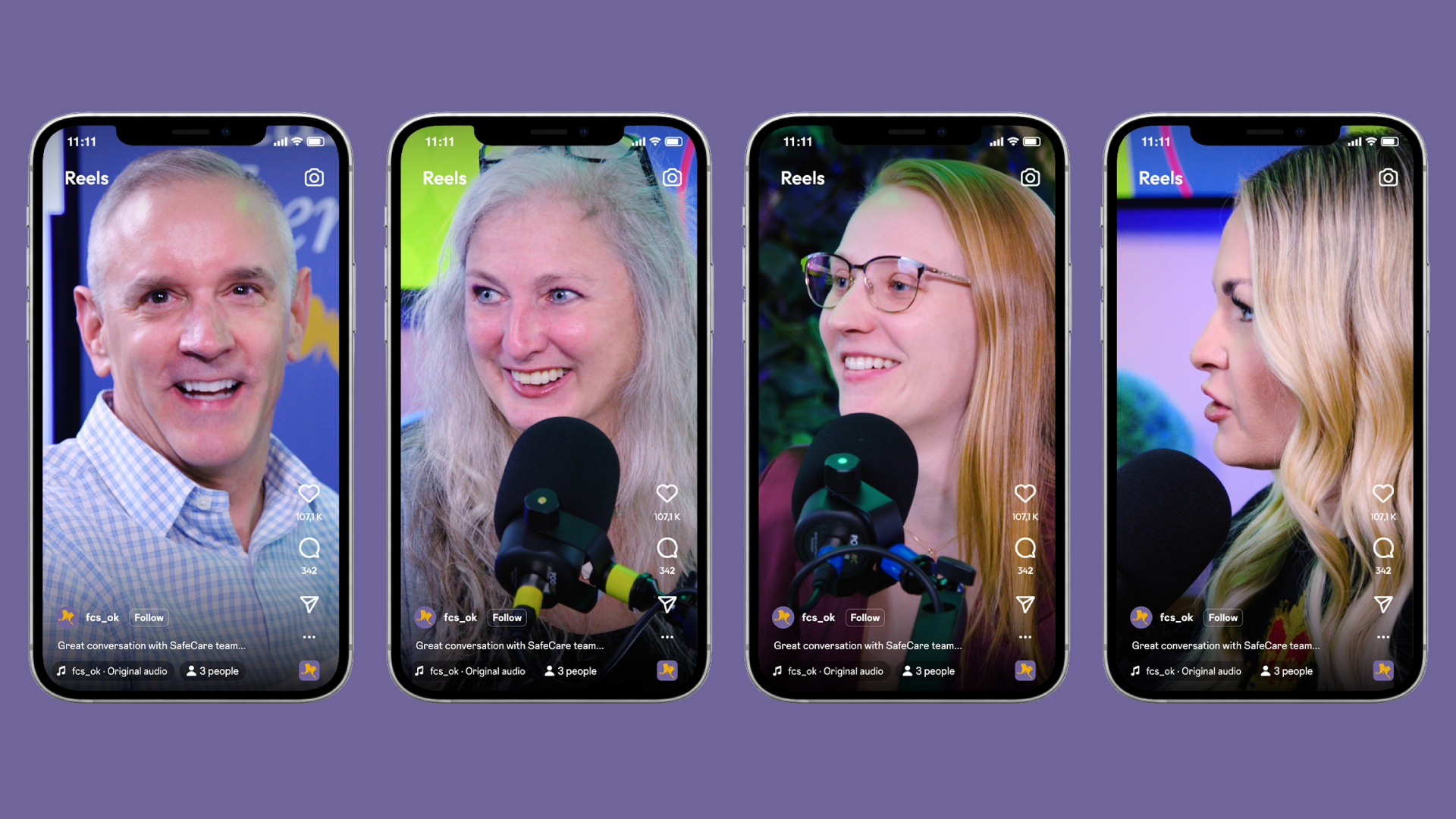
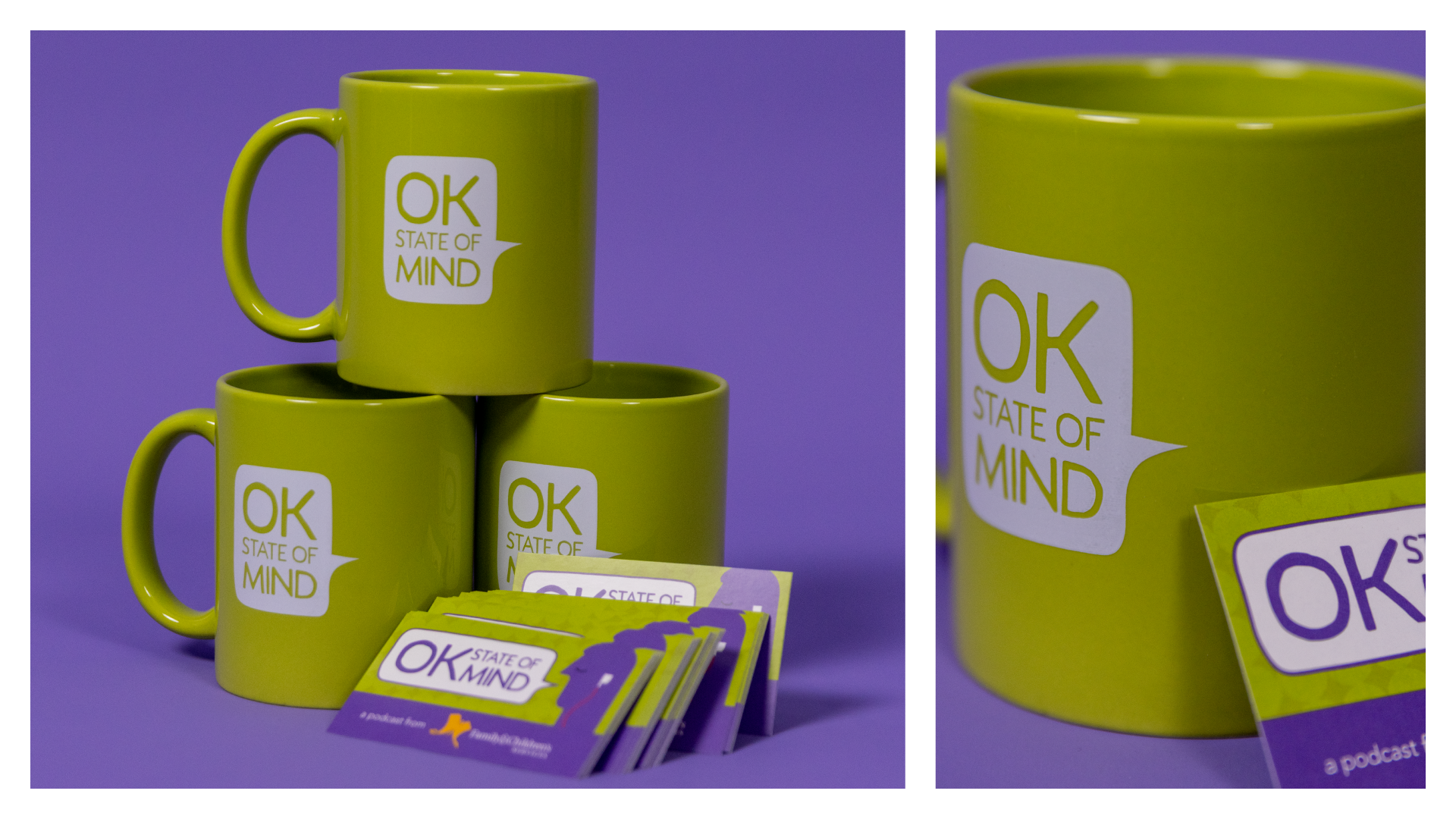
Previously, we battled street noise, transient foot traffic, and harsh natural light that shifted mid-episode. Consistency was impossible. I spearheaded the transition from improvised recording to a controlled multi-cam broadcast setup designed for repeatability. From that studio, each 45–60 minute episode now generates a full multi-cam YouTube video, an audio release, 10–14 short-form clips, highlight segments, trailers, and branded thumbnail systems. I helped develop asset packs and scheduling strategies that allowed the content to live far beyond recording day. What was once a single file became an ecosystem.
But the real significance of OK State of Mind extends far beyond production value. By tackling topics like aging and isolation, men’s mental health, and the science behind anxiety, the show addresses issues that directly impact families across Oklahoma. For the agency, this reinforces subject-matter expertise and strengthens partnerships with community organizations and civic leaders who see their shared work reflected on the platform. For listeners, it replaces confusion with clarity and stigma with language they can use—making vulnerable conversations about lived realities feel normal rather than taboo. The podcast helps position mental health not as a crisis-only service, but as an ongoing, accessible part of everyday wellbeing—elevating both the public dialogue and the organization’s role within it.
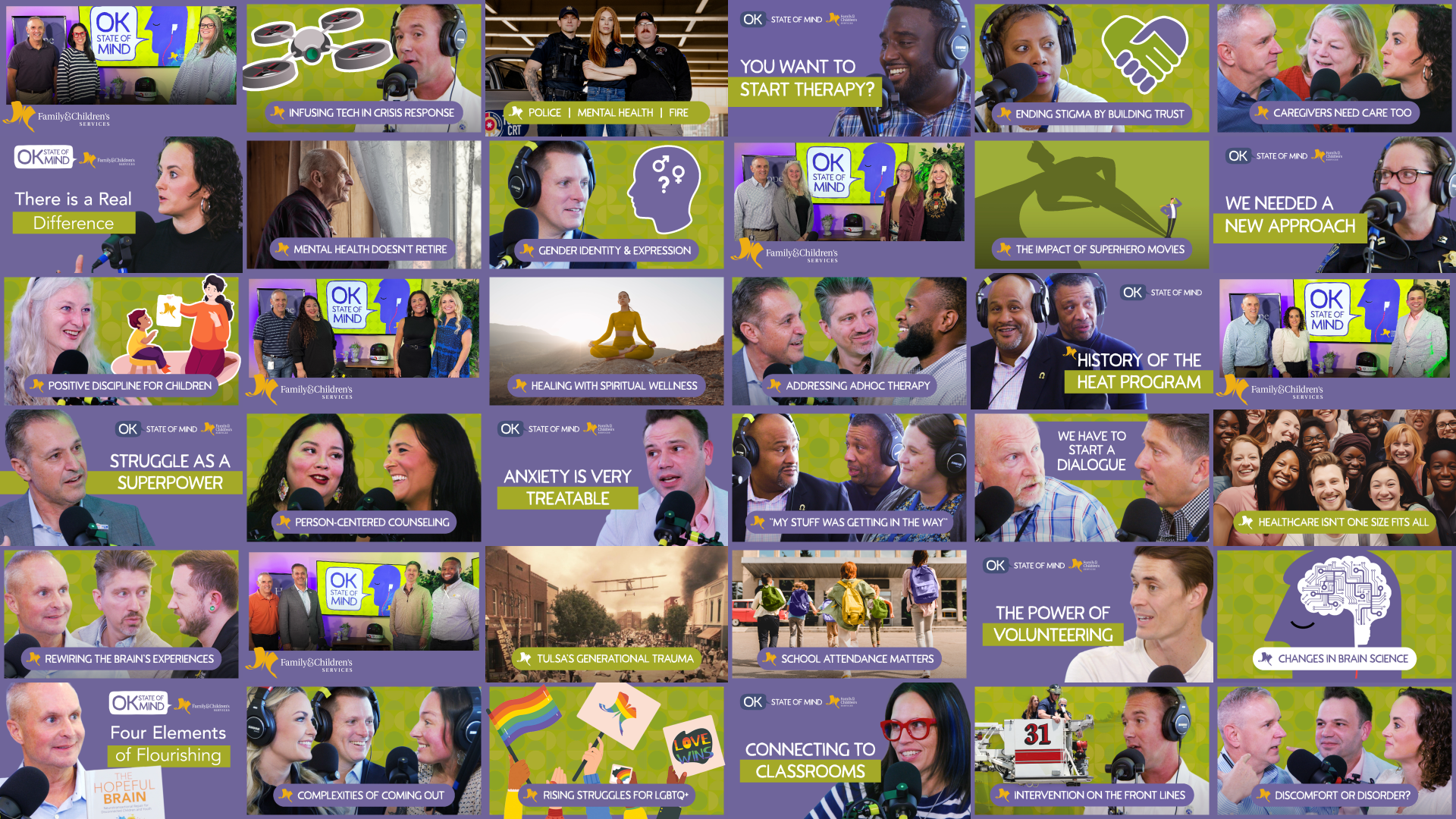
Creatively, this project marked a turning point in my career. The YouTube-first, scalable video thinking I developed in previous roles translated directly into this nonprofit setting. There was no shortage of expert voices or urgent topics; what we needed was infrastructure strong enough to carry them. By building a platform designed for longevity, I helped transform OK State of Mind into the agency’s most dependable media vehicle—producing over one hundred video clips in its first year and multiplying engagement across channels.
OK State of Mind is no longer just a podcast. It is a strategic content engine that cultivates partnerships, establishes thought leadership, and makes complex behavioral health conversations accessible to the public. For me, it represents a moment when storytelling and infrastructure intertwined—when creative production evolved from reactive content into a disciplined, repeatable system capable of carrying a century-old mission into its next era.
The postings on this site are my own and do not necessarily reflect the views of any company or clients.