66 Stops on Route 66 That Helped Me Find My Way
I spent years chasing exploration far from the familiar, convinced that the joy of adventure only existed somewhere beyond reach. It took sixty-six stops across my home state to realize how close the benefits of self-discovery actually were. What started as a casual way to pass time turned into a multi-year process of connecting with Oklahoma, with my pace of life, and with myself. As Route 66 celebrates its centennial, I find myself reflecting on the intentionality behind true connection and what happens when you treat where you are with the same curiosity reserved for everywhere else.
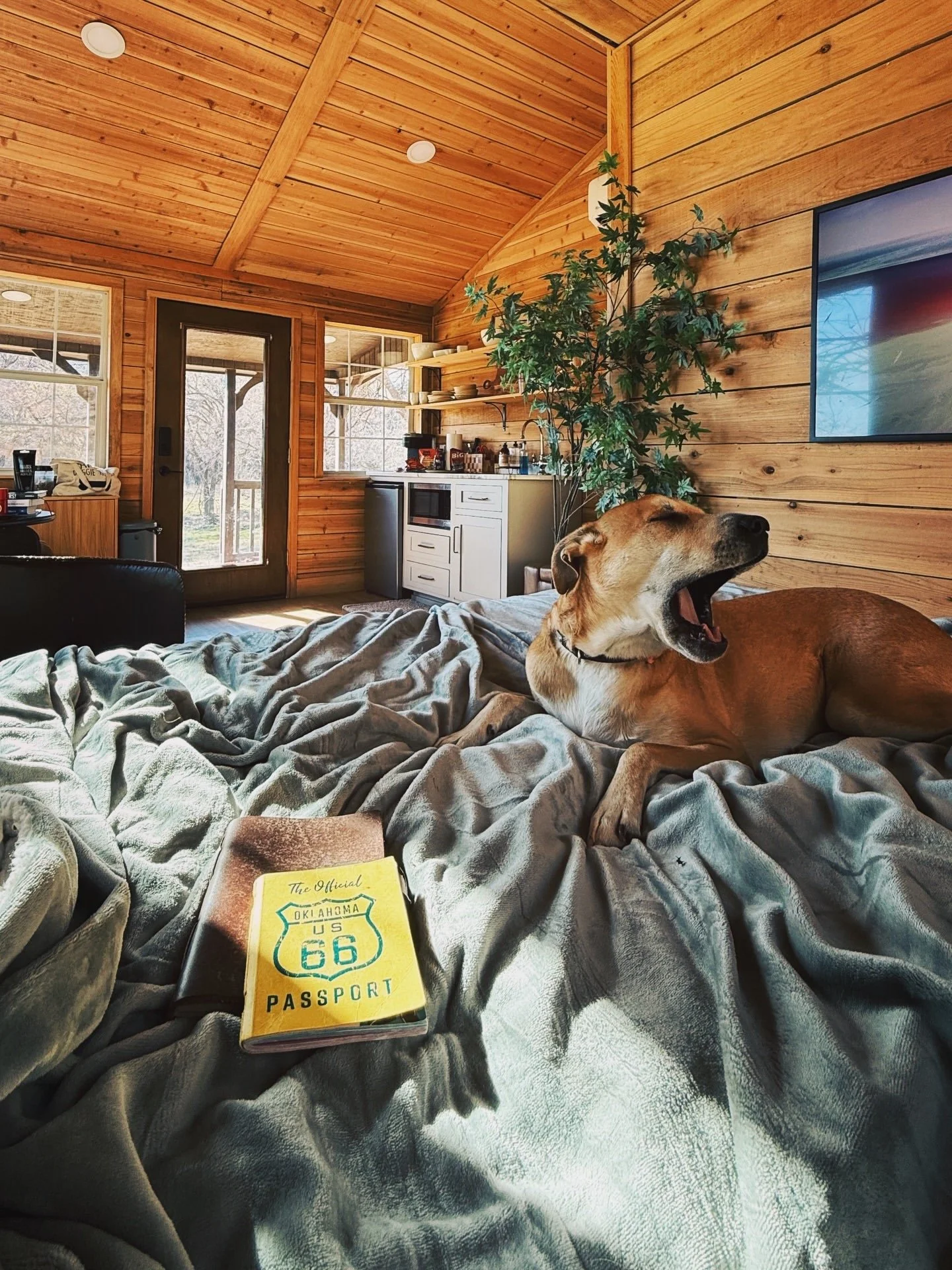
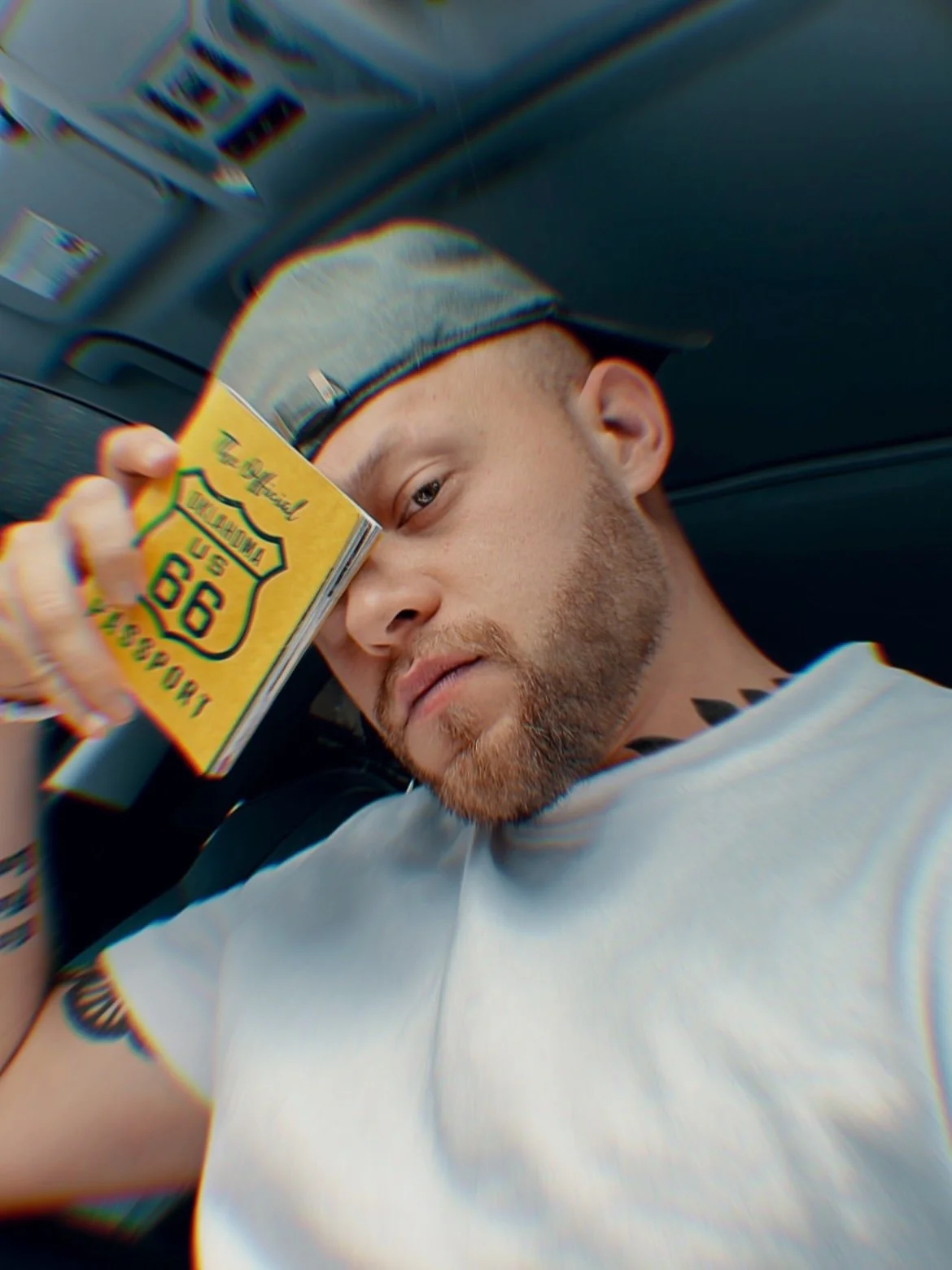
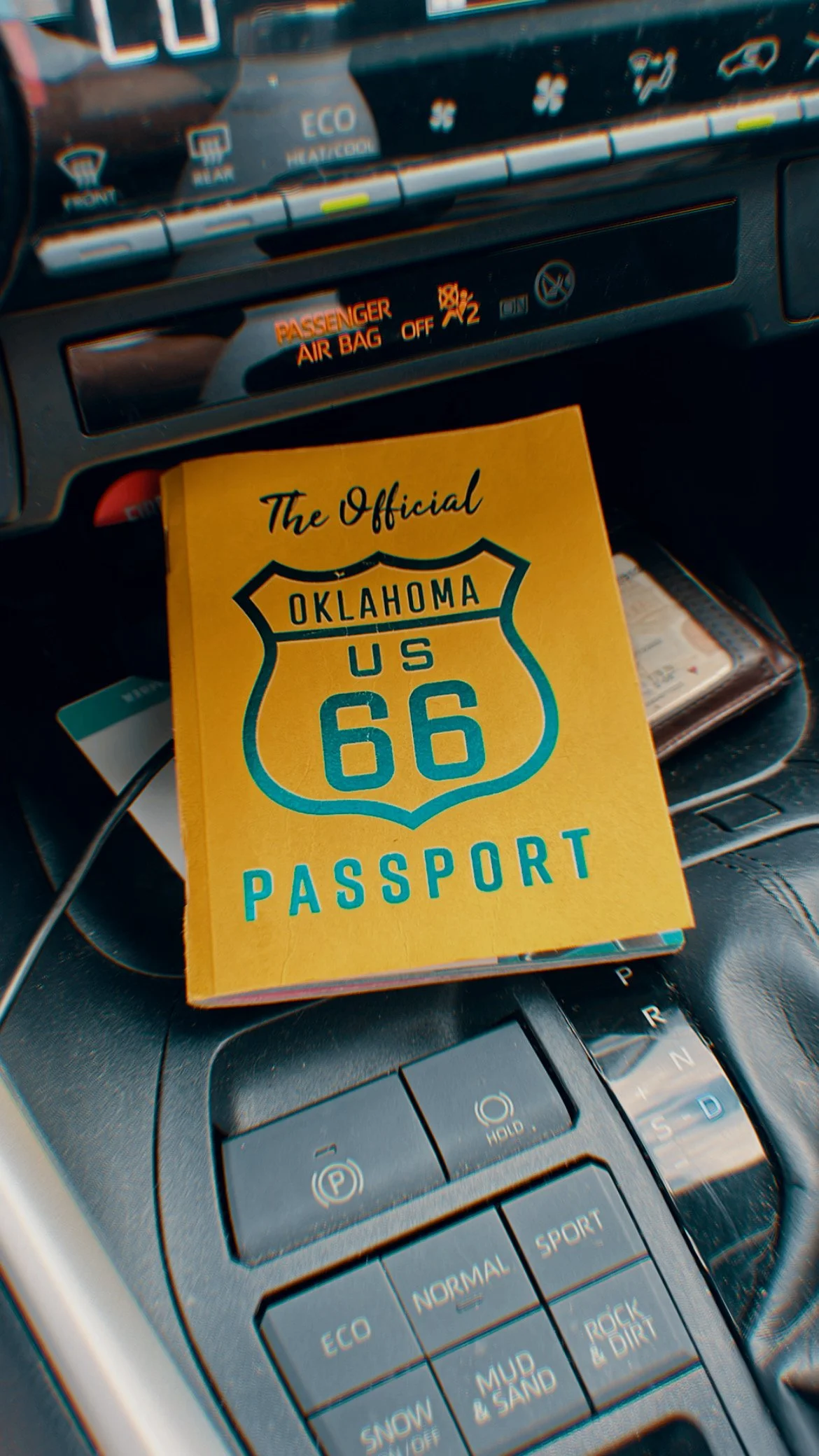
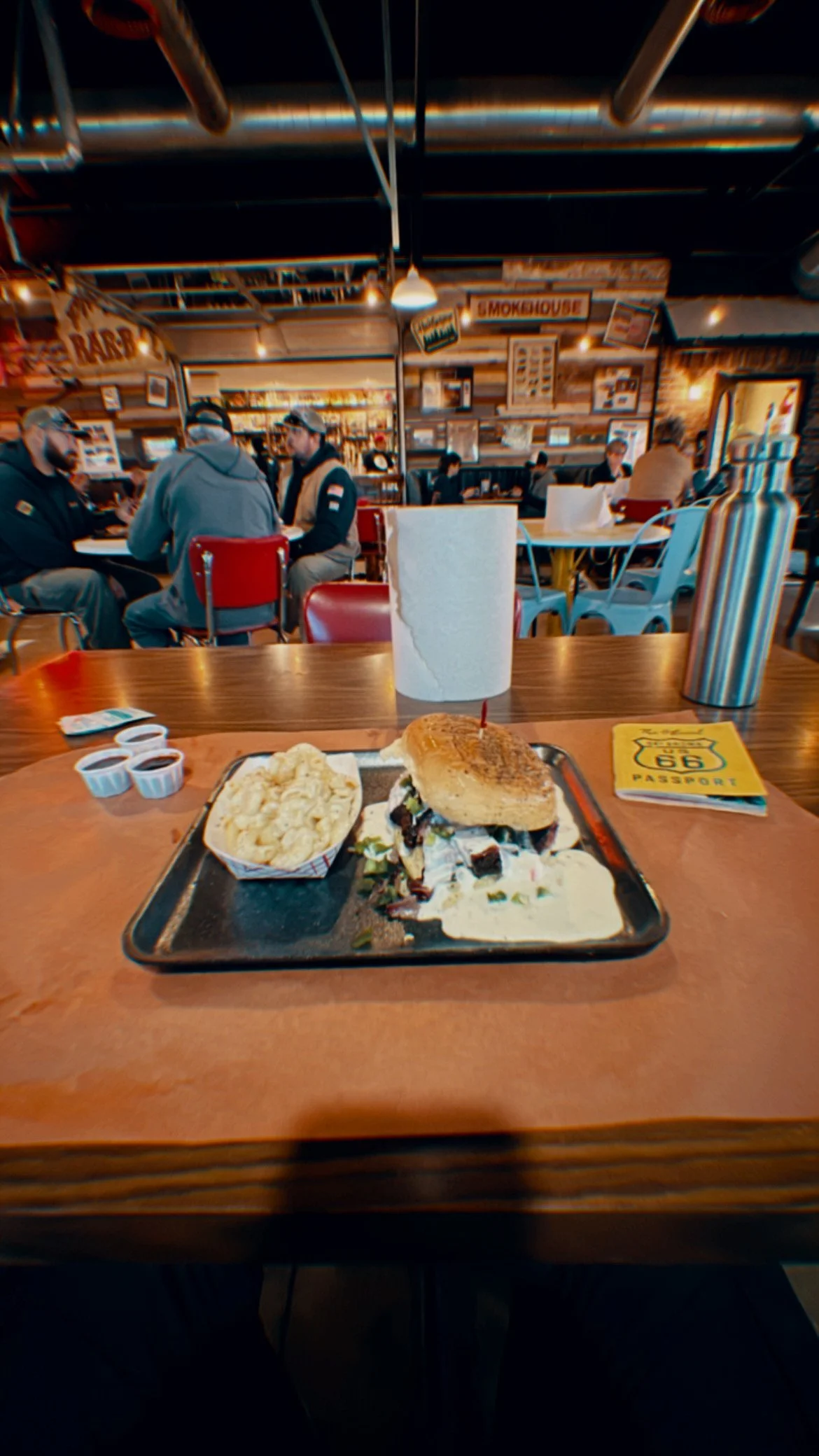
The Route 66 Passport program, created by the Oklahoma Tourism and Recreation Department, is a deceptively simple system designed to guide that kind of exploration. The bright yellow booklet highlights 66 official locations spanning from the eastern state line near Vinita to the western edge in Sayre, divided into regional sections across the state. At each stop, you collect a physical stamp to mark your visit. Once the booklet is complete, it can be verified at a Tourism Information Center in exchange for the final milestone of an exclusive Route 66 coin. On paper, the program reads like a statewide scavenger hunt. In practice, it becomes something much more intentional.
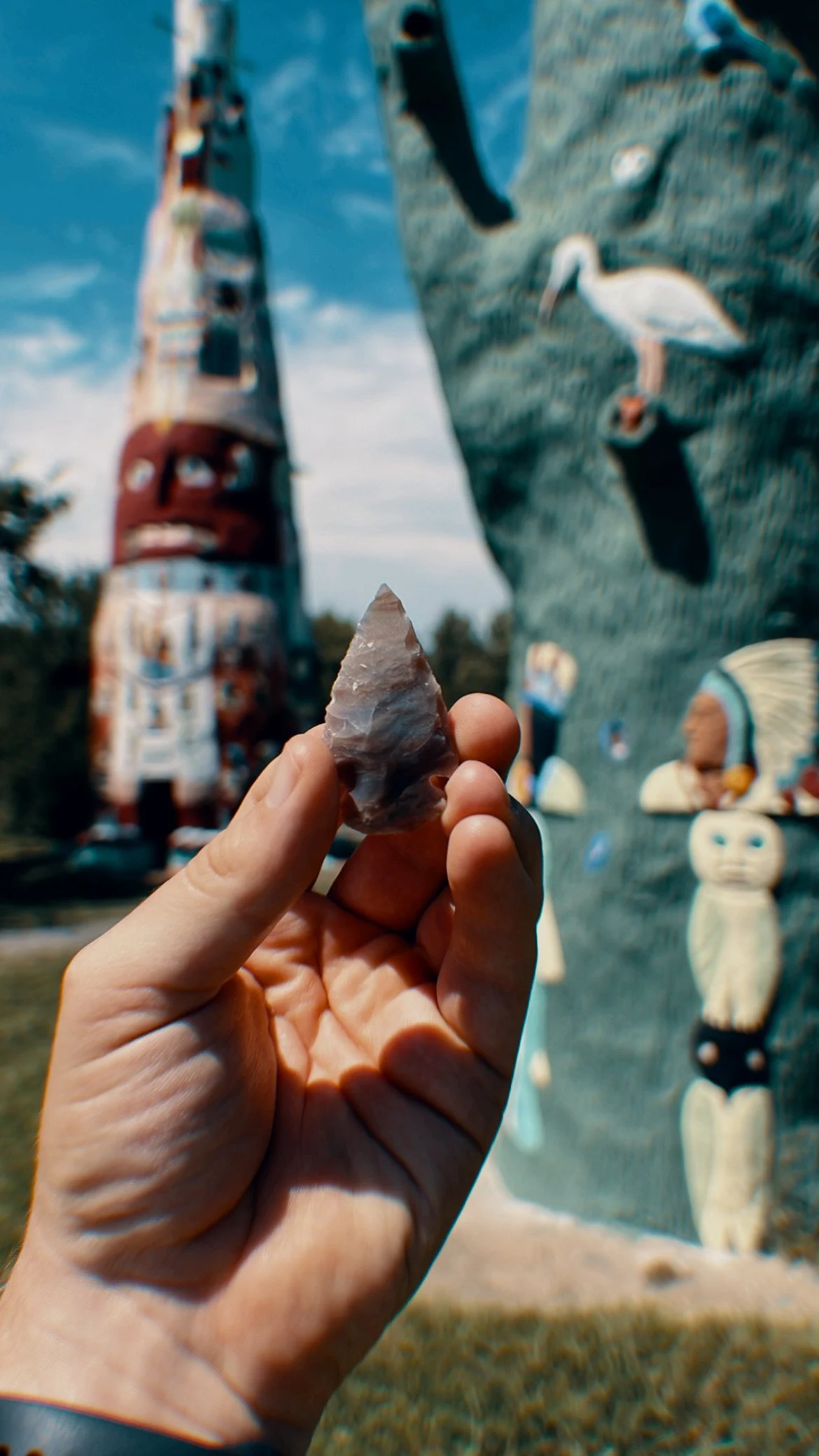
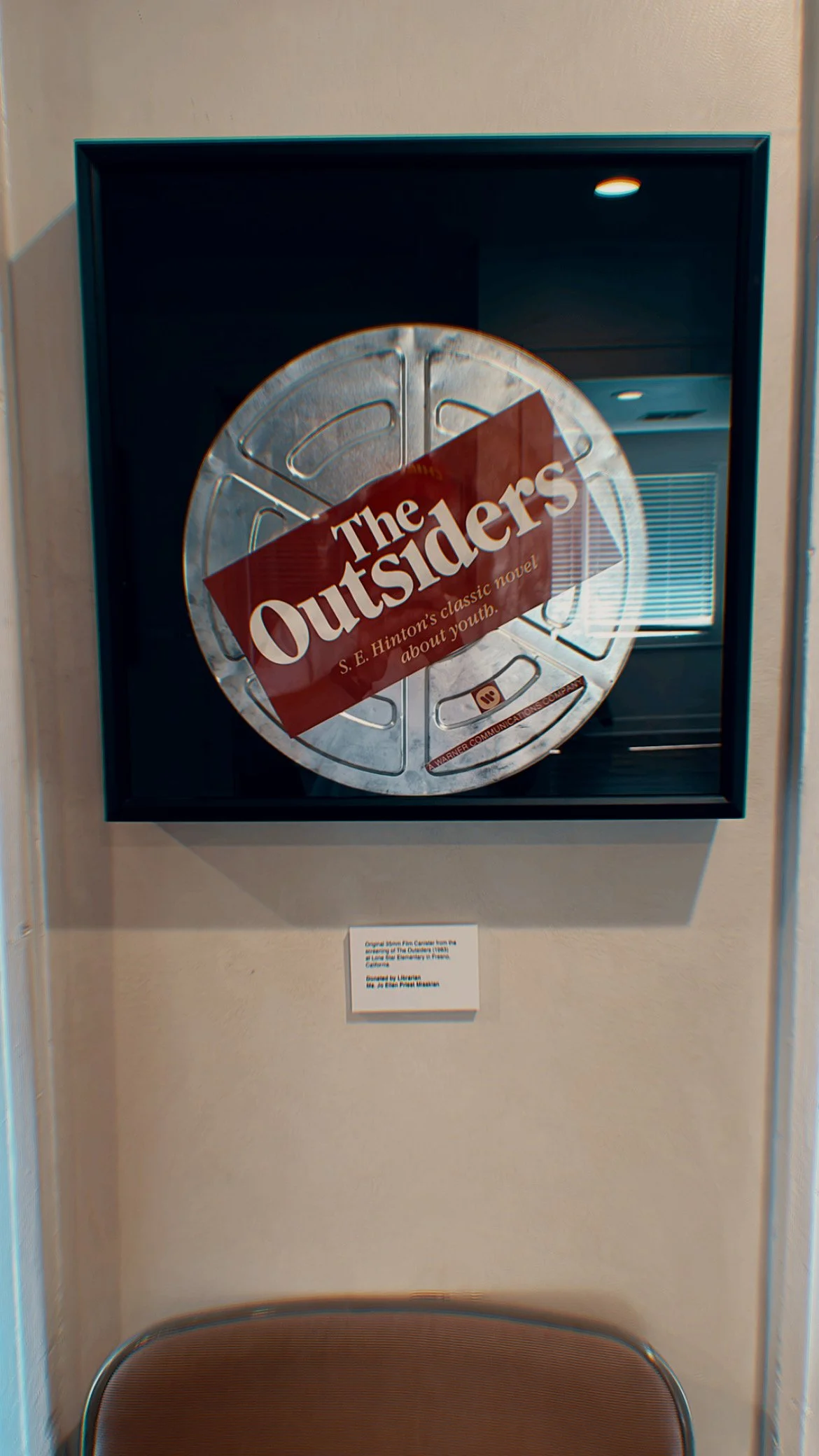
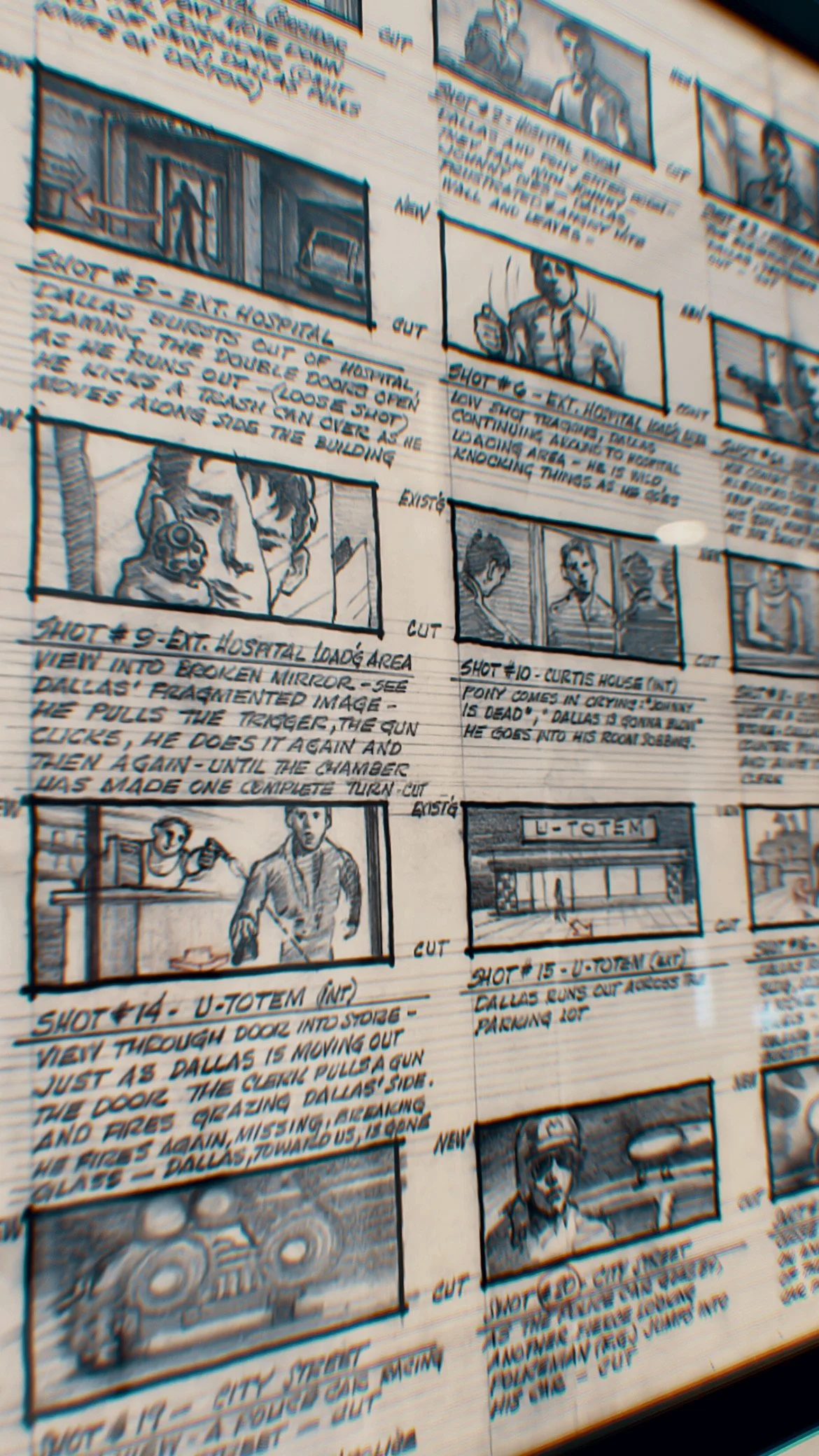
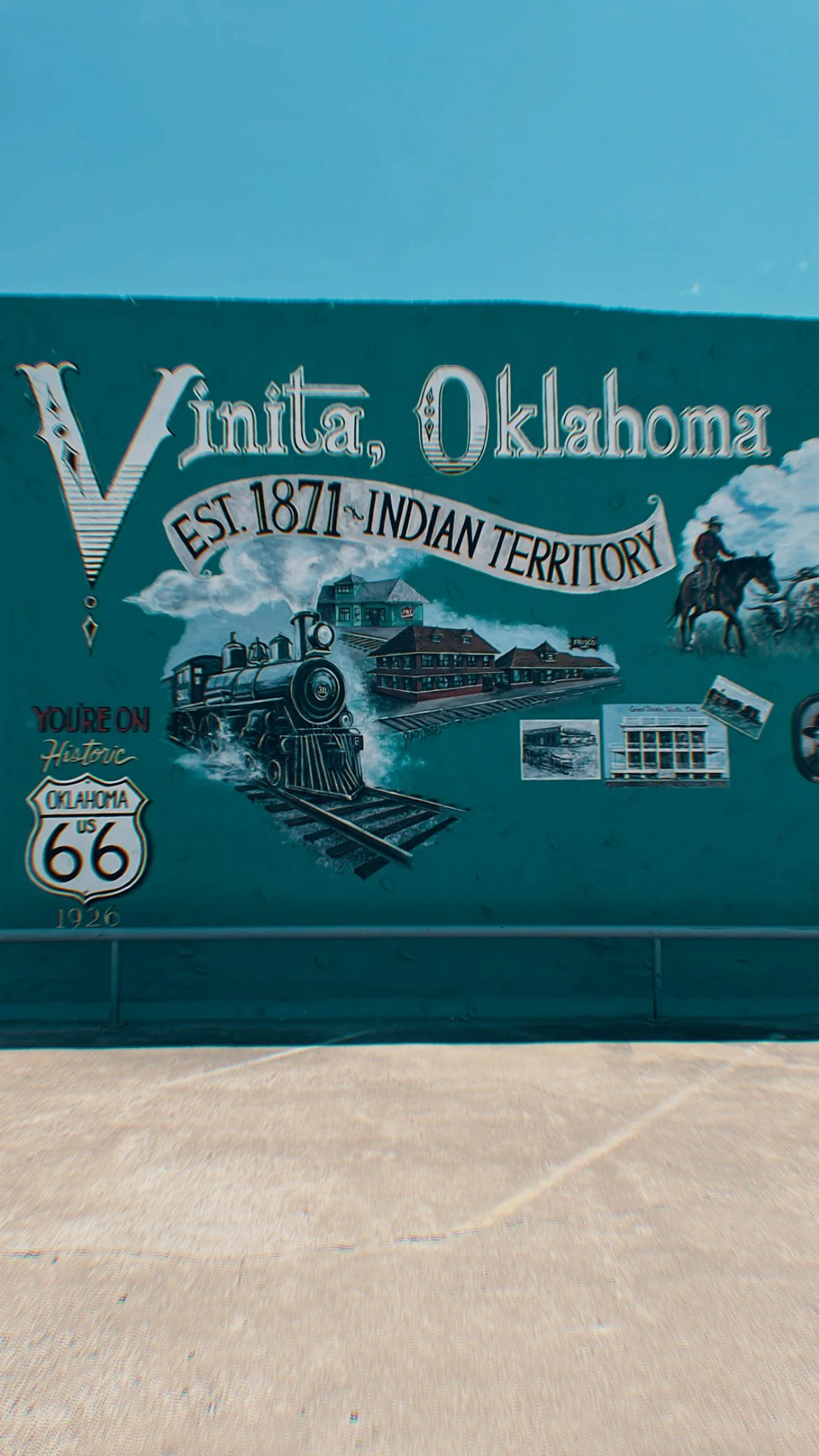
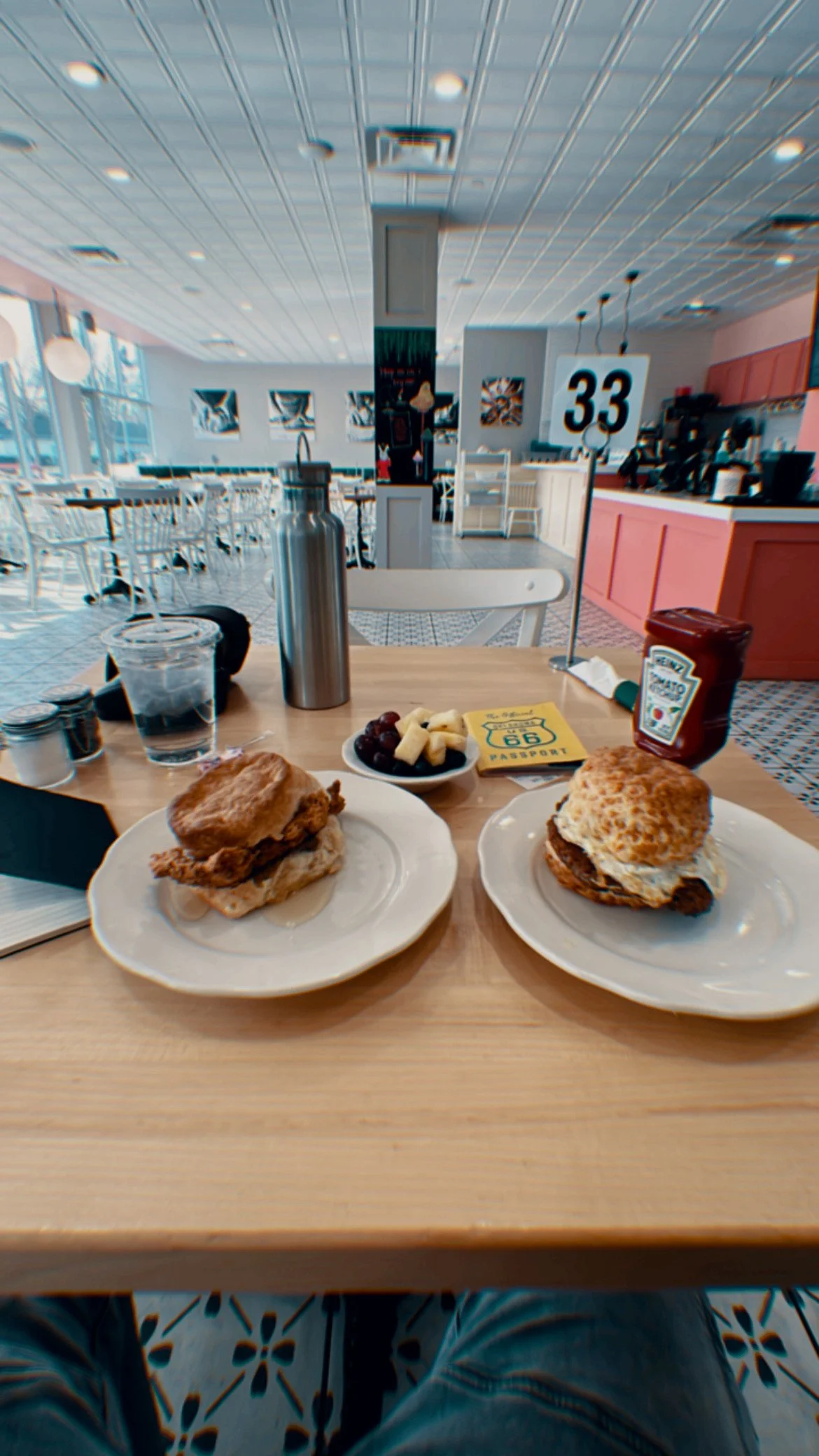
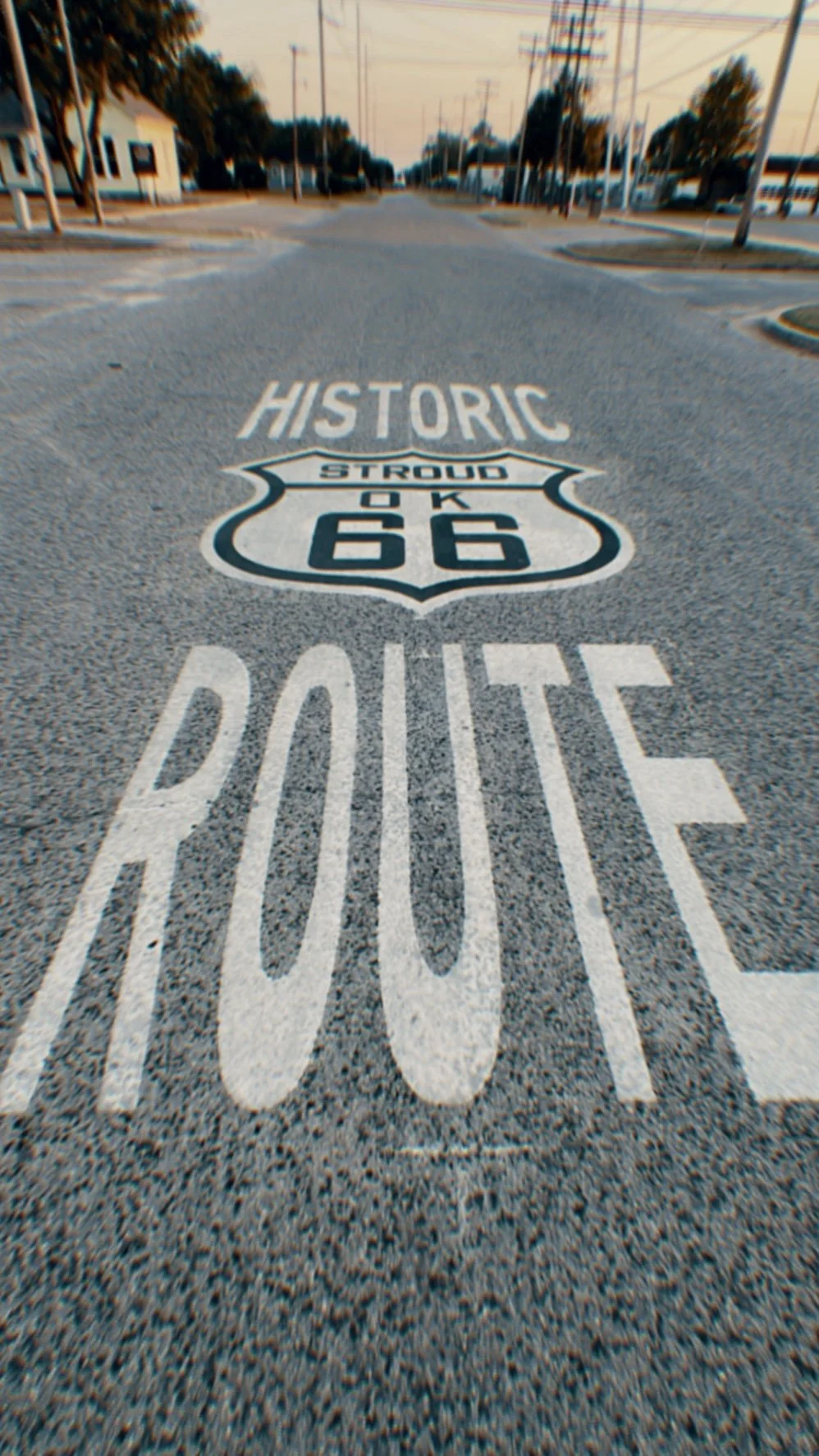
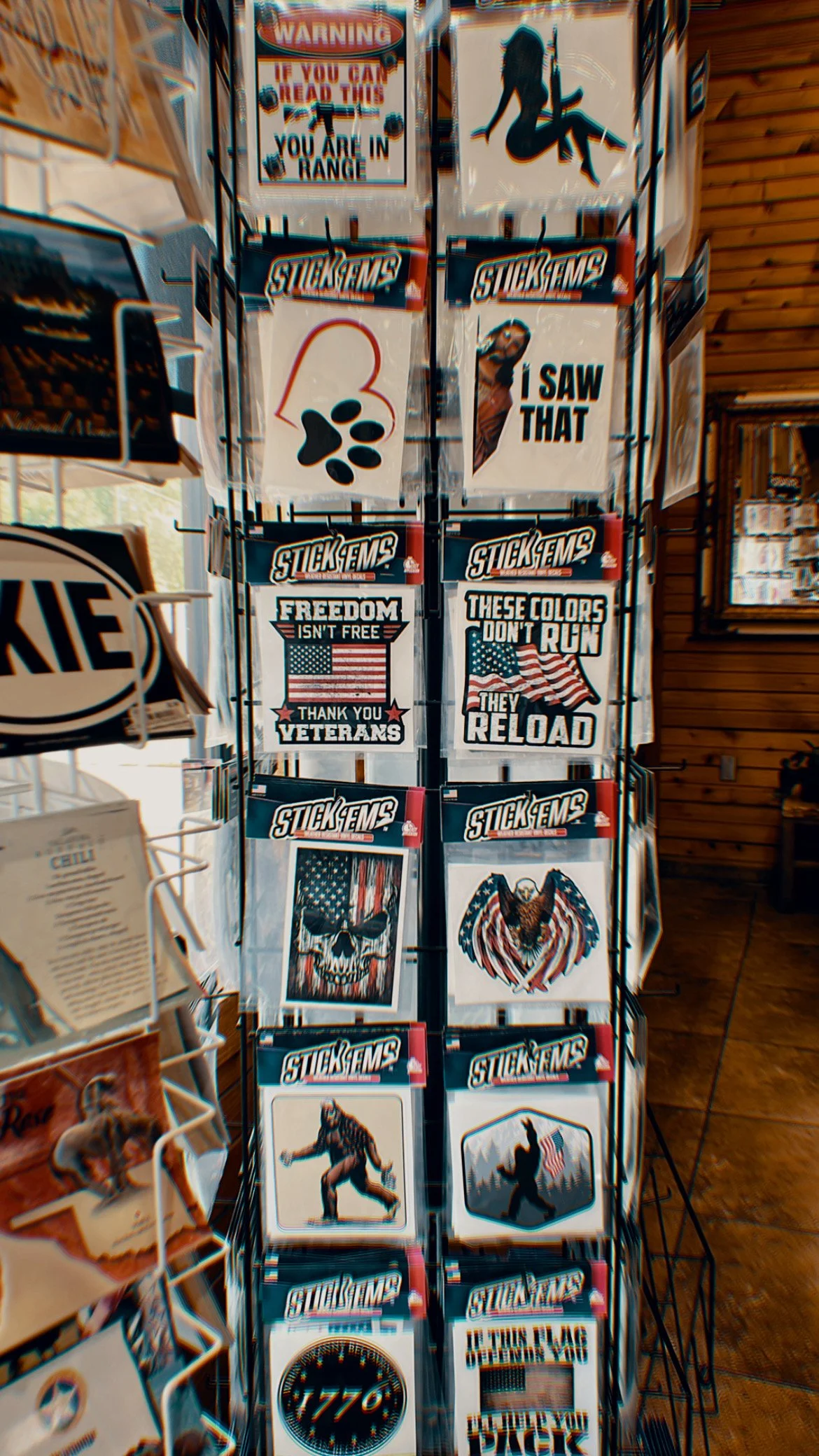
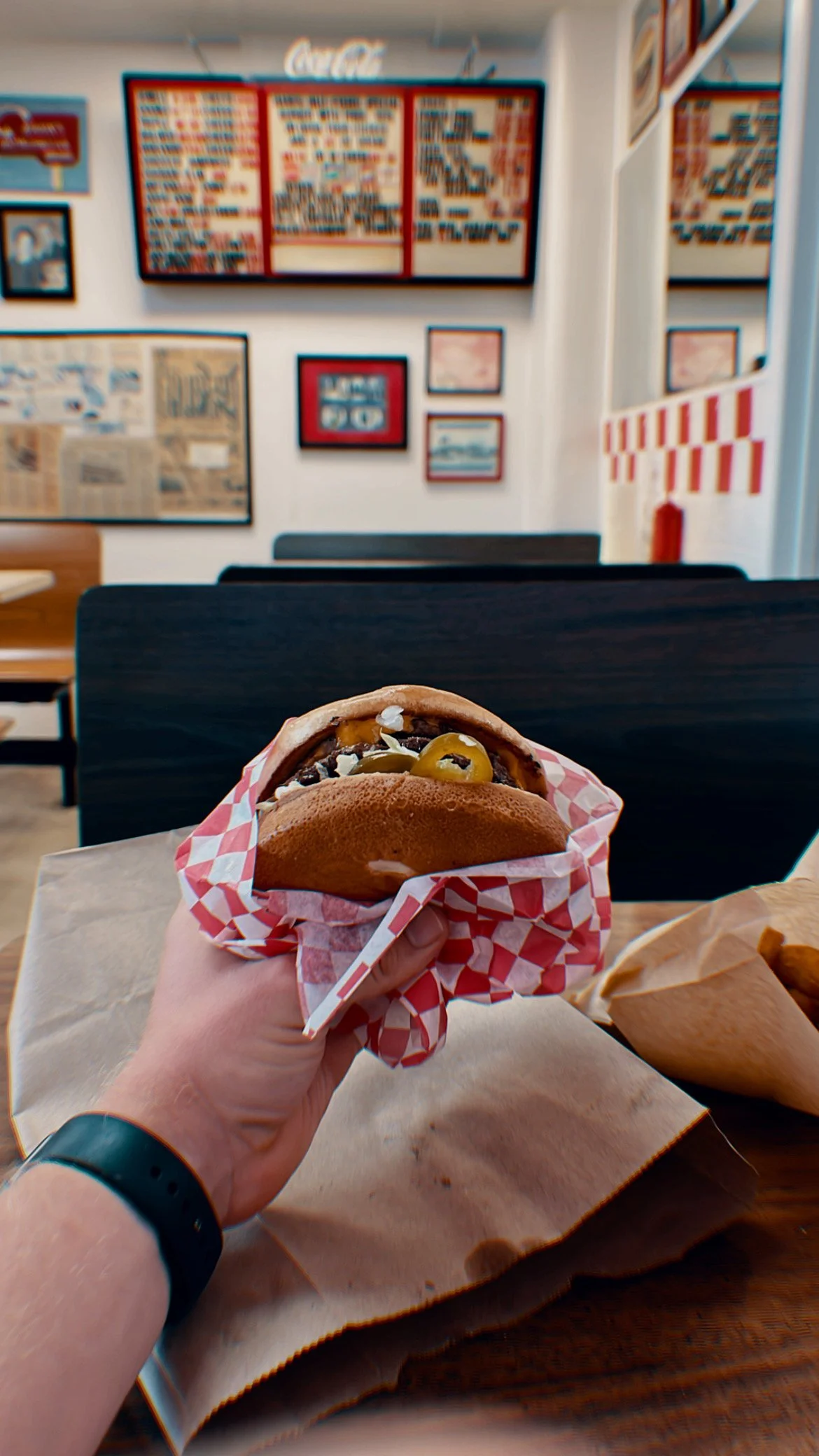
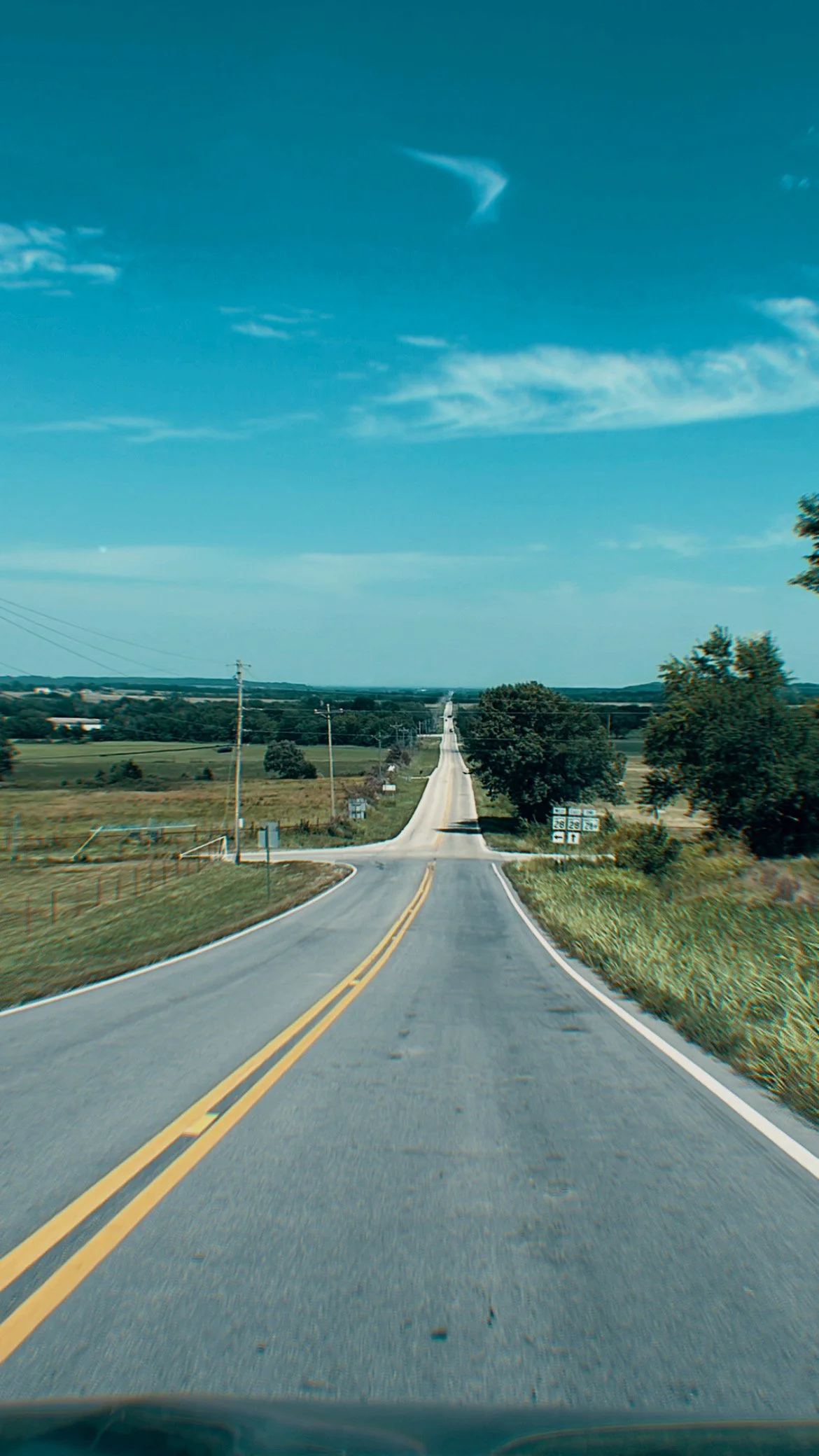
When I first picked up the passport, I thought of it as a Route 66 tour guide and a collection of mini-adventures for someone who had spent the past ten years catching flights instead of looking out his own front door. The Mother Road offers a wide range of experiences, from restaurants fueled by southern hospitality to local museums fighting to preserve history, to hidden gems that only reveal themselves when you step into often overlooked communities. There were stretches when taking an exit off the interstate felt like stepping back into a period not yet overtaken by technology or constant expansion. That slower way of life revealed a different rhythm to society, one rooted in generational storytelling extending from Santa Monica to Chicago.
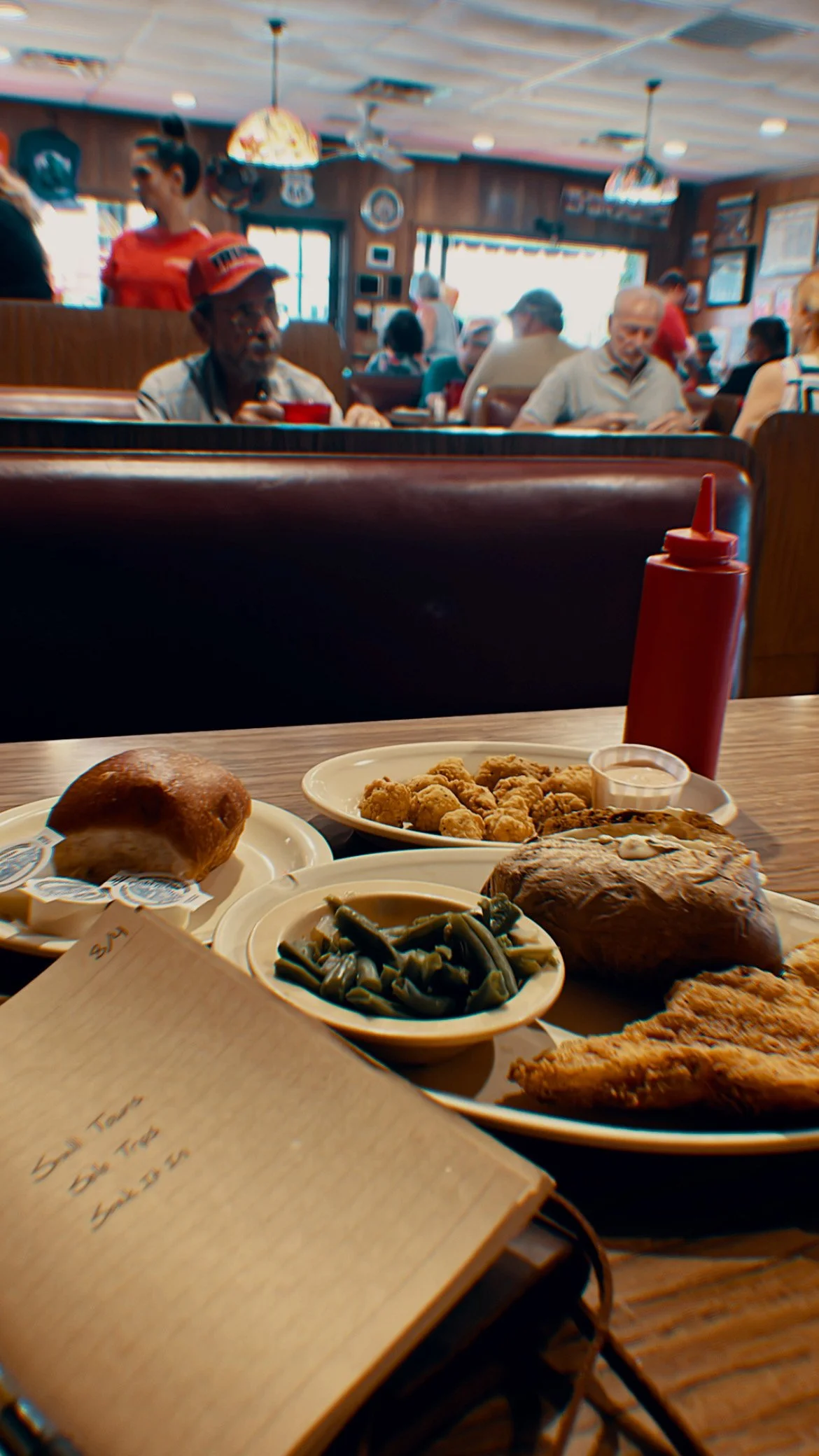
Many towns felt frozen in time, which became part of Route 66’s charm. One stop in particular, Dairy King in Commerce, stood out as the most overt example of that feeling. From the outside, the humble diner looked abandoned, but inside was a sweet elderly woman at a retro register directing foot traffic with quiet confidence. The handwritten menu featured burgers, shakes, and fries that never lacked in portion size, all rung up on an analog calculator and paid in cash. Parking was limited to just a few spaces, and locals knew their orders as intimately as they knew each other. I swear I even saw an elementary school-aged child barking instructions at the grill like a glimpse into a simpler time of lax labor laws. The food was great, but the observation was what stayed with me.
Boomeranging back to my home in Tulsa, many of the early stamps could be collected in a single afternoon with time to return before dark. As those nearby destinations chipped away, more intention was required to plan around extended drives and the peculiar hours of mom-and-pop shops along the route. There were more than a few instances where businesses closed early due to volunteer schedules or sold out of inventory. Some locations became logistical puzzles, requiring timing, patience, and a bit of luck.
Batching stops became part of the rhythm. A solo trip might include a museum, a lunch spot, and a small souvenir shop, all carefully mapped out to allow enough time to fully absorb each place. I was not interested in performatively collecting a stamp and leaving without contributing to the space I had just entered. I ate the meals. I walked the full exhibits. I talked with owners and locals to better understand the communities around me. Over time, it became clear that a successful itinerary was not defined by how many hollow stamps I collected, but by how many full moments I actually lived.
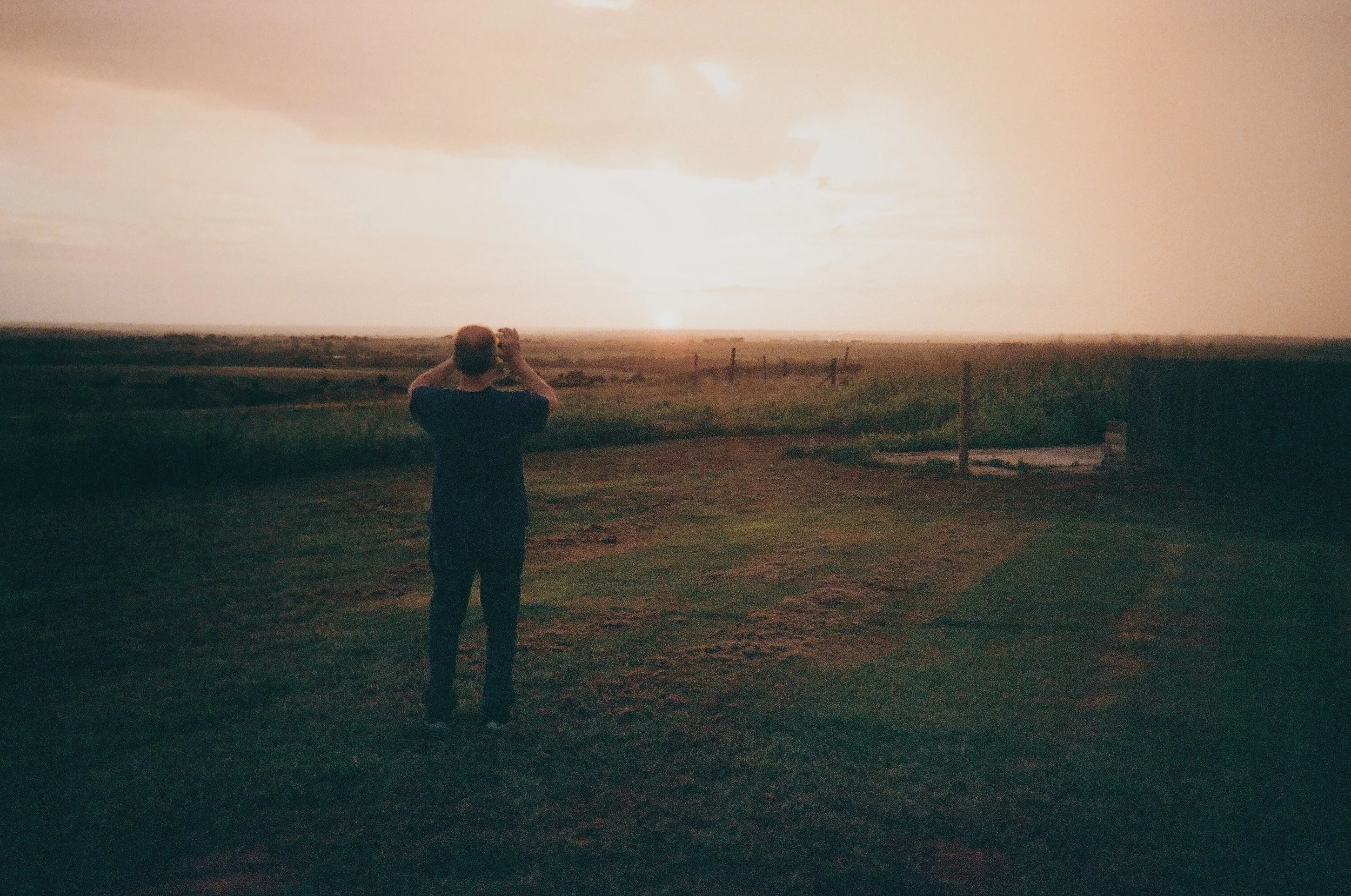
There were only a handful of trips where I brought guests along with me, but those instances carried a different kind of weight. Sharing the experience with someone I cared about added a new layer of meaning. While the journey often benefited from solo movement, those shared trips stand out as some of the most remarkable.
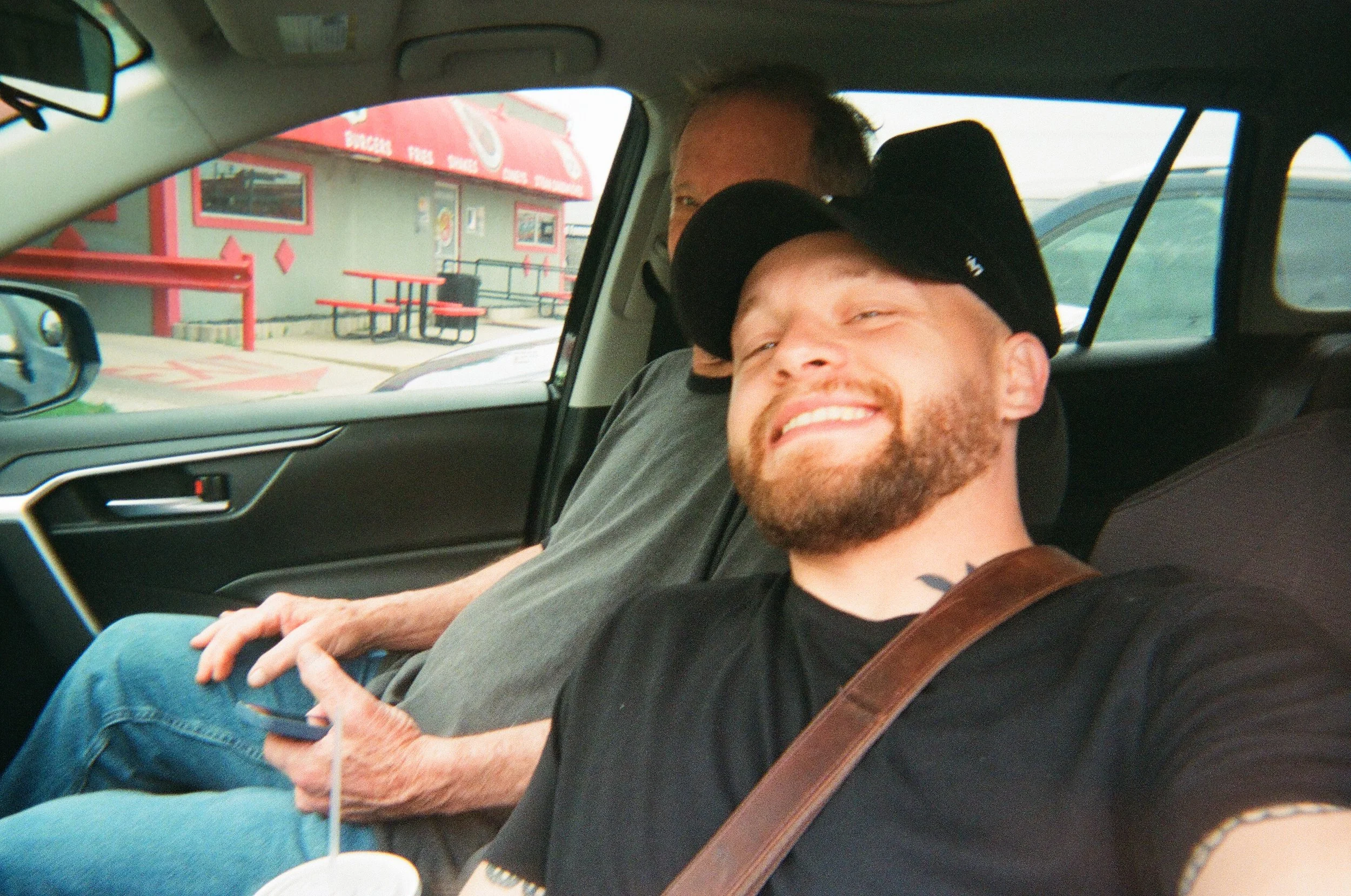
The trek to Clinton, Oklahoma with my dad as my copilot stands out as an intentional attempt to make up for lost time. We had lived in different states for most of my childhood, and the annual crossovers were usually anchored by quick excursions, like the Bahamas, Chicago, and Kansas City. My long drives provided time to think about how I missed those days and how I still recognized myself as a kid craving memories with him. The difference now was that I was in the driver’s seat, literally.
With some planning and a bit of coordination, my dad flew in from Philadelphia for a dedicated boys trip down the Mother Road. Similar to the highway system itself, there was an implicit goal: Connect. He understood that these side quests of mine had grown in meaning, and I recognized that his stage of life gave us an opportunity to meet in the middle. So we set our sights on western Oklahoma with a mix of planned stops and spontaneous detours. The road itself became the experience, a catalyst for conversations that had been waiting for the right chance. We covered ground together, collecting thirteen stamps across places like Red Rock Canyon, Stafford Air and Space Museum, and Café Clinton. It was special to watch him engage with local staff and rural artifacts, each one an authentic echo of his past that helped me see it more clearly.
One moment in particular defined that trip. Just outside of our planned route, we came across a seemingly nondescript steakhouse called White Dog Hill. The limited food options surrounding us paired with the restaurant’s prime location made this a worthy gamble off the beaten path. Knowing my dad’s lifelong affinity for red meat, I risked to reward ourselves with some spontaneity atop the Oklahoma rolling hills. It turned into one of the most memorable meals we have ever shared. As the sun set across a wide, uninterrupted horizon, we found ourselves in a rare kind of stillness. No distractions. No urgency. Just space. In that space, we talked about things we had never fully unpacked. My childhood, his childhood, and the ways our relationship had shaped both of us. Somewhere between the first bite and the last light of day, it became clear what was happening. I was re-meeting my family in the same way I was re-meeting my home, one drive at a time.
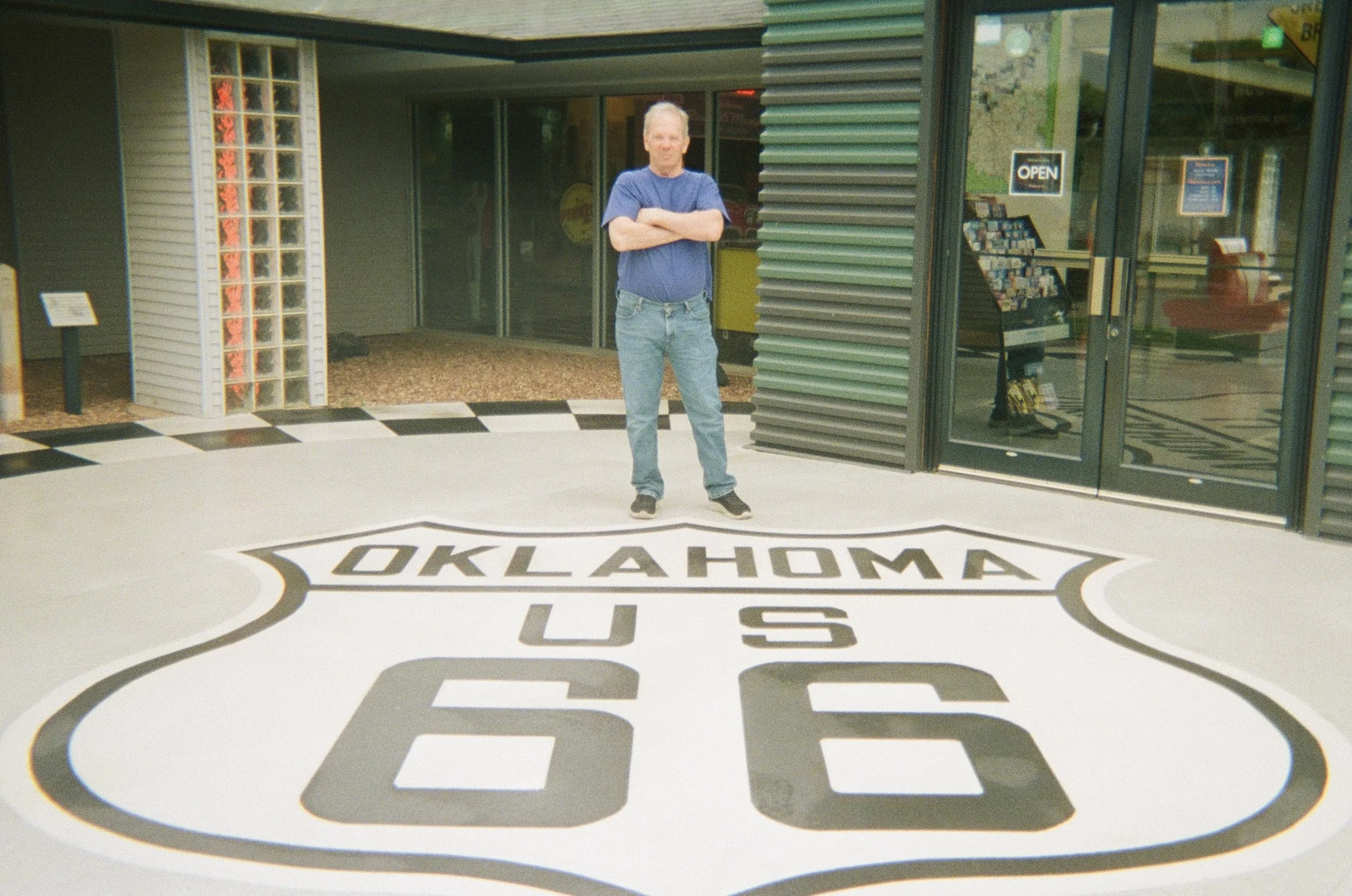
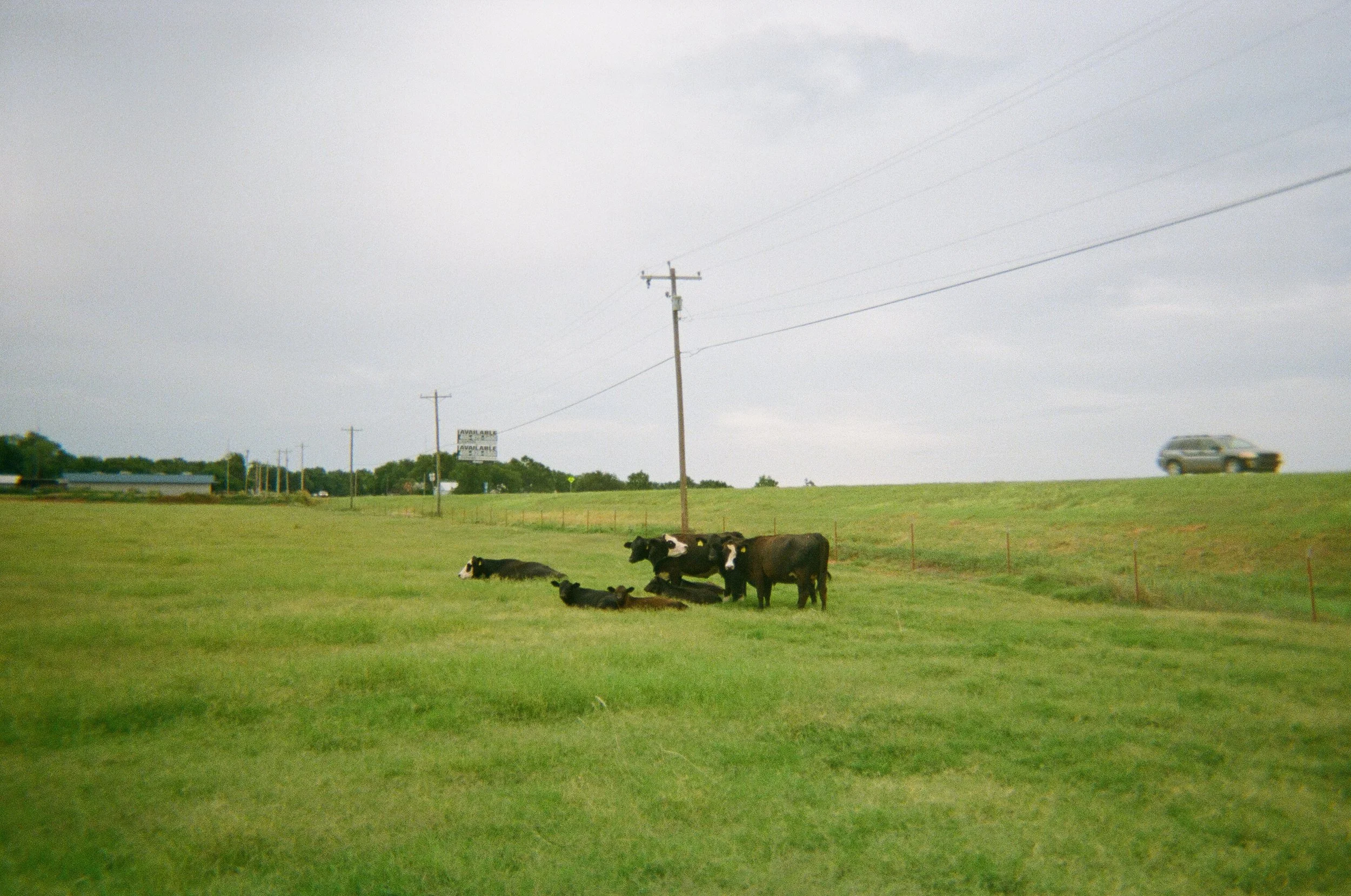
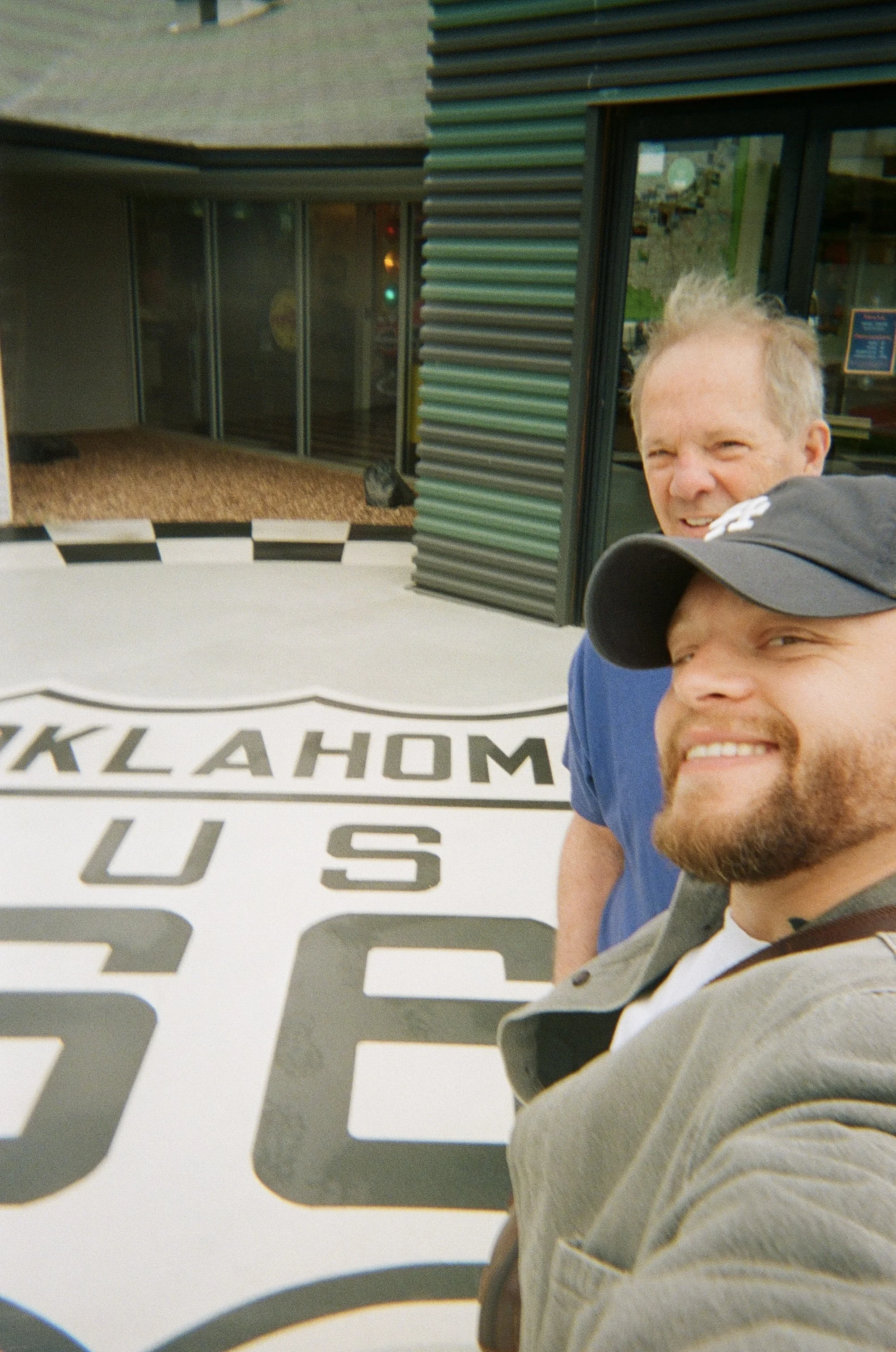
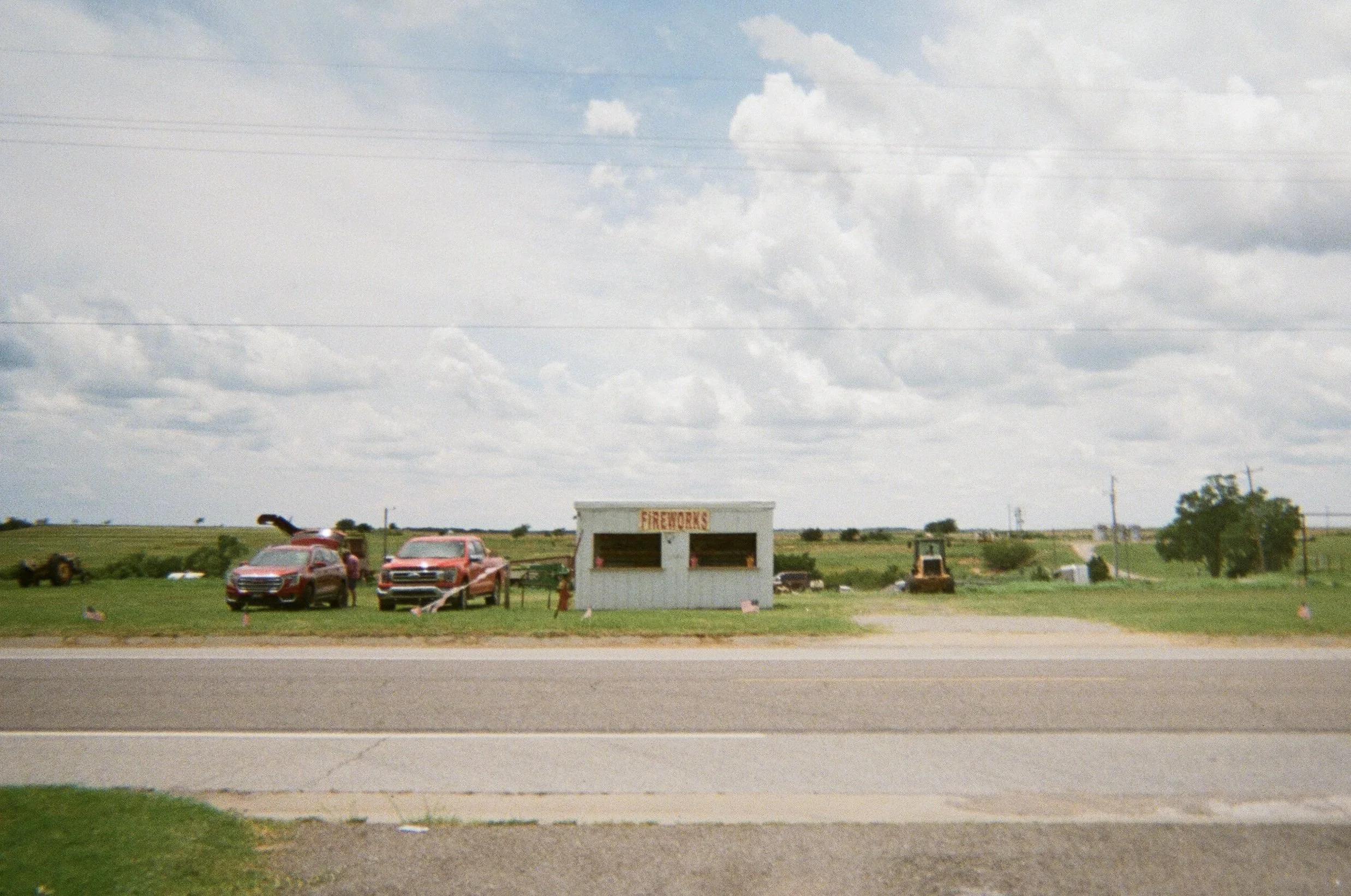
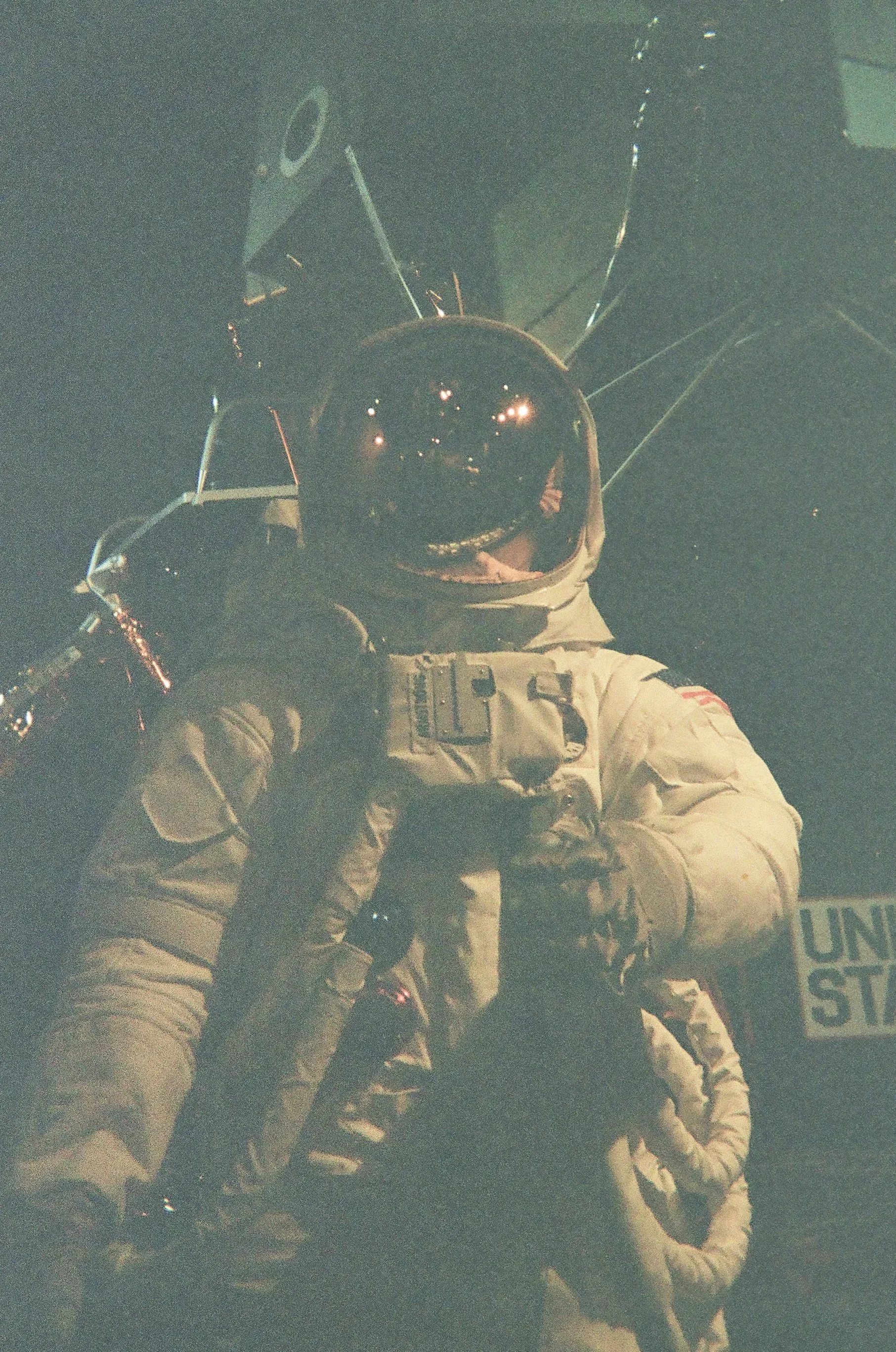
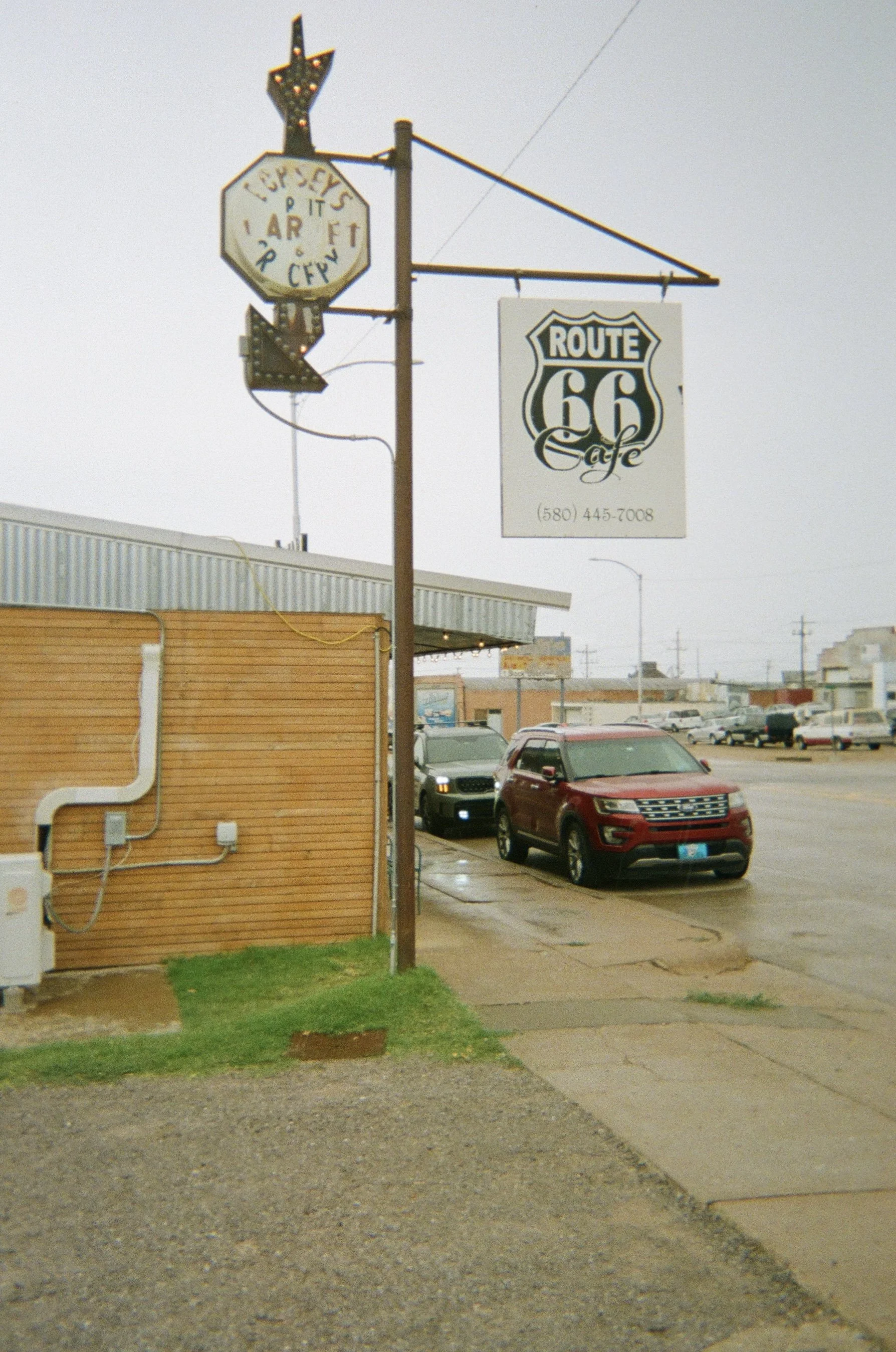
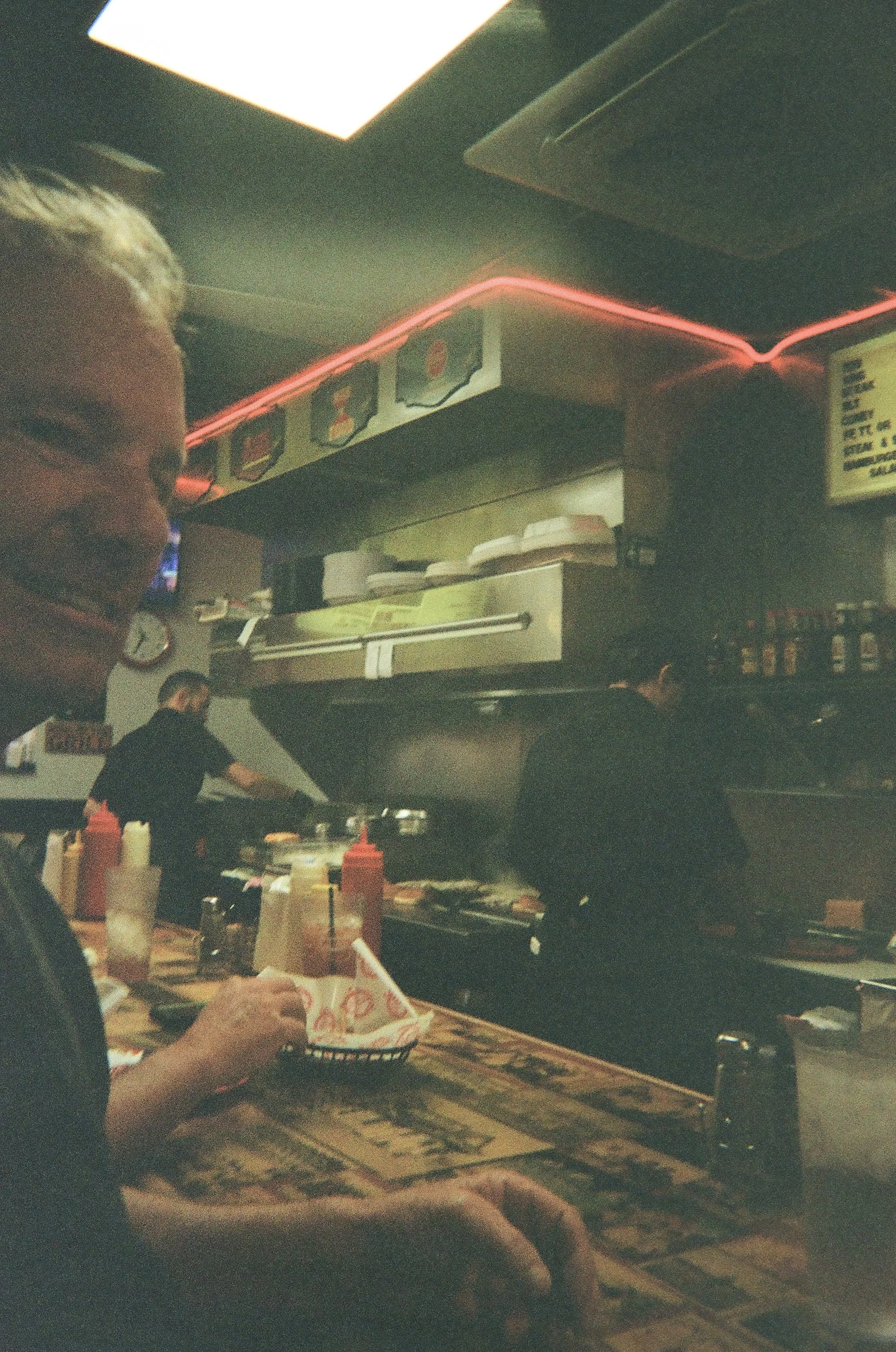
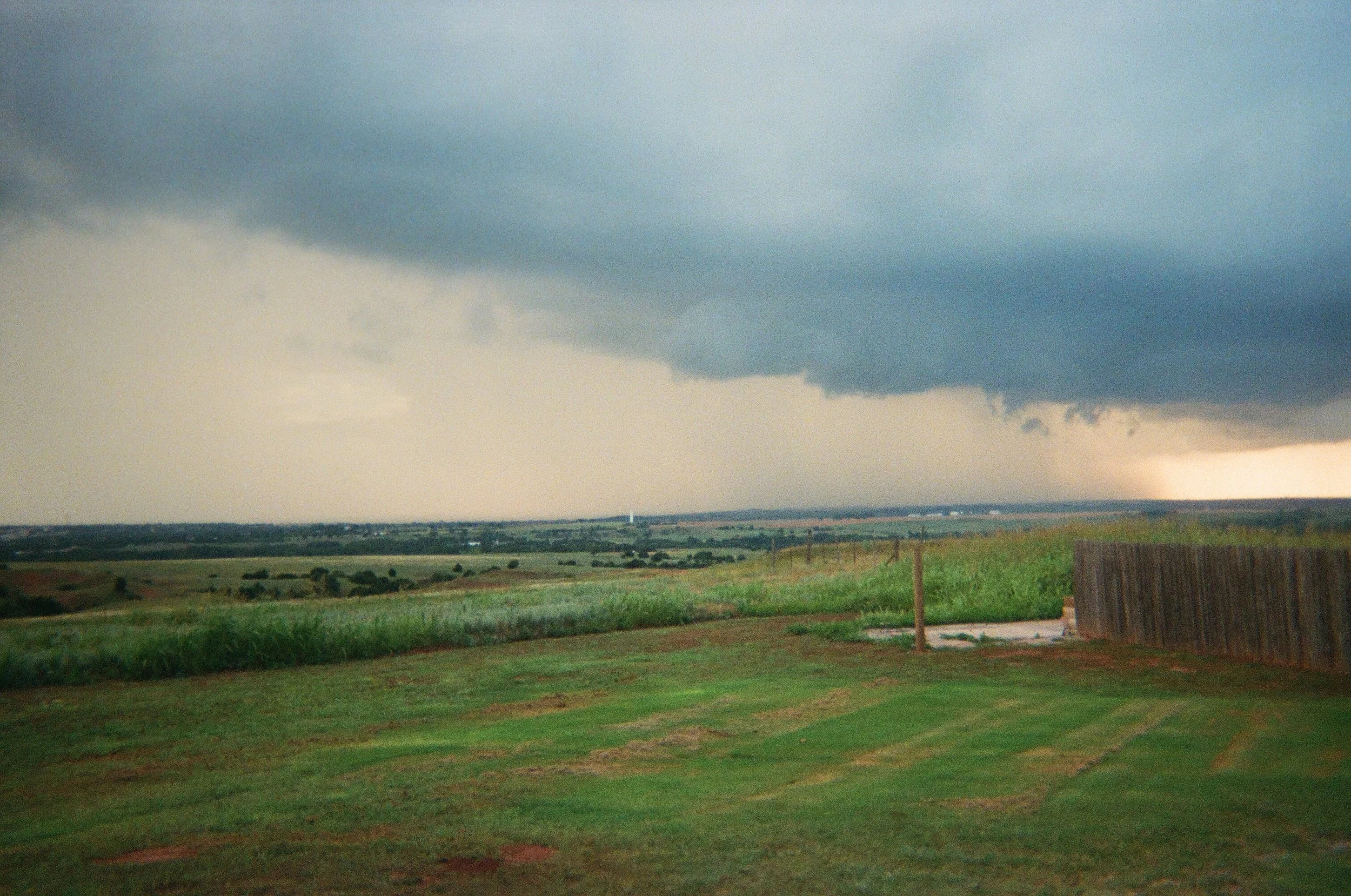
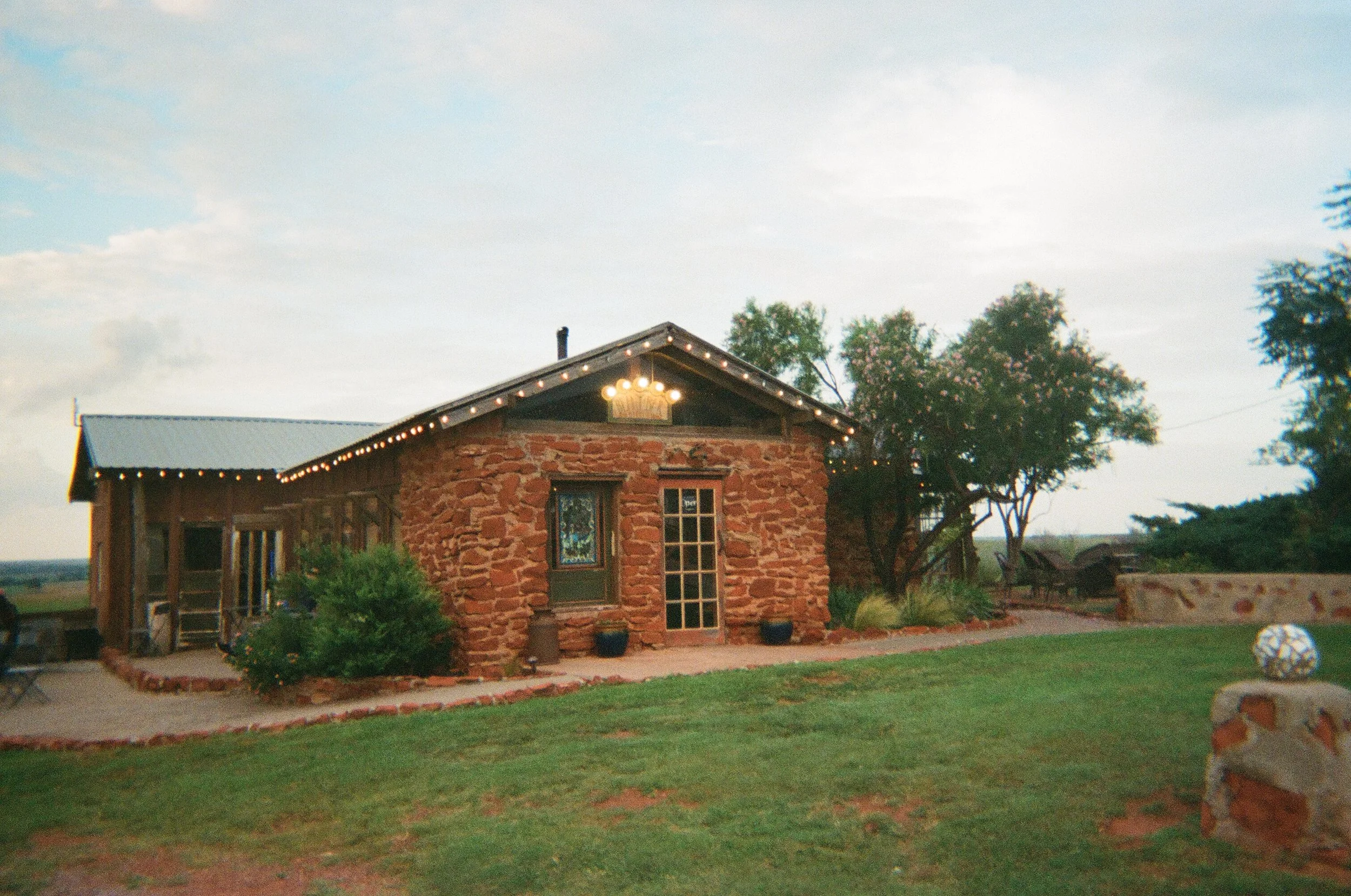
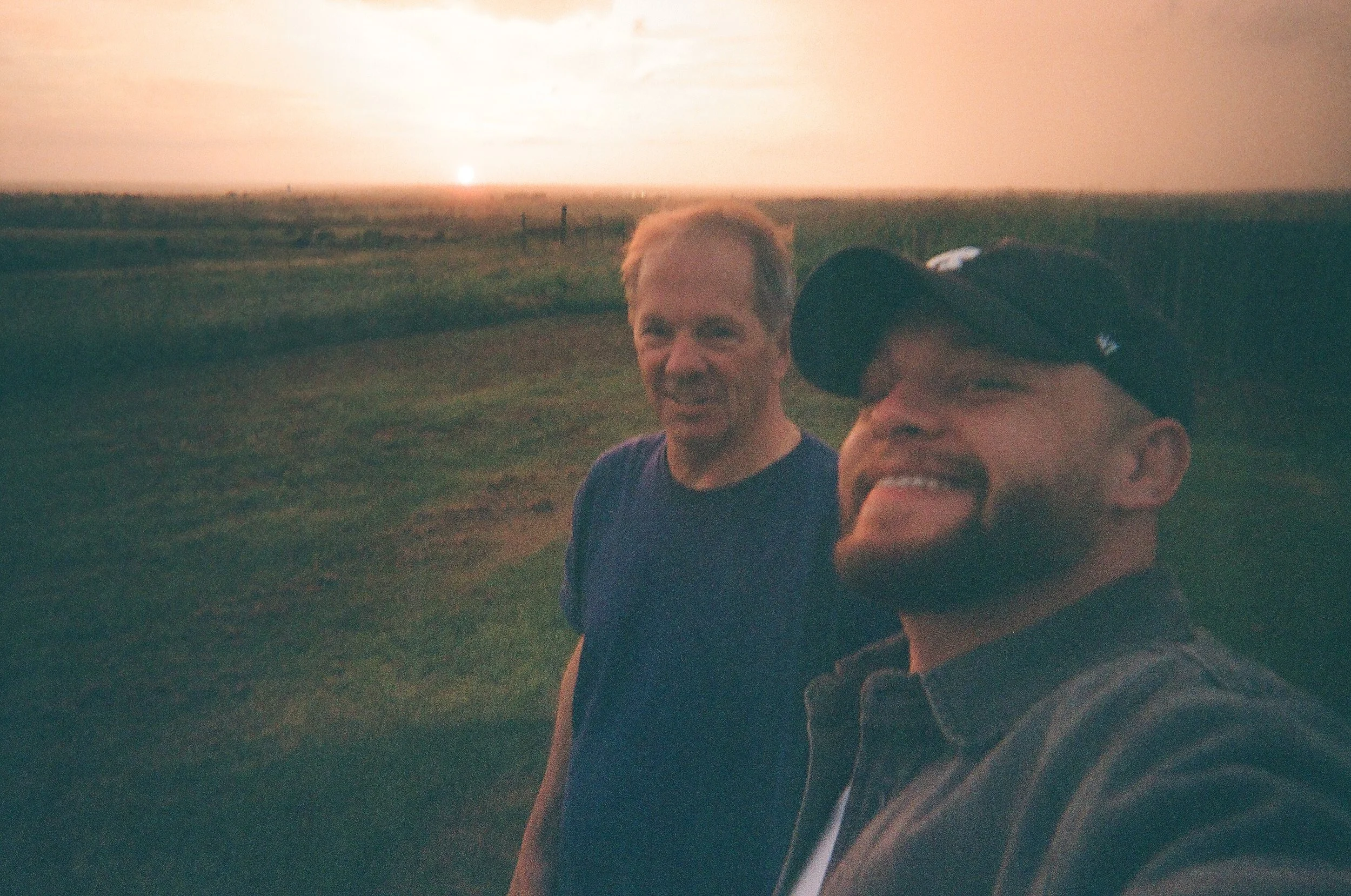
It took years of cumulative trips along Route 66 to fully understand the mission. The quiet time behind the wheel became a form of ongoing dialogue with myself, a space to process what needed to be felt between each stop.
The stamps gave my logical brain something tangible to track. They became a visible measure of progress, a way to see how far I had come in my personal pursuit. What started as a simple tourist campaign evolved to reinforce the value of consistency and intention over time.
Commitment to the course never felt like a chore. If anything, it became something I looked forward to. There was always another stop to experience, another story waiting just off the highway. At some point, I found myself wondering what I would do with that space once all sixty-six stamps were finally collected.
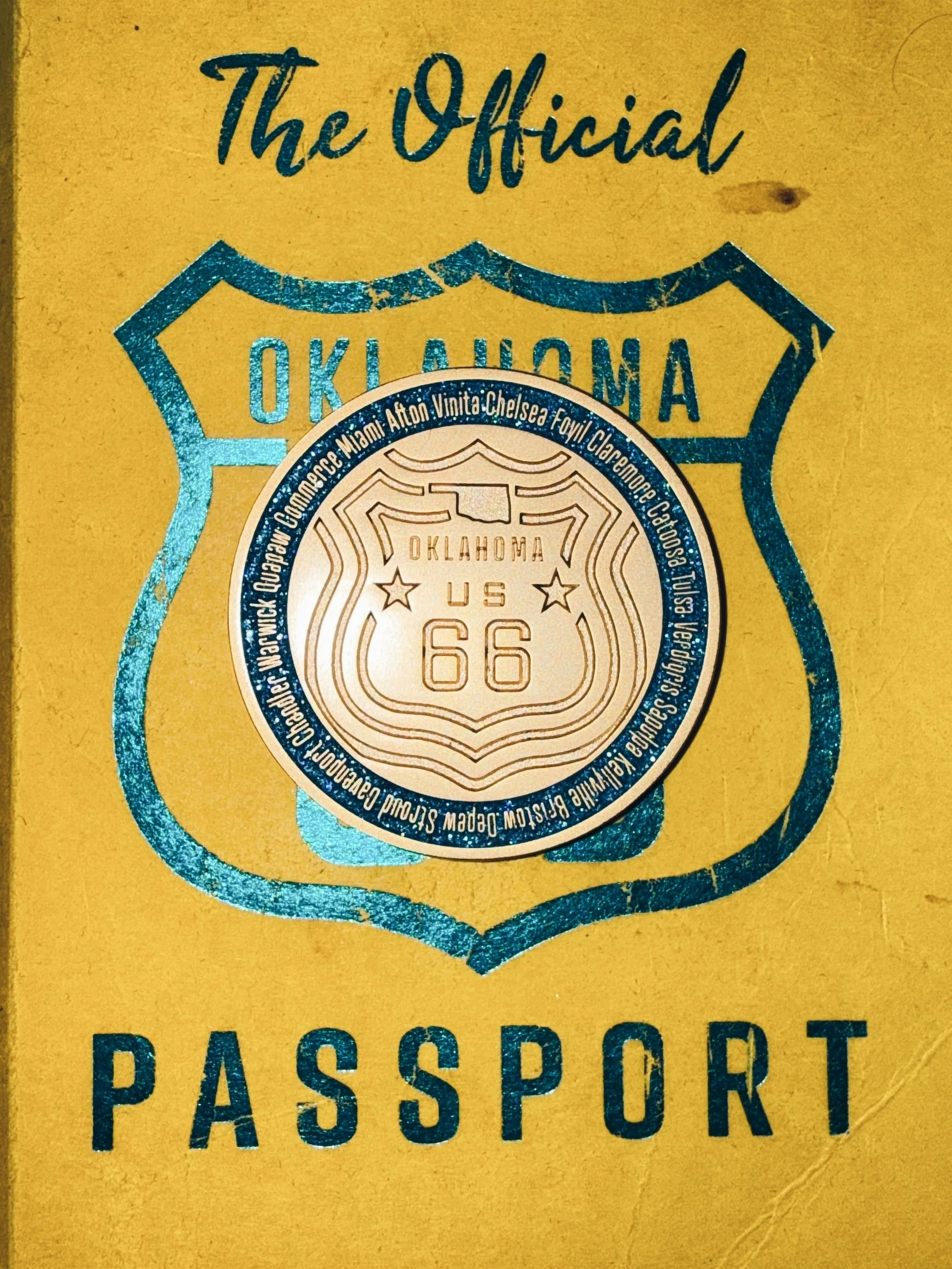
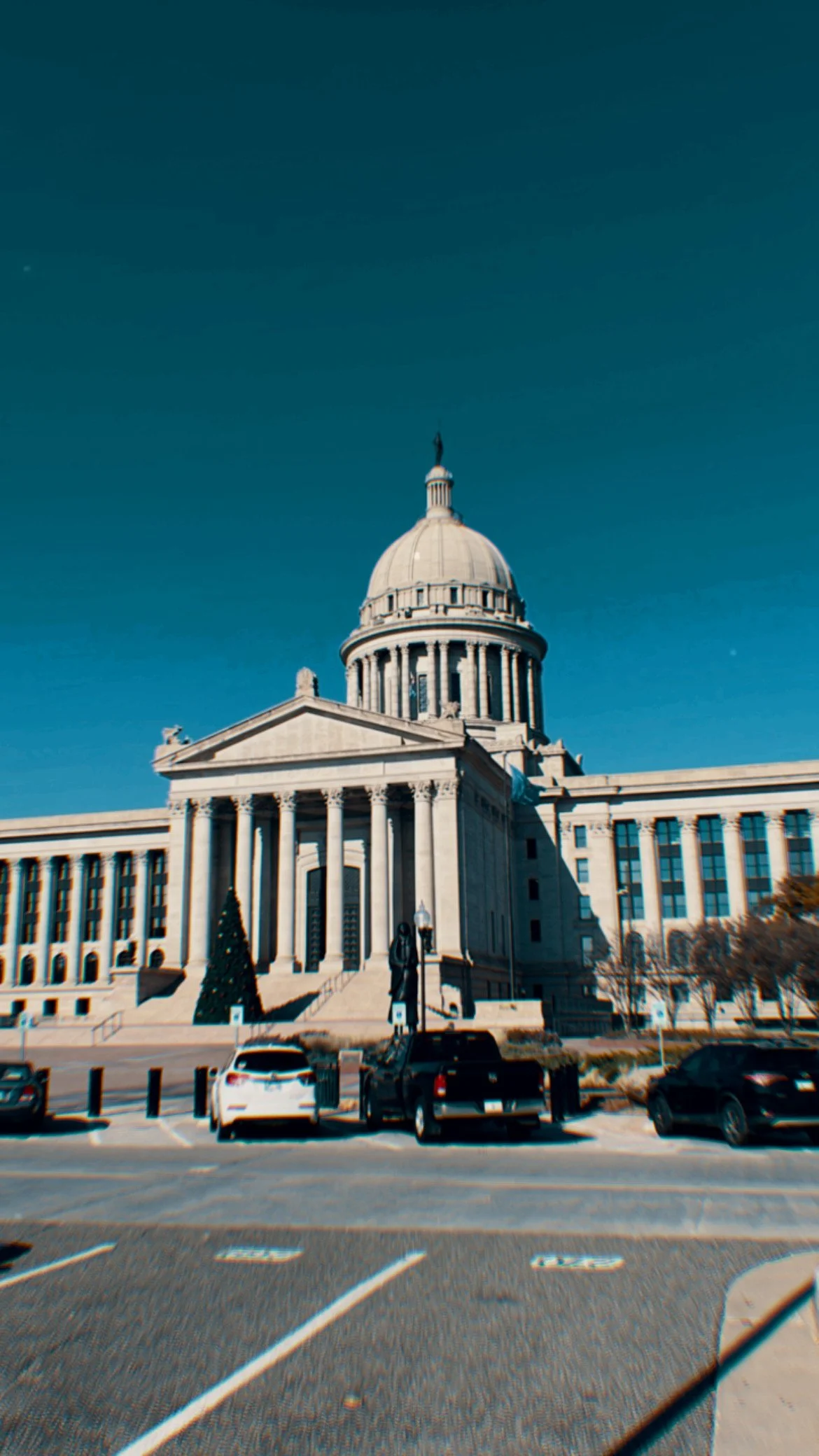
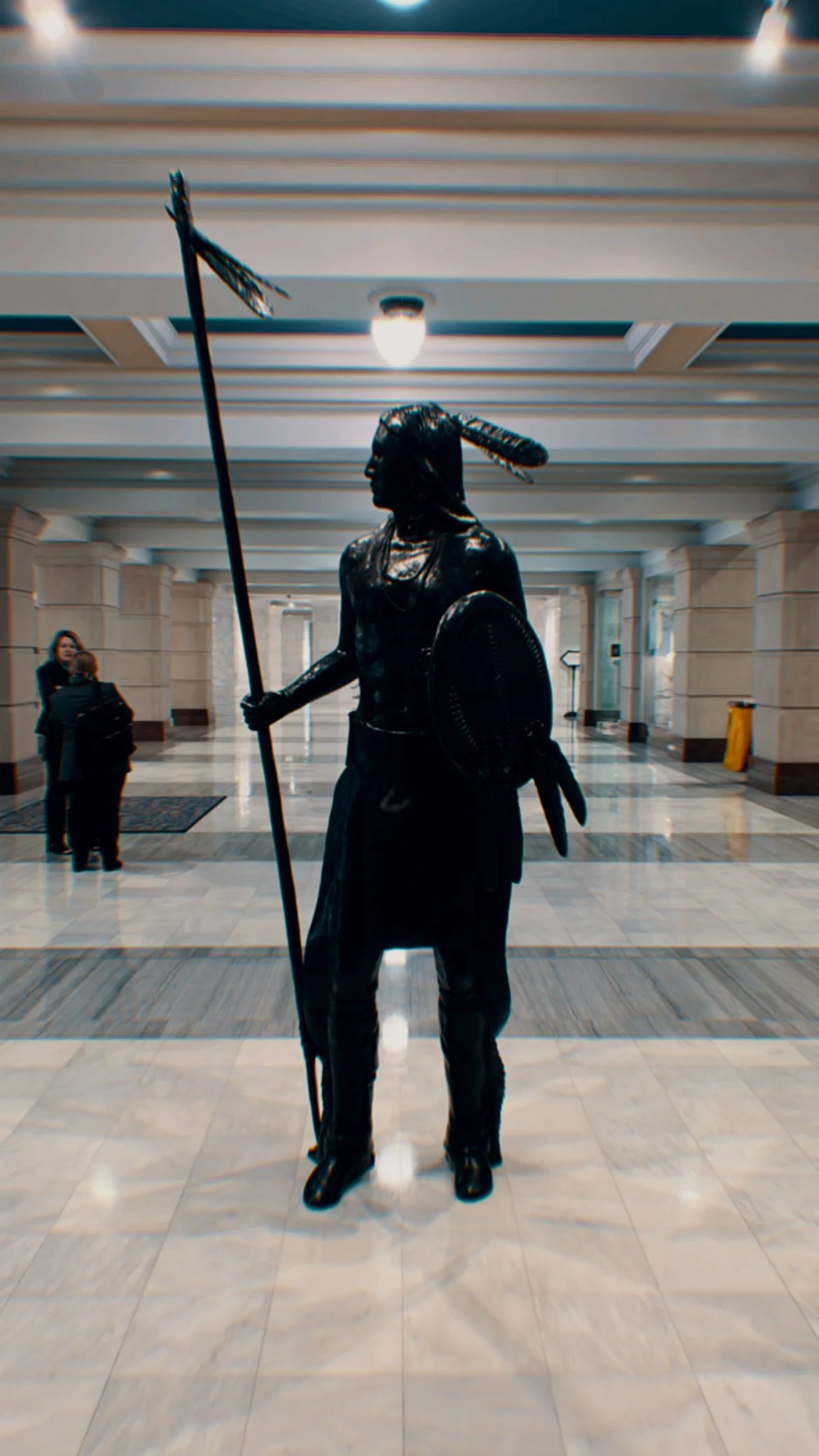
Officially completing the distressed yellow booklet was, unsurprisingly, anticlimactic. I walked into the Oklahoma State Capitol knowing I had done exactly what was required. At that point, the coin felt like a formality, a token of success.
The woman working the gift shop took her time reviewing each page, moving with a level of care I appreciated. She did not rush the procedure or hand over a participation award without verifying the work behind it. She scrutinized each stamp as I silently watched my memories being reviewed. When the back cover closed, she brought out a pseudo-treasure trove of identical Route 66 coins to pick from, letting me choose one as if it were any other souvenir.
She mentioned that completing the full passport was rare. Many people used it as a guide, but far fewer followed through from start to finish and came back to certify it. That comment landed more than I expected. Not because of the rarity, but because it reinforced what the process had required all along. Intention.
That conversation felt like a bonus.
I stalled the subject for as long as possible because I knew that once I left the Capitol, the journey was complete, and honestly, I did not want it to end. The feeling was familiar, like the final sign out of a military base or the last walk across a college campus. The work had already been done. The passion was in the pursuit, not the prize. I went into the closing pages knowing that I had already received the feelings I was hoping for. The golden coin now got to represent that it happened.
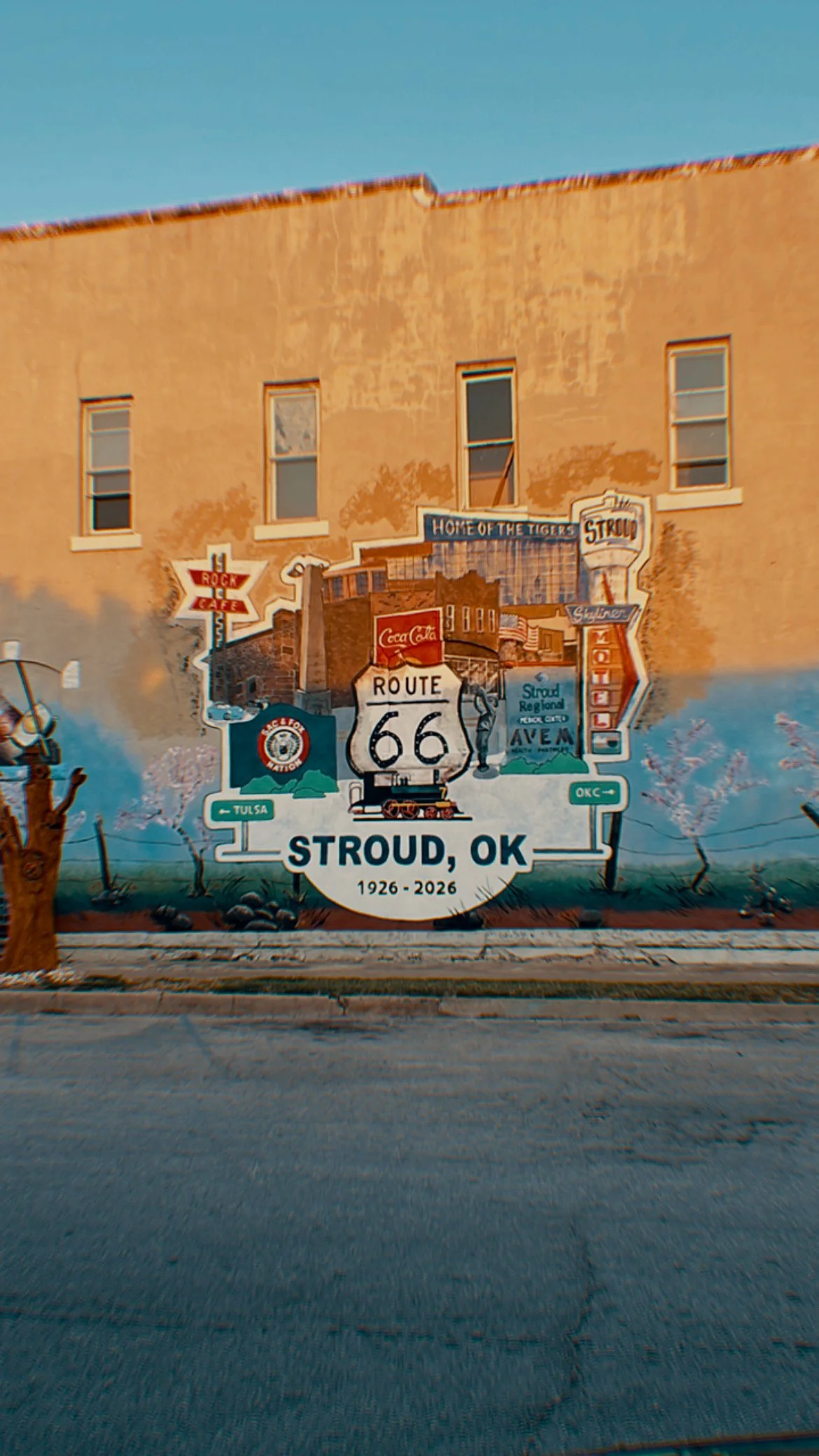
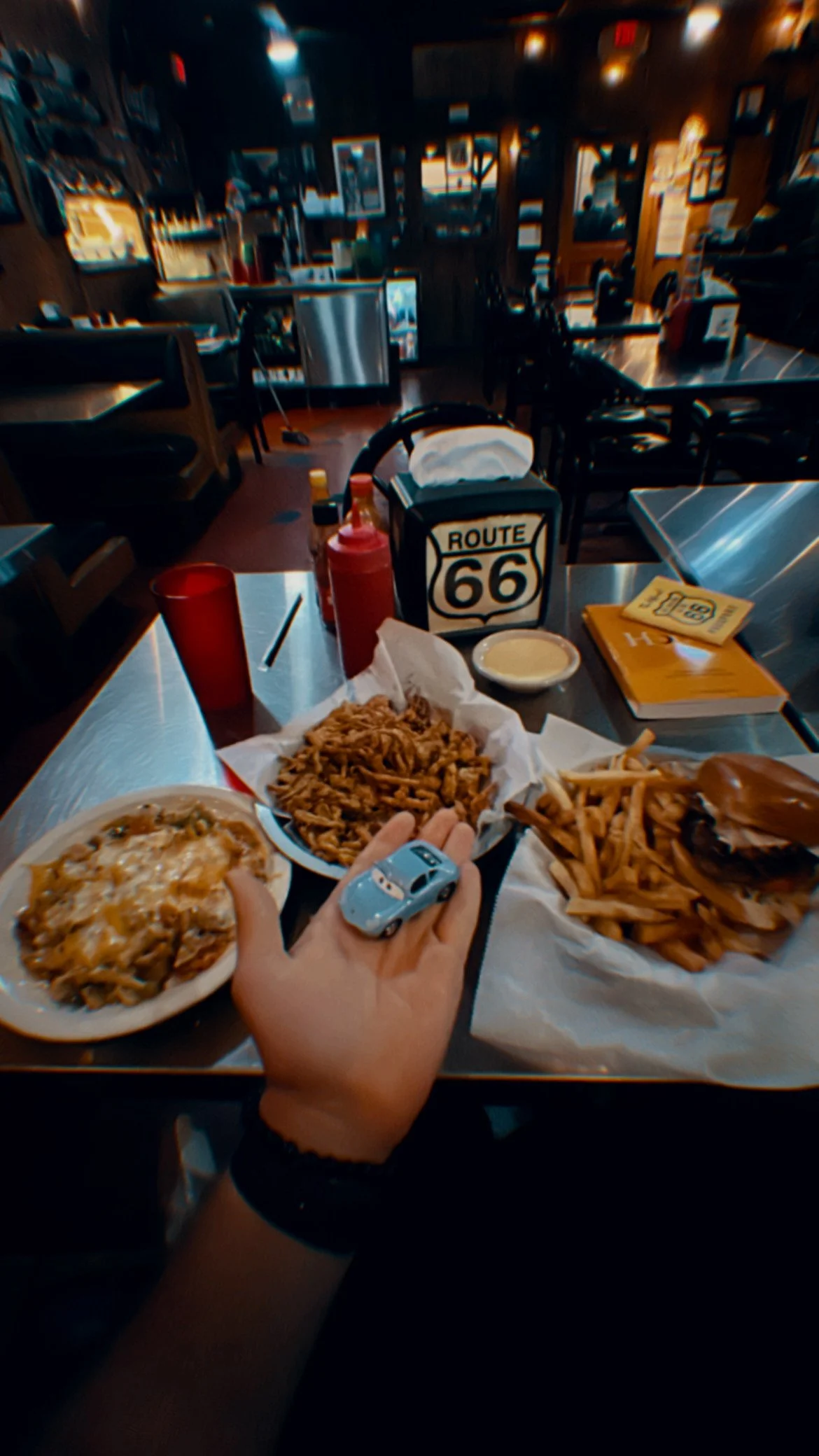
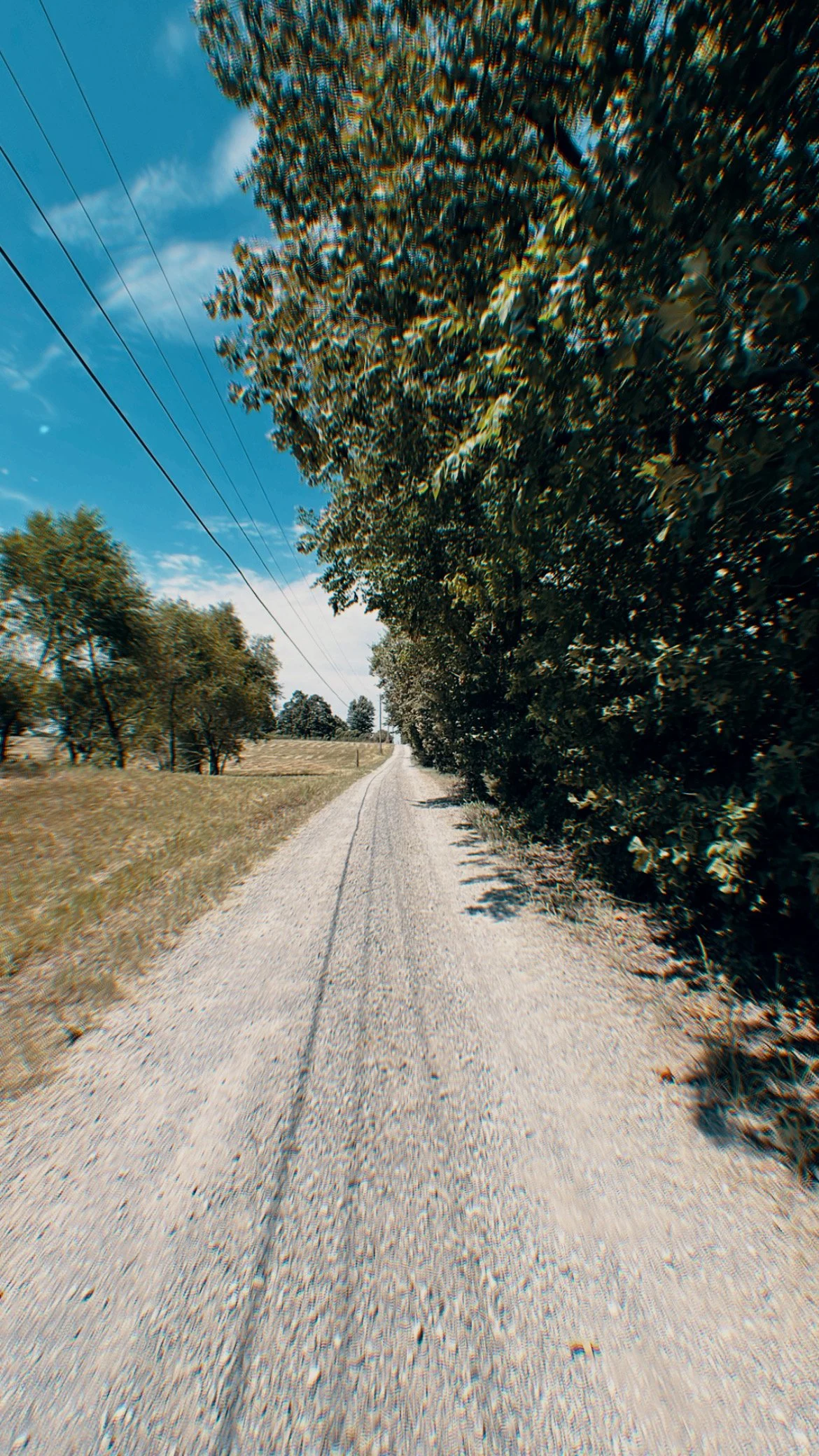
This experience taught me that Oklahoma is not small, not in size nor in spirit. There is more history and character in flyover states than I gave credit for. While many stereotypes still reign true and others completely broke down, cruising Route 66 felt more like traveling into a past way of life. Small towns like Sayre and Vinita tangled into budding tech hubs like OKC and Tulsa to show the full range that the state has to offer. That proximity positions Okies well to slow down or speed up depending on their chosen pace.
Now I know that the beauty equated with elsewhere also lives in the here and now. The false peaks of yesteryears course corrected my path back home. Oklahoma perfectly personified potential in a way that my own reflection did. I learned that while exploring outside of our borders holds benefits, the dopamine behind discovering doesn’t have to be infrequent and unattainable. There are real people with real stories in our neighborhoods ready to be seen.
Route 66 was never just a highway. It was a linkage between families, generations, and communities that refused to fade with time.
In a period of development and a struggling sense of purpose, my time on the Main Street of America served as a committed self check-in. I gave myself permission to explore. I found excitement in the small things. Each of the 66 stops acted as a North Star to treat myself better and place me where people valued my presence.
When I finally reached my destination, the same road that once connected a country ended up connecting me back to myself, reminding me that the journey was the prize all along.
Favorite Restaurants
-
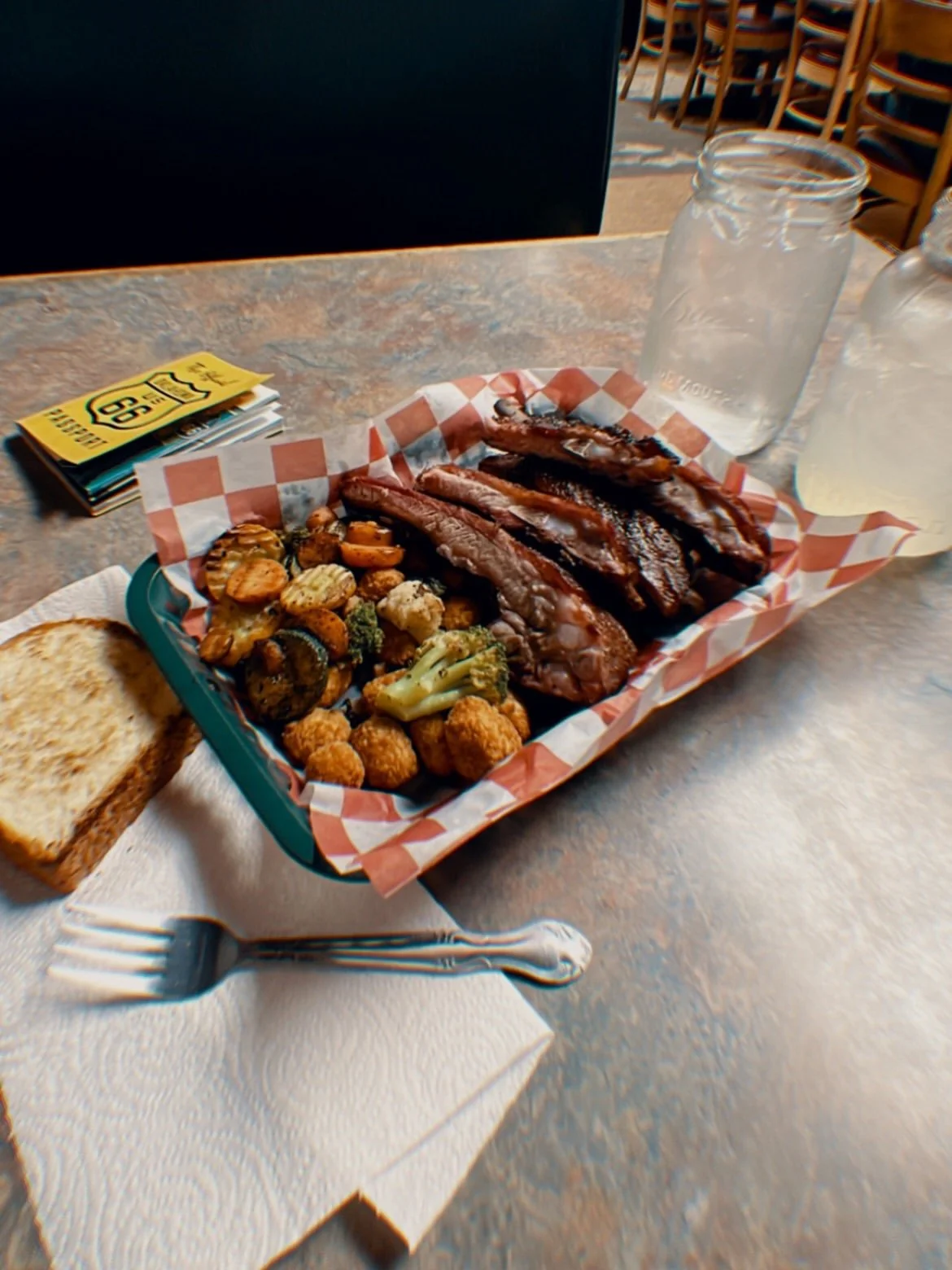
Literally the best BBQ that I have ever eaten. As an avid carnivore, I unapologetically treated myself to this rare find for my 30th birthday. The Butcher Stand has won multiple national cooking competitions and been featured in even more network television shows. The owners open the establishment to the public from 11 a.m.-3 p.m. only three days a week (or until they sell out). So it really does feel fortunate to land a plate on their outdoor patio with all the fixings. My favorite feature of The Butcher Stand is their homemade BBQ sauce flavors that as dispersed in a one-of-a-kind utter-style squeeze tube. Yes I said “utter-style.” The previous owner invented the contraption themselves for the cutely uncomfortable meta-meat flavoring experience. Worth the trip.
-
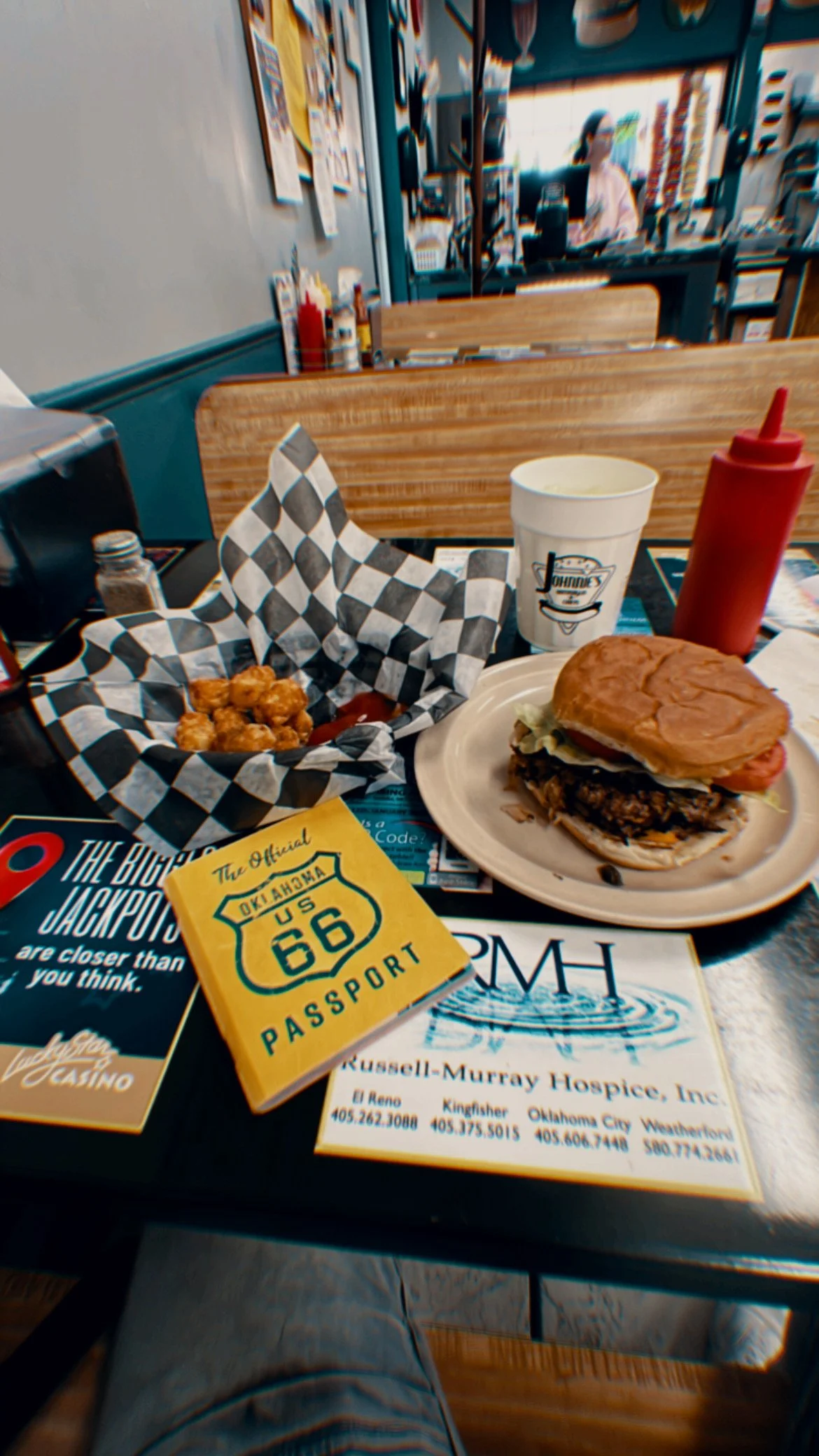
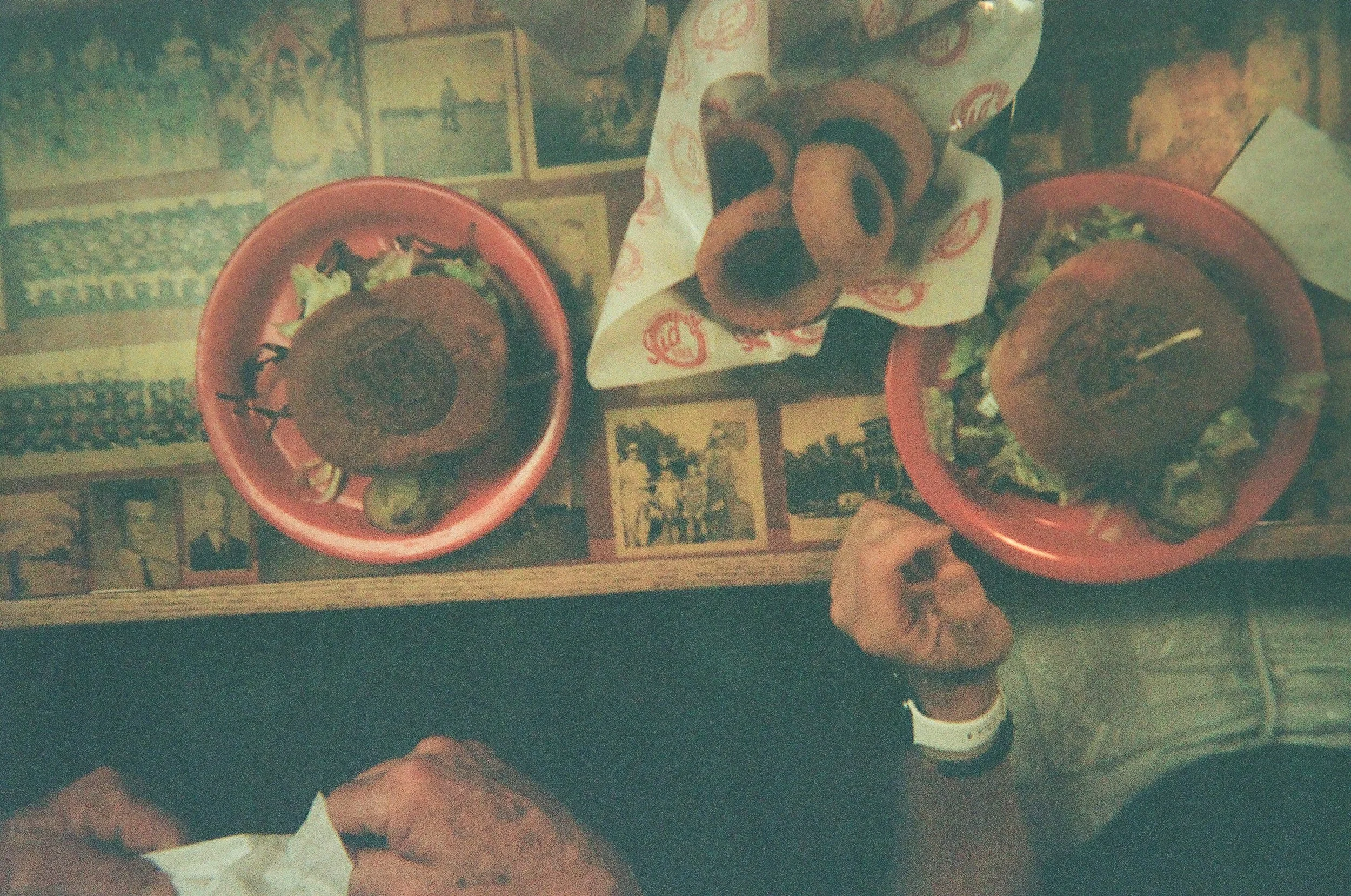
Have you ever heard of an onion burger? Legend has it that the onion burger, one of Oklahoma’s signature dishes, got its start in El Reno. These delicious burgers allocate literally one entire onion per sandwich as they are made by smashing thinly fried onions right into the meat while frying on the griddle to order. Consider adding some extra onions on top of your condiments too. Obviously if you don’t like onions, this might not make your top restaurants list. But to narrow down the best burger spot on Route 66 requires some lore. There are three onion burger restaurants in El Reno’s downtown distract all within an eyeshot from each other - Johnnie’s Grill, Robert’s Grill, and Sid’s Diner. They each claim to be a foundation of the technique and yes I tried them all so you don’t have to. If you are looking for a cheap, greasy, midwestern delicacy, you can’t go wrong with a new twist to an American classic that has kept El Reno and Route 66 travelers eyes watering for generations.
-
This might be the cutest, most peculiar restaurant on the entire Route 66 trip. I have admittedly never been to a tea room before. Until now. When you walk in the Country Dove, the atmosphere gives off your grandparents living space in all of the best ways. There is a southern charm painted over all of the wooden furniture, doilies, and baked goods. The lunch special menu also operates like a southern home might fix it because the kitchen is only open three hours per day and visitors can peer directly into the open kitchen as they prep. The chicken avocado sandwich is exactly what it sounds like. The hearty meal is served on a homemade croissant in their fanciful dining room. I had to order two with the potato soup. Lastly, there are four upstairs rooms to explore that are decorated to different seasons and themes - Christmas, dolls, flowers, etc. It is visually loud and loved in the same way that your grandparents may over decorate a room that no one is allowed to touch anything in. The food and atmosphere makes this the ideal “homestyle” meal found on a highway connecting families for more than a century.
Favorite Museums
-
Tulsa is often considered the heart of the Mother Road. Similar to Route 66, the city is also celebrating a history built on a century of unrealized potential. That is due in part of the Tulsa Race Massacre of 1921 in the famed Black Wall Street. The once thriving historical Greenwood DIstrict suffered immeasurable loss in a story captured well at the Greenwood Rising museum. Its high-tech immersive exhibits use techniques like projection mapping and holographic effects to tell the tale of the district’s rise, its destruction in the massacre, and the strength of a community still rebuilding legacy. Route 66 first cut through Tulsa’s downtown shortly after the predominately black neighborhood was leveled and now provides a direct line to the newly thriving economy found where the rubble once lay. The visual, the emotion, the physical location of Greenwood Rising gives any Route 66 traveler the opportunity to experience what was, what is, and what is coming in one of Oklahoma’s fastest growing communities.
-
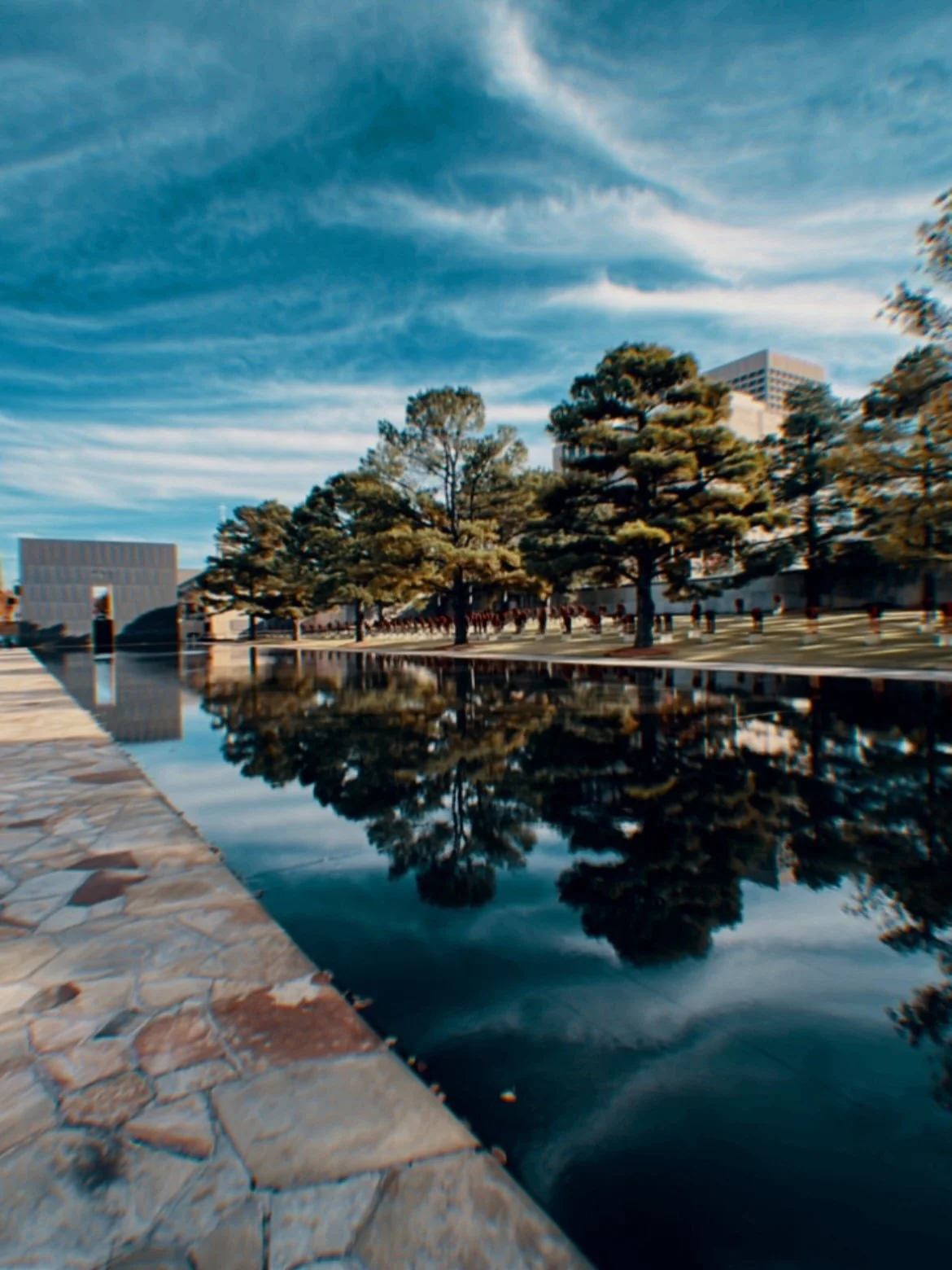
This jaw dropping museum, which has been ranked by TripAdvisor as one of the top 25 in the United States, commemorates the April 19, 1995, bombing of the Alfred P. Murrah Federal Building. It’s hard to understate the significance and resonance of this memorial as an Oklahoman and as an American. Route 66 points right to the destination of one of the most influential domestic attacks that the United States has ever seen and the museum is laid out to tell the story perfectly. I have been to many many museums in my life (evident by the list below), but what stands out most about this museum is its layout. The Oklahoma City National Memorial uniquely guides visitors through the series of events on that fateful day, moment by moment, artifact by artifact, in a way that can best be described as physically walking through a Netflix documentary. Not many museums have a tight singular timeline with a beginning, middle, and end the way that OKC does. It’s rare to have such a clear antagonist and resolution. This stop brings you back to the energy of ground zero, next to the fragments of history and glowing chairs of remembrance, in pursuit of redefining our nation’s solidarity in the middle of the map.
-
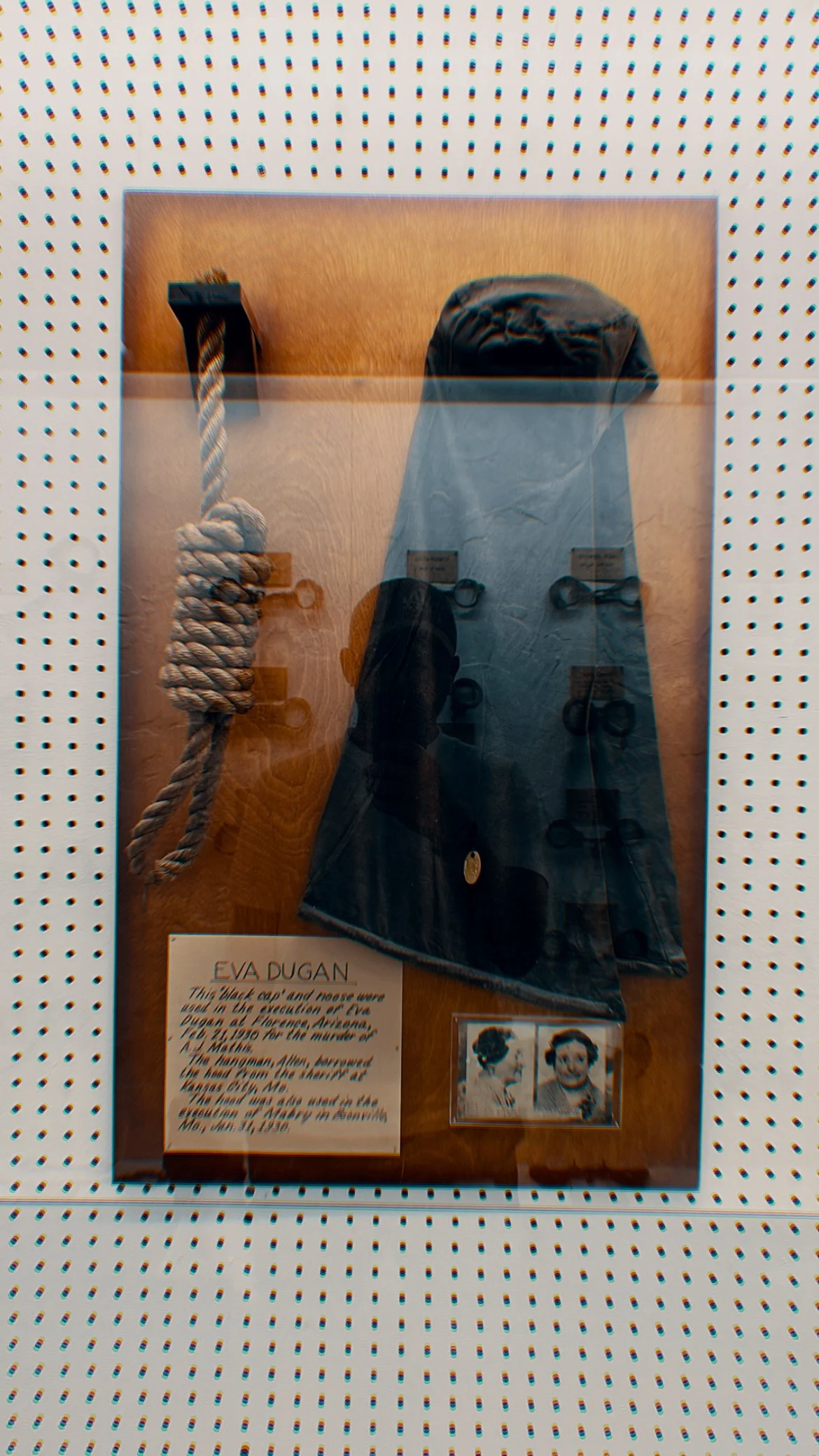
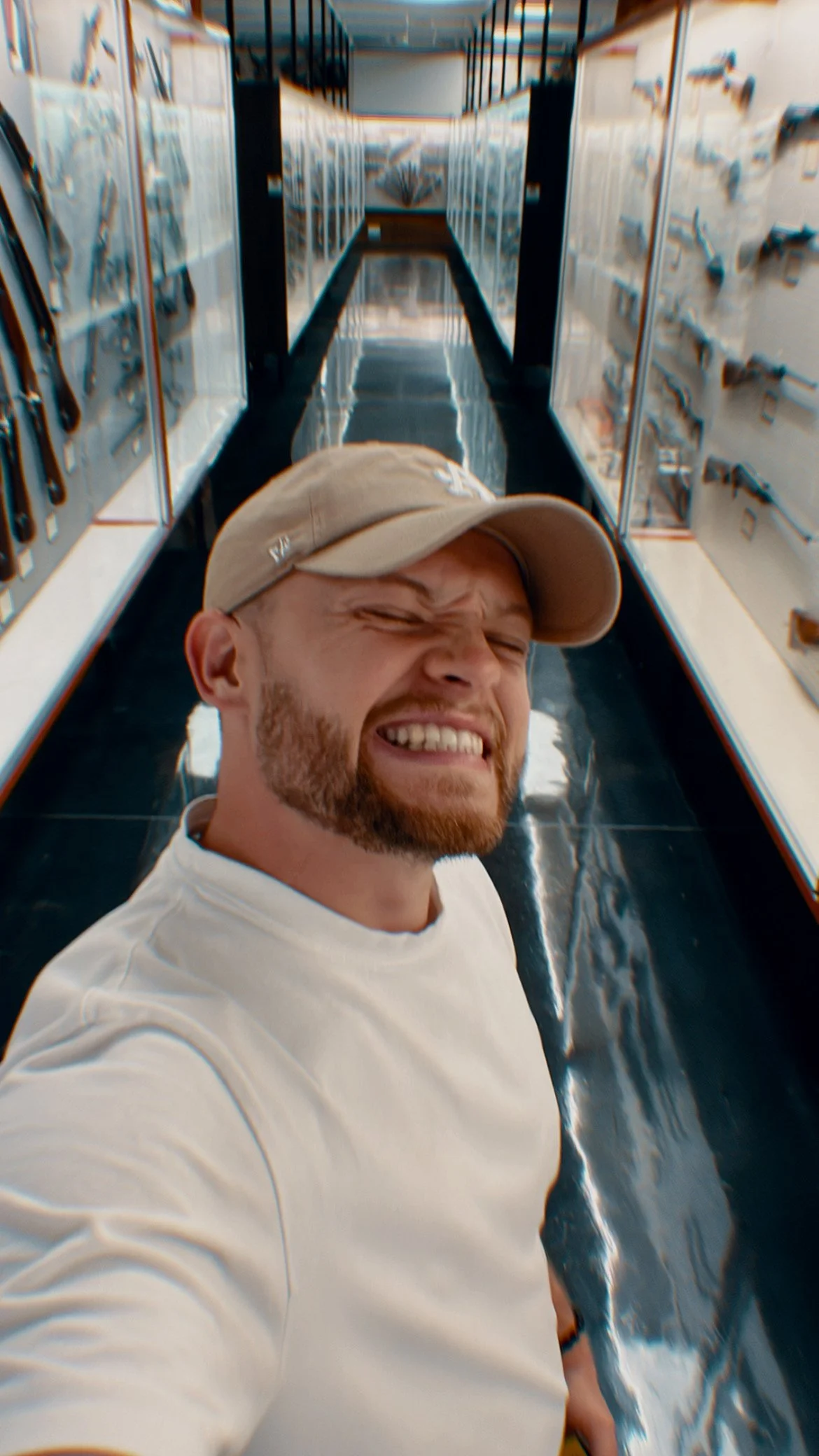
This Claremore classic is the world’s largest privately held arms collection with over 11,000 different weapons on display. Their weapon inventory is as far as the eye can see with a range from Native American artifacts, World War machines, and more modern attachments taking us into the next wave of warfare. My personal morbid curiosity spent the most time in the corporal punishment exhibit that was donated from national prison systems. It not only featured execution and torture devices, but it specified the actual cases in which they were used. It is enormous and enthralling. I say pull the trigger and go.
Favorite Hidden Gems
-
Fans of 1970s music - like my Dad - might consider this working music museum on the Mother Road as a key piece of rock-n-roll history. Tulsa’s music environment is often tied back to the work of Leon Russell’s album catalog, Shelter Records, and iconic Church Studio. Many founding fathers of iconic music like Bob Dylan and Woody Guthrie tie back to T-Town because of their affiliation with the native Russell to only further illustrate his impact. The Church Studio operates as both memorabilia exhibit to music greats as well as a state-of-the-art recording studio that actively engineers with today’s top talent. Tour the live instrument soundstages and executive board rooms where the magic happened. To know that the momentum generated by Leon Russell over half a century ago is still expanding our current musical landscape captures the ethos of Route 66 ability to continue connecting people beyond imagined limitations.
-
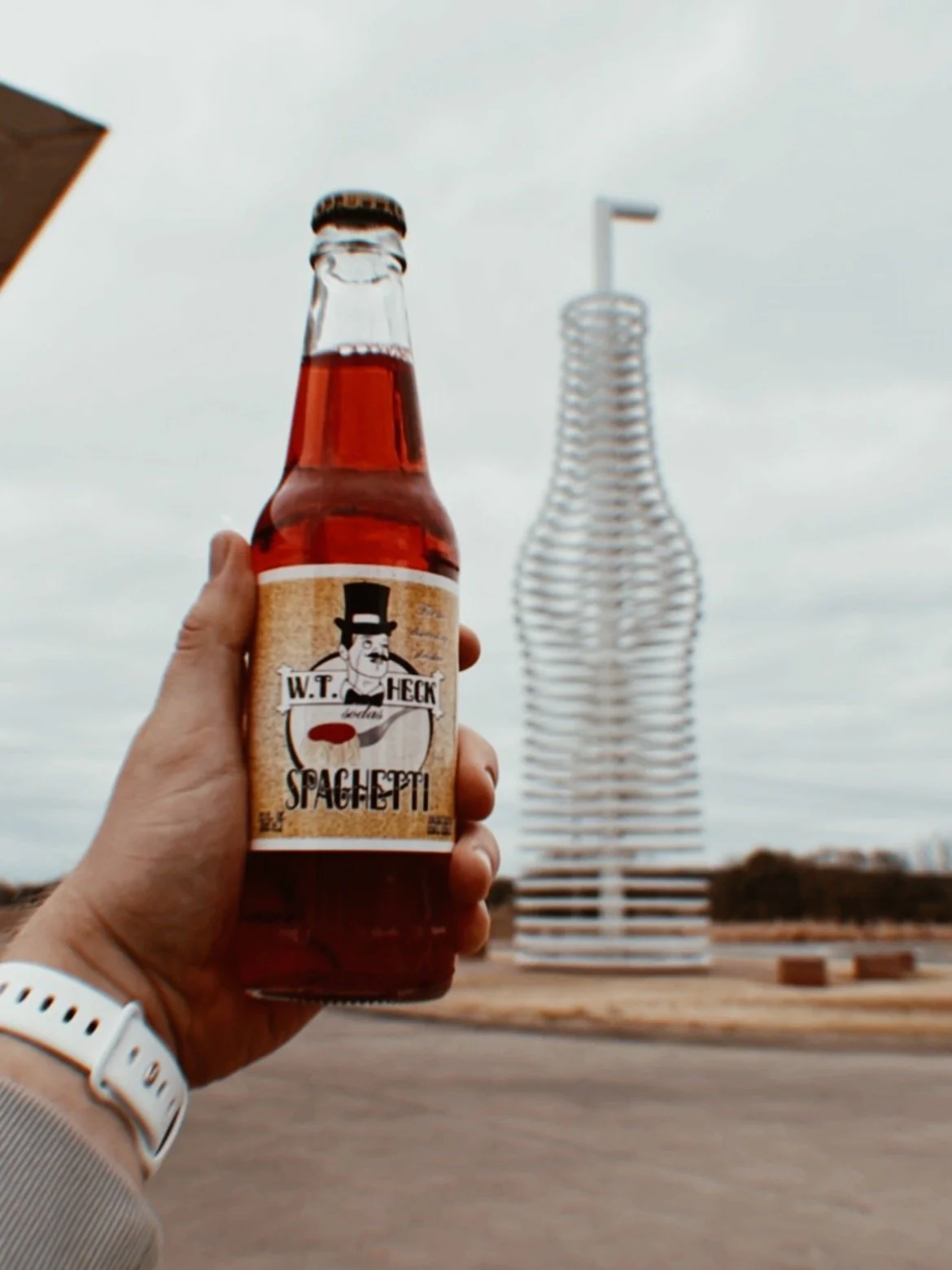
Is it “Coke”? Is it “soda”? It’s Pops. This signature midwestern attraction serves as one of the best photo ops on Route 66. The glowing, 66-foot-tall LED pop bottle sign stands as the halfway point between Tulsa and Oklahoma. The statue itself almost literally and figuratively overshadows the gas station, diner, and soda ranch tucked behind. The all glass building houses more than 700 types of soda pop from the classics to the disturbing. Their six pack specials allow you to mix and match some of your favorites with some new flavored soda like spaghetti. Pair that with that with Pops’ burger, fries, and malt to round out a truly one-of-a-kind experience in middle of the Mother Road.
-
In the furthest west town on Oklahoma’s Route 66, Gallery @112 caps off many passport trips with a nod to local artists from all across the state. Sayre boasts a population of 4,000 people while still managing to showcase many Great Plains artists in one of the state’s only non-profit galleries. Visit this unique space down the single lane road from their copper-domed city hall building to support many area artists, purchase art supplies, or attend a painting night. One of my favorite buys out of all 66 stops was from Gallery @112. Their volunteer staffer pointed out some clay bison plaques that had been carved and framed by some local school children to fundraise for their programs. The sentiment behind the project struck me as a symbolic tie to the ethos of the Route 66 trip itself - to learn, to connect, and to support. That bison piece now sits on my desk at work to remind me once again of how thinking creatively can connect us much further than any small town limits.
Favorite Overall Stop
-
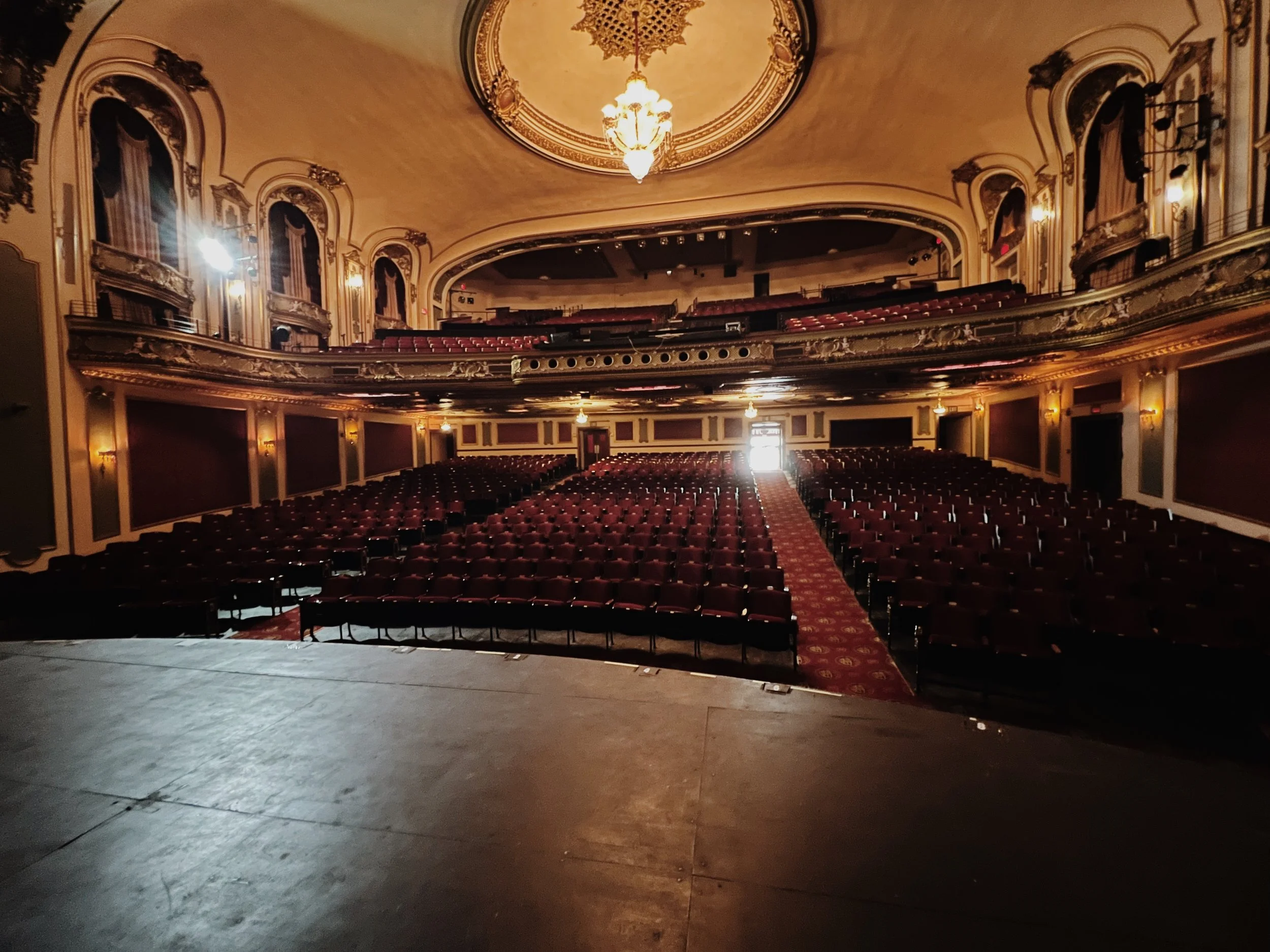
This stop fully embodies the spirit, history, and community that Route 66 was founded on. The Coleman Theatre sits in downtown Miami Oklahoma as an artifact of a once bustling economy formerly founded around the nations largest tire manufactuing plant before being moved overseas and abandoned. As told by the sweetest 90 year old tour guide you’ve ever met, in its heyday, the Coleman Theatre featured many of the country’s top performers from Ella Fitzgerald and Frank Sinatra in what many would now consider to be a flyover town. The structure currently hosts periodic vaudeville productions in an opulent theatre with an impressive Louis XV interior. The elegant red curtain compliments their proudly renovated chandeliers. One of the coolest features of the space is the personalized tour behind the curtain. They take you back into the depth of original technician equipment operated by gears and levers, the preserved powder rooms for distinguished guests, and a close up of the Mighty Wurlitzer organ operating since 1929. The elderly woman’s anecdotes described a scene of her performing her kindergarten recital on the very stage that she now volunteers to preserve and present. The visual of those contrasting versions of herself really stuck with me. The Coleman Theatre is a living museum of what was and what it is. Similar to the Mother Road itself, bigger and better may now exist as the place to attract. But for the ones that lived it, the moments within theatre were as real as the memories we make today.
Full Route 66 List
1. Dallas’ Dairyette - Quapaw, OK
2. Dairy King - Commerce, OK
3. The Dobson Museum & Memorial Center - Miami, OK
4. Coleman Theatre - Miami, OK
5. Nowhere on Route 66 - Afton, OK
6. Clanton’s Cafe - Vinita, OK
7. Eastern Trails Museum - Vinita, OK
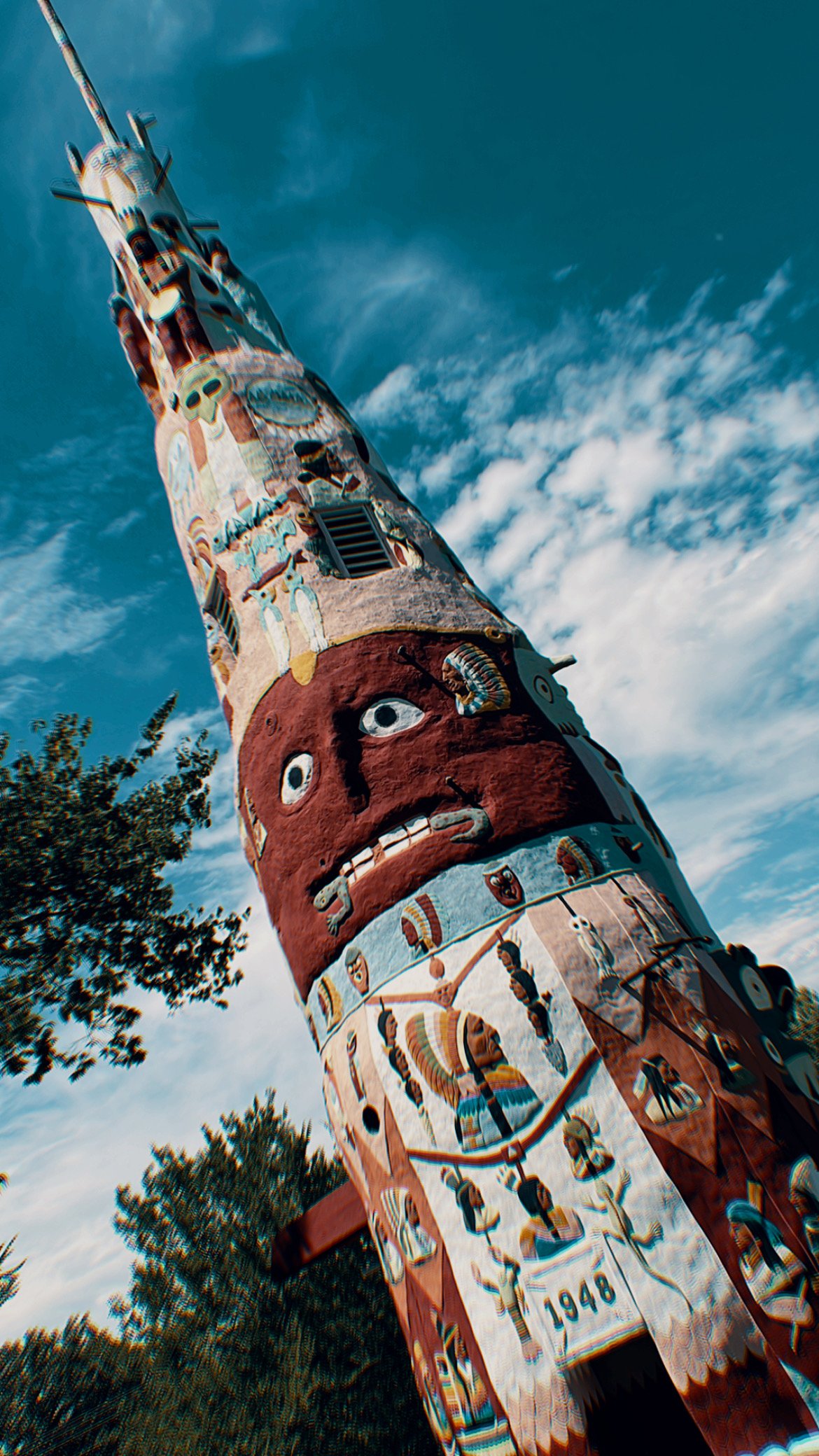
8. Ed Galloway’s Totem Pole Park - Chelsea, OK
9. Annie’s Diner - Claremore, OK
10. J.M. Davis Arms and Historical Museum - Claremore, OK
11. Claremore Museum of History - Claremore, OK
12. Will Rogers Memorial Museum - Claremore, OK
13. The Blue Whale - Catoosa, OK
14. D.W. Correll Museum - Catoosa, OK
15. Tulsa Fire Station 66 - Tulsa, OK
16. The Church Studio - Tulsa, OK
17. Mother Road Market - Tulsa, OK
18. The Outsiders House Museum - Tulsa, OK
19. Buck Atom’s Cosmic Curios on 66 - Tulsa, OK
20. Sky Gallery - Tulsa, OK
21. Greenwood Rising - Tulsa, OK
22. Woody Gutherie Center & Bob Dylan Center - Tulsa, OK
23. Happy Burger - Sapulpa, OK
24. Sapulpa Historical Society and Museum - Sapulpa, OK
25. Downtown Sapulpa Shopping - Sapulpa, OK
26. Heart of Route 66 Auto Museum - Sapulpa, OK
27. Bristow Historical Society and Depot - Bristow, OK
28. Rock Café - Stroud, OK
29. Route 66 Bowl - Chandler, OK
30. Route 66 Interpretive Center - Chandler, OK
31. Lincoln County Museum of Pioneer History - Chandler, OK
32. Seaba Station Motorcycle Museum - Chandler, OK
33. The Butcher BBQ Stand - Wellston, OK
34. The Chicken Shack - Arcadia, OK
35. Arcadia Round Barn - Arcadia, OK
36. Pops - Arcadia, OK
37. Blockworks - Edmond, OK
38. Edmond Historical Society & Museum - Edmond, OK
39. Science Museum Oklahoma - Oklahoma City, OK
40. Oklahoma History Center - Oklahoma City, OK
41. Oklahoma State Capitol - Oklahoma City, OK
42. HunnyBunny Biscuit Co. - Oklahoma City, OK
43. Oklahoma City National Memorial & Museum - Oklahoma City, OK
44. First Americans Museum - Oklahoma City, OK
45. Sweets by Karen - Bethany, OK
46. Green Chile Kitchen RT 66 - Yukon, OK
47. Vladslava’s Czech Bakery & Cafe - Yukon, OK
48. Yukon Chamber of Commerce - Yukon, OK
49. El Reno Chamber of Commerce - El Reno, OK
50. Johnnie’s Grill - El Reno, OK
51. Robert’s Grill - El Reno, OK
52. Hinton Historical Museum & Parker House - Hinton, OK
53. Red Rock Canyon Adventure Park - Hinton, OK
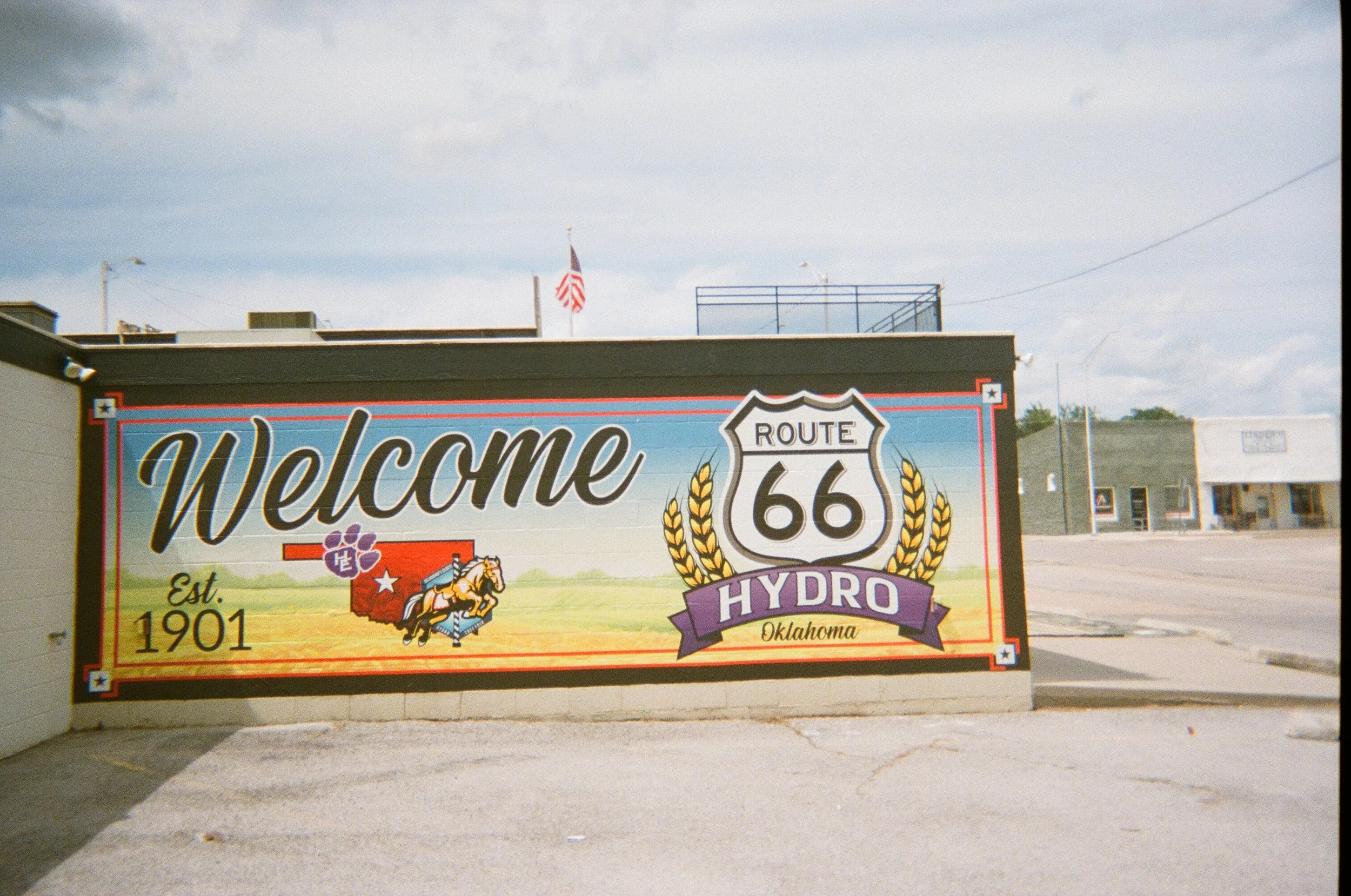
54. Deer Creek Market/Nutopia - Hydro, OK
55. Lucille’s Roadhouse - Weatherford, OK
56. Stafford Air and Space Museum - Weatherford, OK
57. Heartland of America Museum - Weatherford, OK
58. Mohawk Lodge Indian Store - Clinton, OK
59. Route66 Café at the Market - Clinton, OK
60. Café Clinton - Clinton, OK
61. Oklahoma Route 66 Museum - Clinton, OK
62. Foss State Park - Foss, OK
63. Country Dove Gift & Tea Room - Elk City, OK
64. 66 Sweet Spot - Elk City, OK
65. National Route 66 Museum Complex - Elk City
66. Gallery @112 - Sayre, OK
The postings on this site are my own and do not necessarily reflect the views of any company or clients.