What Jiu Jitsu Taught Me About B2B Marketing
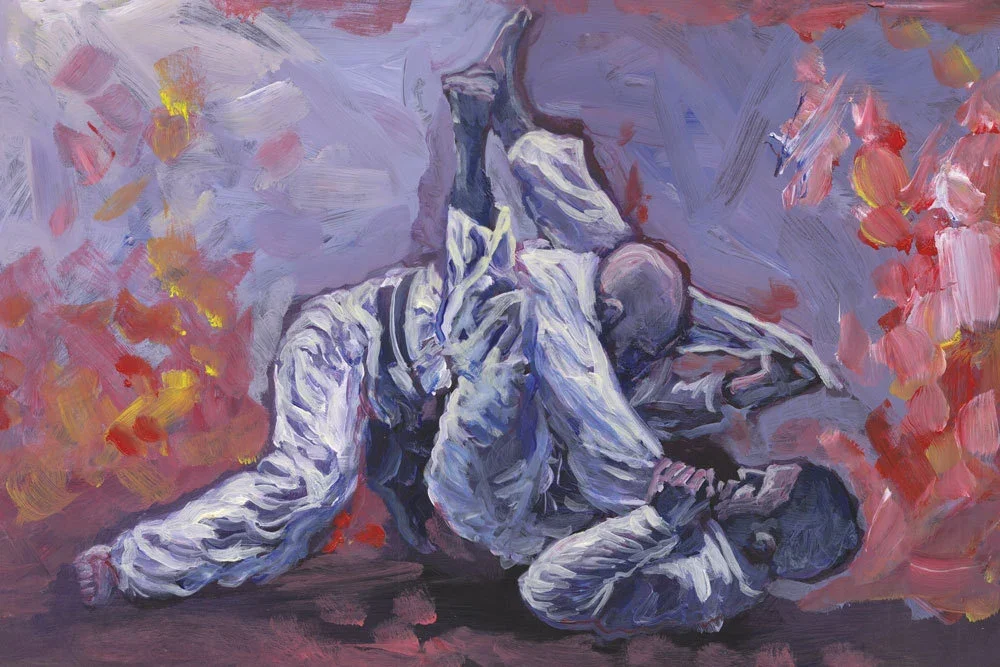
At first glance, Brazilian Jiu-Jitsu and B2B marketing appear to live in entirely different worlds. One takes place on padded mats where two people grapple for control. The other unfolds across conference tables drafting strategic plans tying back to quarterly goals. One looks physical and primal, the other analytical and strategic. Yet the longer I spend on the mat, the more synonymous it all becomes. The movements are different, but the thinking behind them begins to feel remarkably familiar.
Jiu-jitsu often introduces itself as a martial art. However, over time it reveals itself as something closer to a training grounds for decision-making under pressure. Every round compresses the same challenges we encounter elsewhere in life: moments of uncertainty, flashes of opportunity, sudden mistakes, the need to adapt when a plan begins to unravel. On the surface the exchange appears physical, but the deeper practice is mental. Timing matters. Patience matters. Ego reveals itself as an early opponent to overcome.
I originally stepped into the gym for ostensibly straightforward reasons—skill, exercise, and community. Those rewards arrived quickly and remain some of the best parts of training. What surprised me most was something quieter. The mat began to expose patterns that seemed to apply everywhere else in life. Meetings at work, conversations with friends, professional strategy sessions, even the rhythm of relationships began to echo the same lessons learned during a five-minute round of sparring.
The Gracie family articulates this idea clearly as the forefathers of the art form in Rener Gracie’s book The 32 Principles of Jiu-Jitsu, which outlines a set of universal concepts that govern both the craft itself and the mindset behind it. Techniques change constantly while principles remain stable. They guide how we react to pressure, how we manage energy, how we interpret opportunity. Reading that framework made something click for me: the lessons I was experiencing on the mat were both athletic mechanics and mental models that could apply just as easily to business strategy or personal relationships.
There is nothing that brings a person back to the present quite like a grown man slipping his grip under your chin and applying pressure.
In that moment, the mind becomes incredibly clear. Plans dissolve. Time slows down. The future shrinks into a single question: what is the right move right now?
Over time, certain principles began to surface again and again. Out of the broader framework described in The 32 Principles of Jiu-Jitsu, nine stand out most frequently in my daily life. They understandably show up during sparring rounds, but they also appear in marketing strategy meetings, long-term projects, and the quiet process of building trust with people.

Connection
Connection is unavoidable in jiu-jitsu. Hands grip lapels, legs entangle around hips, and bodies move in constant contact as each practitioner searches for balance and control. Running from connection simply stops the exchange; the match loses momentum and the opportunity to learn disappears. Early in training this physical conversation feels intensely intimate—uncomfortable even—because every grip feels like a threat and every movement feels personal. Over time that sensation fades. Connection becomes natural, almost invisible, like the unconscious breath that keeps the flow alive.
That same principle exists far beyond the gym. Businesses succeed through connection with their audiences. Campaigns gain traction when they touch the people they serve. Professional relationships deepen when communication becomes consistent and authentic. Even our personal lives rely on connection, whether that means revisiting a hometown that shaped us or nurturing the vulnerability required for romantic relationships to grow. In each case the lesson remains the same: meaningful progress begins when we accept connection as an integral part of the exchange rather than something to avoid.
Detachment
Where connection appears, detachment inevitably follows as its counterpart. One principle balances the other. In jiu-jitsu this lesson arrives quickly when a beginner grips an opponent’s collar or sleeve with all the strength they can muster, believing that control comes from holding on tightly. That same grip can suddenly become their own threat the moment an armbar begins to creep into position. Instinctually holding on reveals itself as the doorway to defeat, and the safest move is often to release and return to a stronger defensive position.
Detachment operates the same way in life. A confidant that once provided a safe haven can begin to erode the very trust they once created. A job title that once felt like professional progress may eventually limit growth if the surrounding environment no longer encourages development. The challenge is recognizing when holding on is no longer a sign of strength but an act of stubbornness. Detachment is not defeat. Instead, releasing allows space for better positions to emerge.
Tension
Tension reveals intention. When two practitioners are locked in a clinch, the subtle shifts in muscle minutia signals what might happen next. A tightening shoulder hints at a submission setup. A sudden pull on the belt suggests a sweep. Equal awareness of our shared micro-movements is always at play. In jiu-jitsu, tension can be useful when applied strategically, yet excessive tension quickly drains energy and makes movesets predictable.
The same dynamic unfolds in professional and personal settings. Productive tension inside a conference room often signifies ideas being tested rather than politely accepted. Healthy debate forces strategies to withstand scrutiny before they move forward. In relationships, respectful tension exists between trust and control, between healthy independence and unhealthy possessiveness. It allows space for the environment to inform. Learning to interpret tension rather than fear it becomes a powerful skill, because it reveals the motivations that might otherwise remain hidden.
Frame
Framing is one of the earliest lessons taught in jiu-jitsu. Coaches repeat the same instruction until it becomes instinct: “Keep your elbows in!” That simple cue protects the center of the body and preserves the structural integrity needed to survive under pressure. It becomes hard to address much else when underneath an opponent’s crushing body weight. The moment that elbows flare outward, the frame collapses and submissions begin to appear from every direction.
Frames do more than protect; they afford time. A strong frame slows the pace of a match and creates the breathing room necessary to think clearly about the next move. In business, framing operates through proactive preparation rather than reactive problem-solving. Organizations invest in training, build teams with complementary skills, and position themselves for future opportunities so that unexpected challenges do not dictate their decisions. In personal relationships, frames appear as boundaries and intentional routines—date nights, traditions, or simple commitments that protect time spent together. Structure preserves stability, and stability allows thoughtful decisions to follow.
Pivot
The pivot principle carries a liberating message: changing direction does not equal failure. It provides permission to adjust without shame. In jiu-jitsu a slight pivot of the hips can transform a struggling triangle choke into a clean submission. The technique itself remains the same, yet a few degrees in a different direction changes the entire outcome. Pivoting can also occur when an offensive move unexpectedly exposes a vulnerability, forcing a practitioner to shift immediately from attack to defense.
This same adaptability shapes successful careers too. Taking a new position in an unfamiliar industry can be the disruption needed to progress as a professional. Refusing to pivot often flags a rigid ego rather than strength, because it means clinging to a plan even when evidence suggests another direction would be wiser. In life, pivoting may appear as a choosing sobriety to take back one’s health or as adapting to the unexpected loss of a friend. The realization that a path once pursued no longer aligns with the person we are becoming can require an intentional adjustment. Pivots acknowledge a naturally changing reality while preserving forward momentum.
Ratchet
The ratchet principle explains how progress accumulates through small, persistent advances rather than dramatic breakthroughs. In jiu-jitsu, escapes and sweeps rarely occur through one explosive movement. Instead they unfold through sequences—shifting the hips to create space, securing an underhook, moving from full mount into half guard, and eventually reversing the entire position. Each individual step appears modest, yet together they transform the outcome.
This principle resonates strongly in professional life. Major accomplishments often emerge from repeated small investments rather than singular grand gestures. My own college experience stretched across nearly a decade before culminating in a degree, a timeline that only makes sense when viewed through the ratchet principle. Each semester, each class, each assignment represented another small step forward. Over time those steps accumulated into something meaningful. Relationships operate the same way. Grandiose gestures are great. But a person’s true character is founded on the small actions that add up along the way.
Depletion
Depletion teaches the importance of patience and endurance because the person who manages their energy best controls the outcome. New white belts often burn through their energy within the first minutes of a round because they cannot yet distinguish between explosive moments that require effort and safer moments that allow recovery. Experienced grapplers understand that controlled pressure can drain an opponent far more effectively than frantic movement. Simply maintaining a strong position—such as placing steady weight through a knee-on-belly—can exhaust others while conserving energy for the one applying pressure.
Outside the gym, depletion reminds us that energy is one of our most valuable resources. Poor decisions in business often stem from reactive thinking that drains financial or emotional capital without producing long-term value. In personal life the principle appears in subtler ways. Recovery after a demanding season of work or the end of a relationship may feel unproductive at first, yet rest allows the body and mind to rebuild the wisdom and energy necessary for the next opportunity. Sustainable progress requires understanding when to push and when to recharge.
Mobility
Mobility acts as the connective tissue linking all the other principles together. In its most literal sense, mobility emphasizes the physical flexibility and agility required to perform techniques—shrimping to escape pressure, rolling into new positions, or adjusting angles for submissions. Yet the deeper lesson lies in the constant movement that defines jiu-jitsu itself. Positions flow into one another in continuous sequence, and the practitioner who stops moving quickly loses control of the exchange.
Rener Gracie summarizes this concept with a simple line in The 32 Principles of Jiu-Jitsu: “If you can’t move your opponent, move yourself.” The statement reflects the art’s commitment to efficiency and adaptability. Sometimes the most effective strategy is not forcing the world to change but repositioning ourselves within it. Companies update their technologies. People relocate to rebuild relationships. Mobility becomes the capability and willingness to modify environment, perspective, or position in order to move when it matters most.
Clock
The clock governs everything. Every round begins and ends according to the same silent authority. Submissions may occur along the way, but if neither practitioner finishes the match before time expires, the clock delivers the final verdict. It’s the ultimate referee.
This principle becomes most obvious in the final seconds of a round. An opponent may lock in the early stages of a triangle choke, yet if only seconds remain in a move that requires many steps, a blue belt likely knows that the smartest strategy may simply be to allow and outlast. In those moments the best way to win is sometimes just not to lose. Surviving an entire roll with more experienced practitioners often reinforces this lesson.
Beyond sports, the clock principle carries a deeper philosophical weight. Every person shares the same fundamental constraint: time. Wealth, talent, and background cannot separate from the fact that our available hours remain finite. In such a fluid environment where no two rounds are the same, focusing on the limited constants can anchor us in mutual agreement. That shared boundary reframes our approach. Each minute becomes a small opportunity to learn, to connect, or to build something that did not exist before.

The longer I train, the more these principles begin to overlap. Connection leads naturally to detachment when circumstances change. Tension reveals opportunities that require a pivot. Ratcheting progress forward requires patience, mobility, and respect for the clock. What once appeared as isolated techniques on a jiu-jitsu mat now feels like an exercised philosophy for navigating everyday challenges.
Every practitioner begins as a white belt. Technical knowledge arrives slowly, often through mistakes repeated dozens of times. Progress demands consistency more than brilliance. Showing up becomes the most important move.
Over time those same habits begin to shape everything else. Work becomes another arena for practice. Relationships become opportunities to apply patience and awareness. Even something as benign as B2B marketing starts to resemble a strategic exchange of positioning, timing, and connection.
Jiu-jitsu may begin as a martial art, but the longer one stays with it, the more it reveals itself as a quiet guide to the ever-evolving exchanges that are experienced when we connect to the world around us.
The postings on this site are my own and do not necessarily reflect the views of any company or clients.